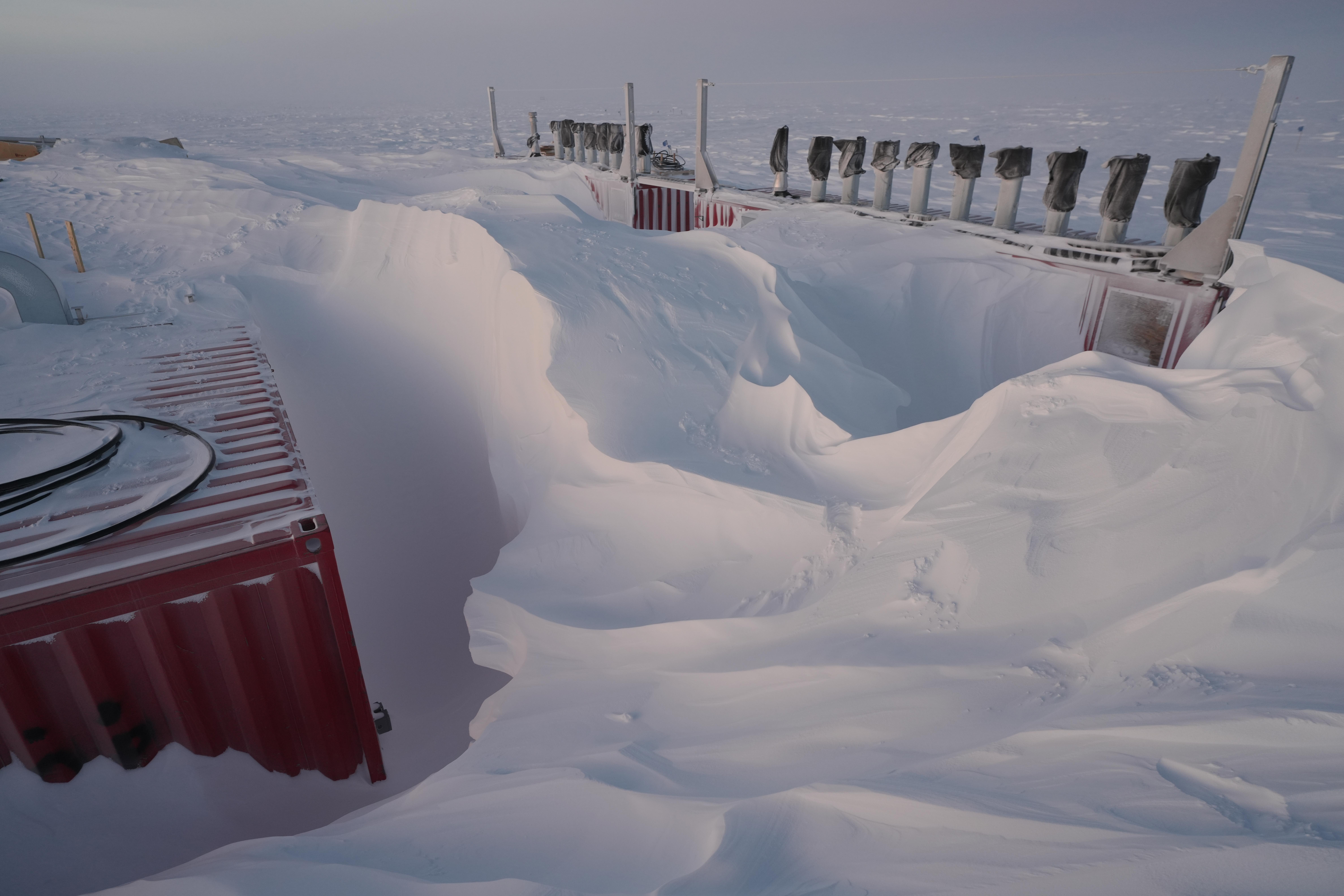
In fact, it was days' worth of shoveling. We all chipped in and got it done, though I’m sure we’ll see shovels again before the end of the summer.
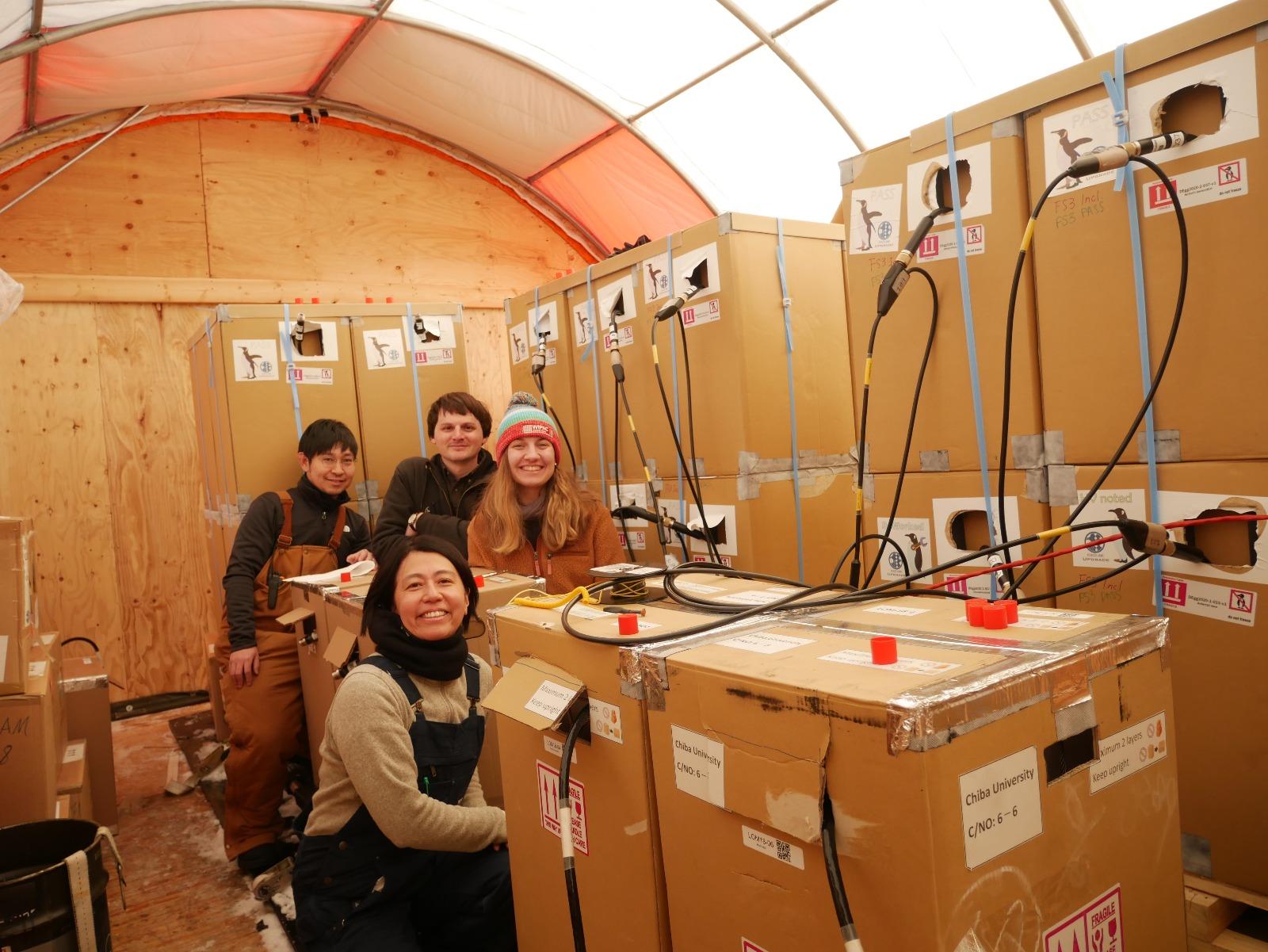
Clearing snow from the equipment is just the beginning of preparing for our upcoming work, which will include drilling seven holes over a mile deep into the ice and installing 100 detectors in each hole. So what else do we need to do? One task is to plug in each detector to test that it’s working as we expect before it goes into the ice. Others include testing out cables, getting equipment moved to the correct location, and preparing our lab building for the additional detectors coming online.
It takes a whole team of people, multiple teams actually, to get all this work done. First off, people have been planning for the work we are doing now for years. They planned how the detectors would operate and where they would go, and then they built them. They made plans for the cables to be built and tested them multiple times. They made plans for drilling into the ice again, tested everything, and trained people on what to do. And they made plans to get all the equipment to the South Pole.
One way that all our cargo got here was with the South Pole Overland Traverse (known as SPOT). SPOT is a convoy of heavy machinery (like bulldozers) that pulls equipment and fuel from McMurdo Station to the Amundsen-Scott South Pole Station. This year, SPOT took about a month to arrive at the South Pole. Now that the summer season is underway, we have multiple shifts of workers to cover all 24 hours each day. The good news for those of us on the night shift is that the sun is up in the sky 24 hours a day, so we do not have to contend with darkness in addition to the extreme cold.