However, observations using the Antarctic Sea Ice Processes and Climate (ASPeCt) protocol, which is an internationally accepted method of sea-ice observation, allow us to assess a broader spectrum of sea-ice characteristics.
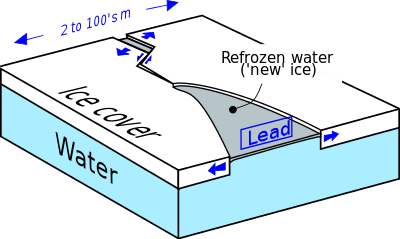
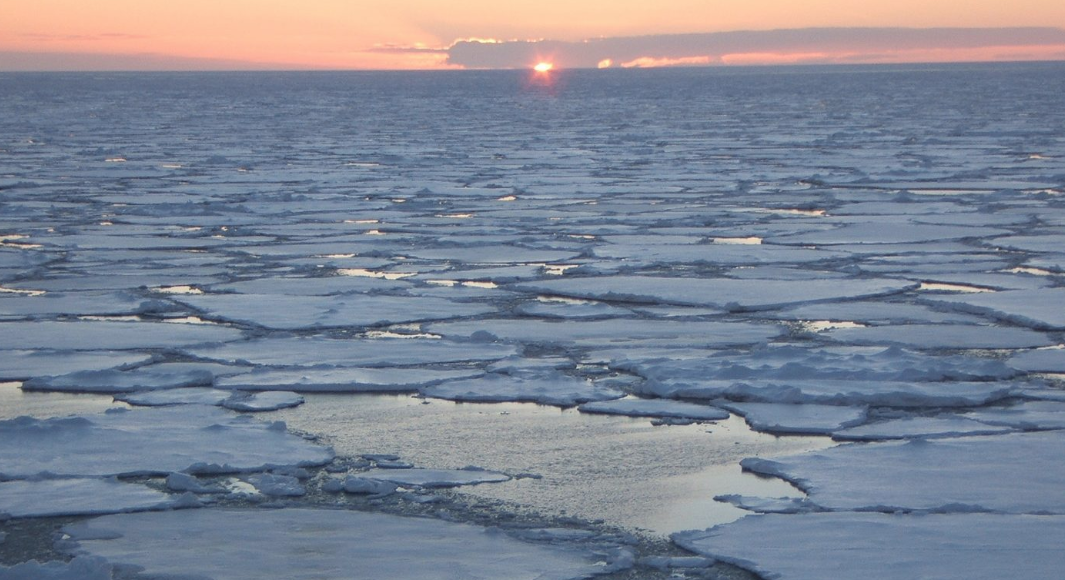
The ASPeCt protocol looks at the sea-ice type, thickness, shape, edge properties, snow characteristics and total concentration compared to open water to assess the sea-ice cover in the polar region. Sea-ice features like leads, weathered ridges and types of rafting are also identified. Included in the ASPeCt protocol are meteorological observations that would influence the sea-ice cover in the area. Some of these include cloud cover, current weather conditions, wind speed and air temperature. Here is the link to the ASPeCt website to learn more about the protocol: http://aspect.antarctica.gov.au/home.
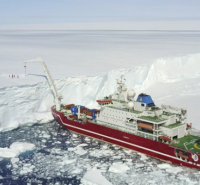
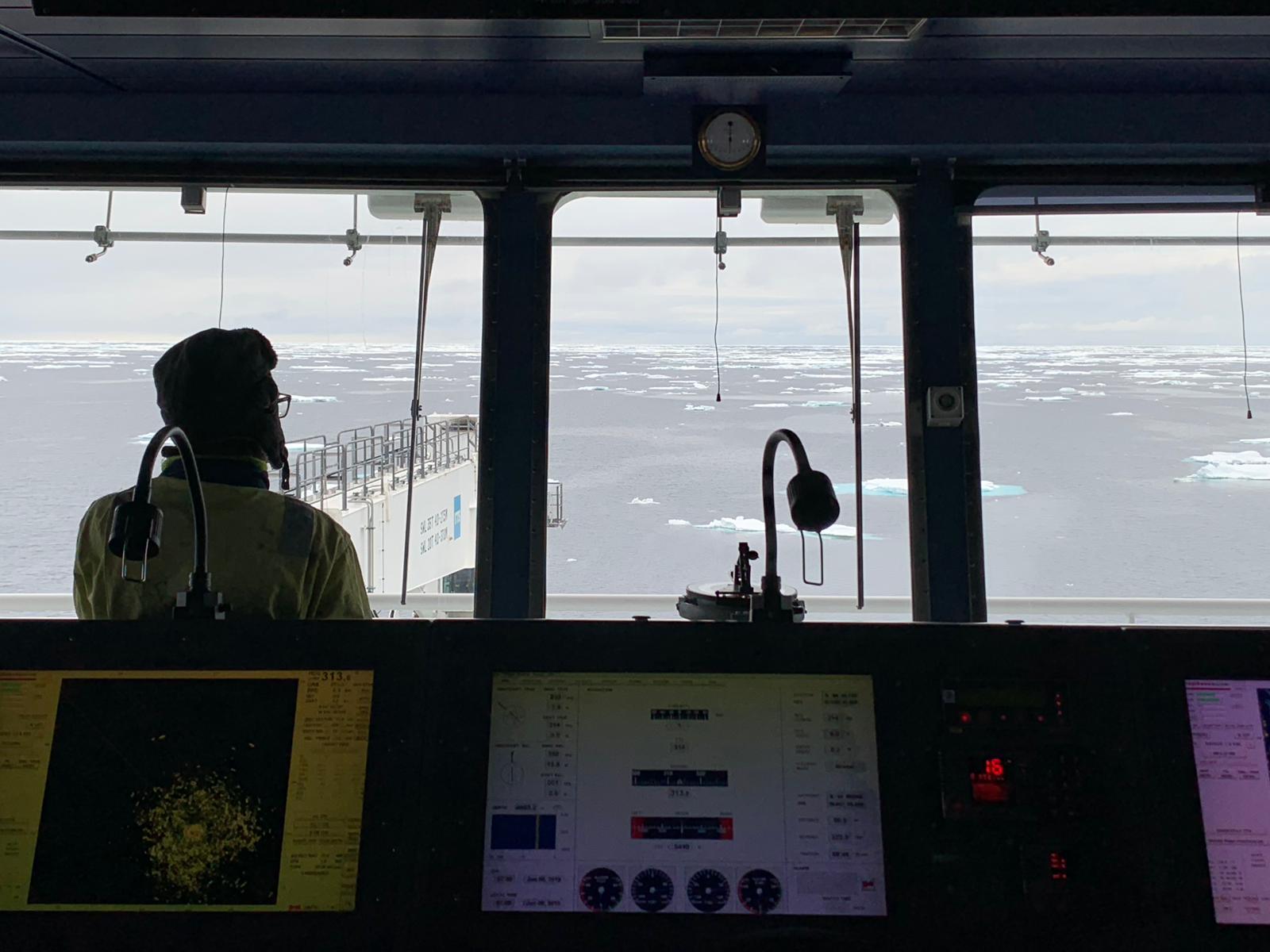
Sea-ice observations are being conducted from the bridge of the S.A. Agulhas II. These will be supported by a camera, mounted on the port (left) side of the vessel, which is continuously recording wide-angle time-lapse videos.
Understanding how the sea-ice cover evolves as we move from the open ocean into the sea-ice dominated region is vital for navigational and scientific purposes. The WSE and the S.A. Agulhas II provide us with the perfect opportunity and means to observe a relatively under-observed region of the Antarctic: the Weddell Sea.