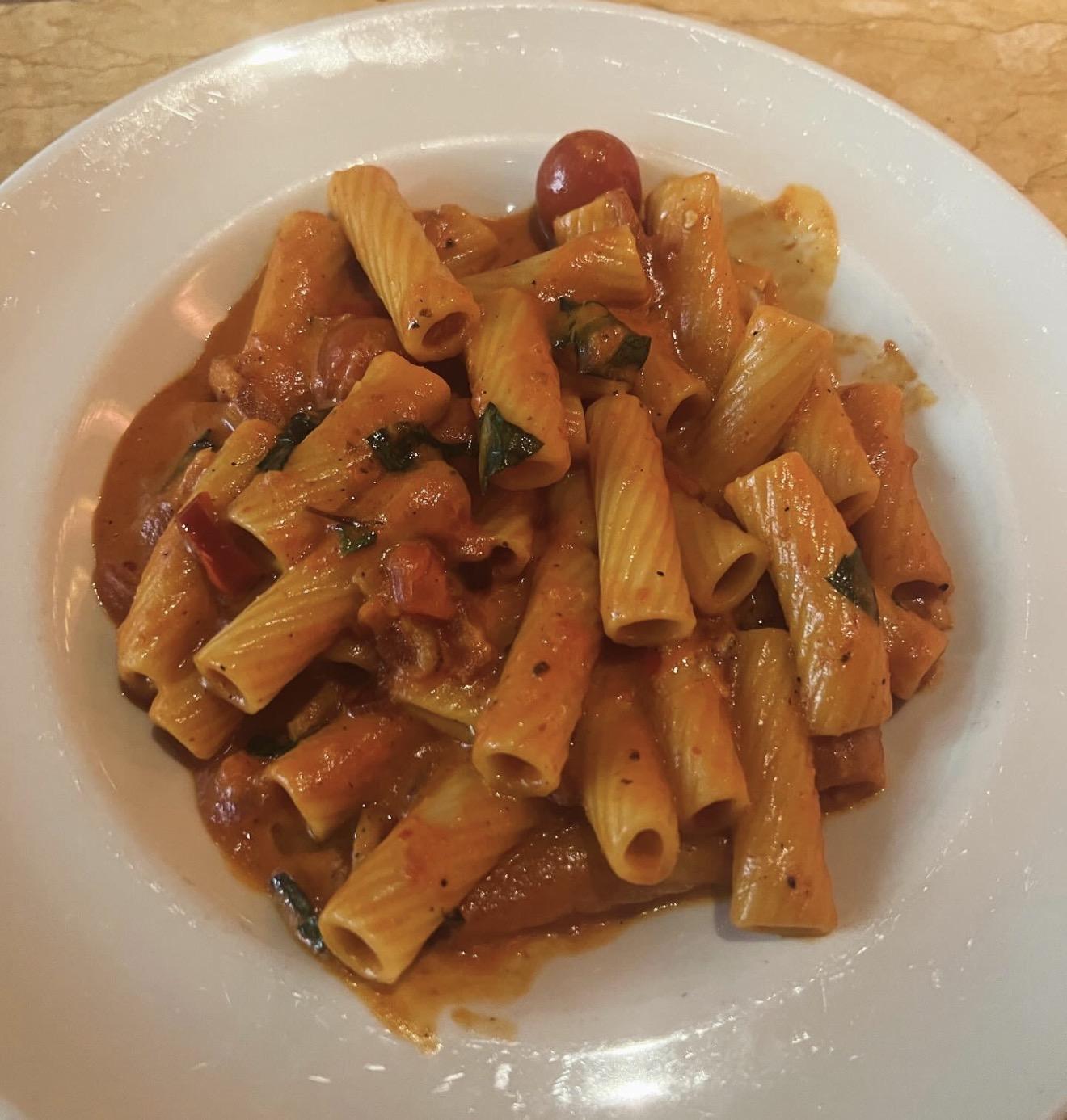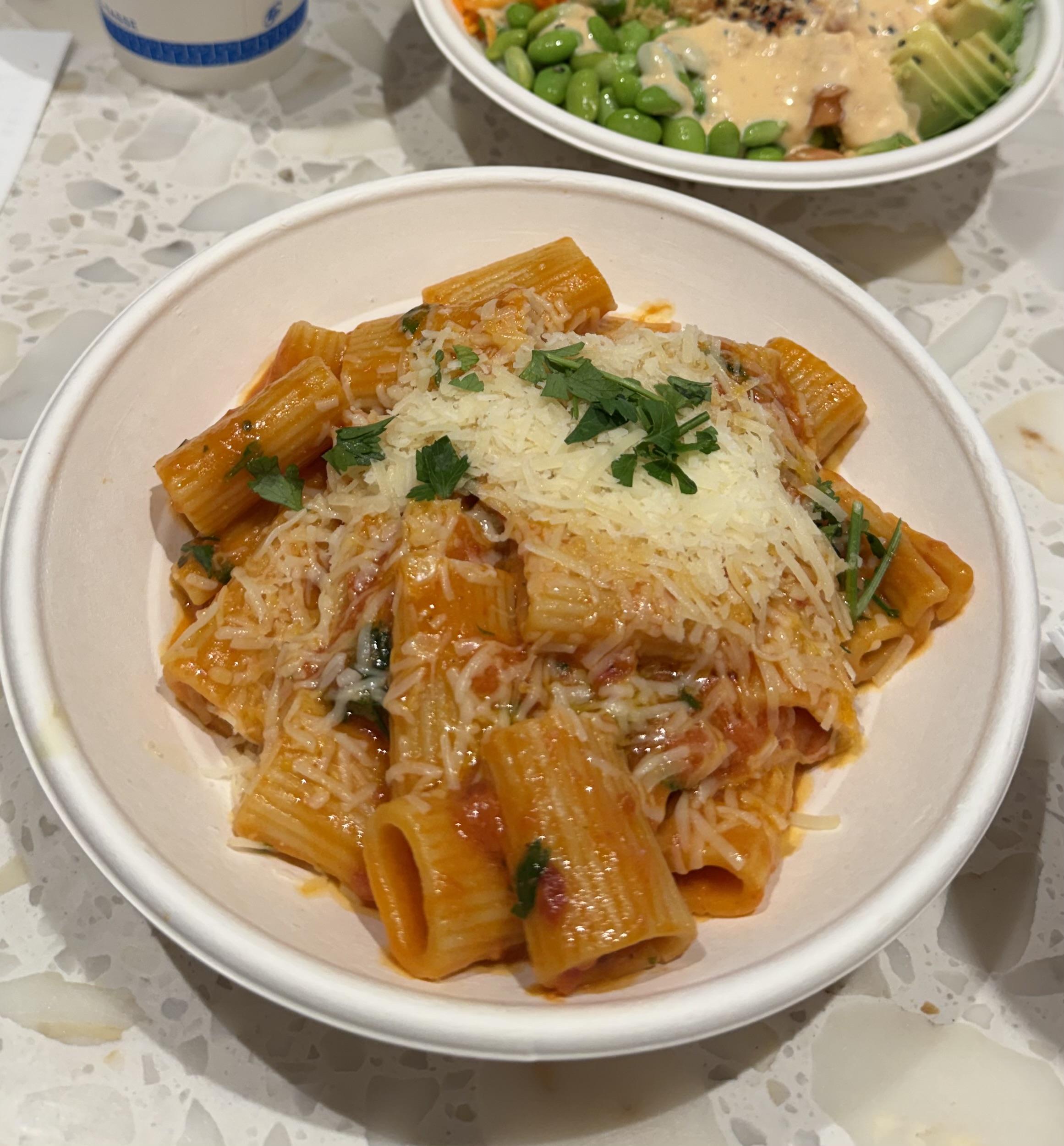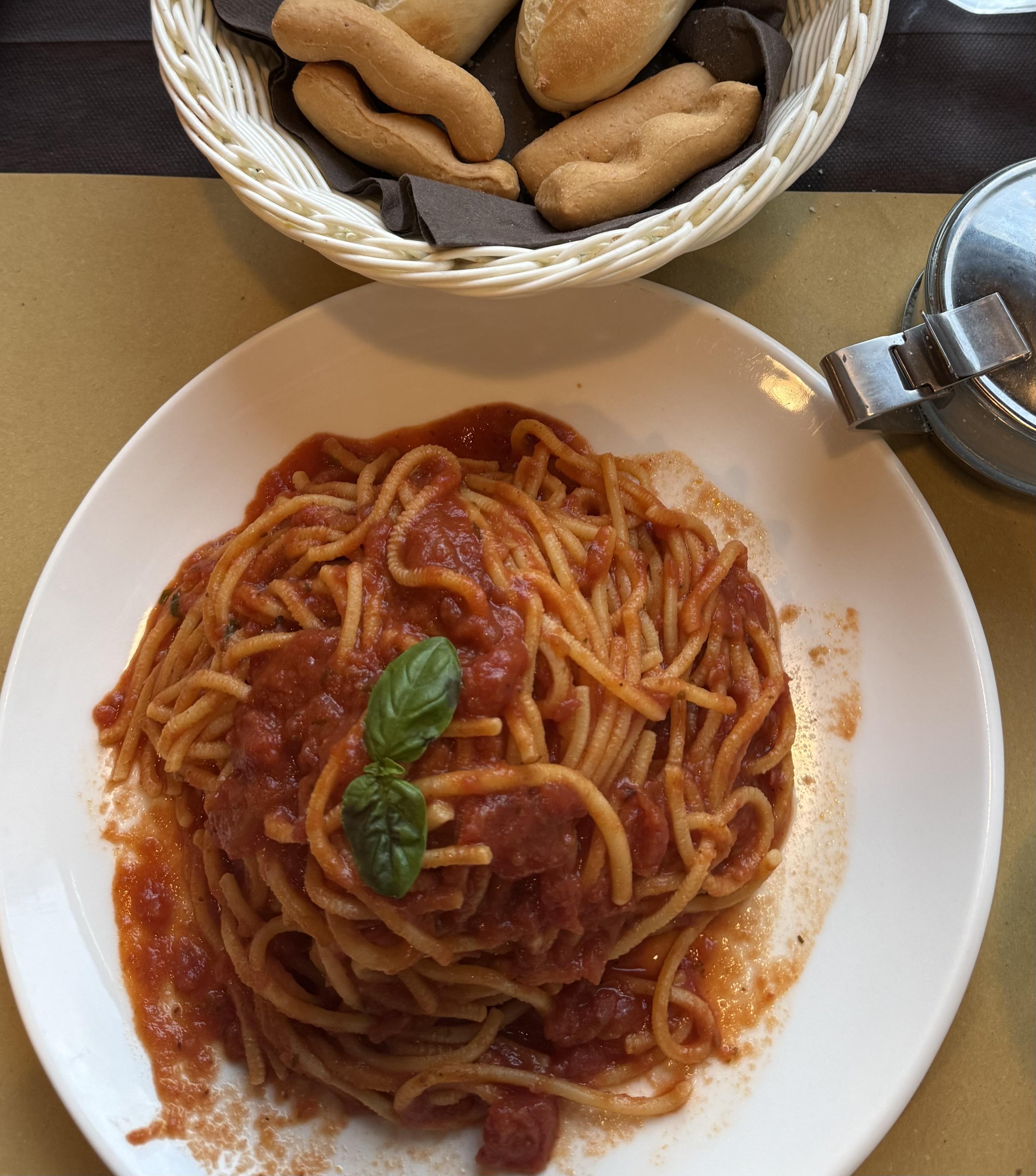
The penne with olives and anchovies was a reminder that pasta is also part of my everyday student life since I could enjoy it right in my dorm's cafeteria.
Each pasta dish was prepared differently. Pasta al pomodoro is made by cooking pasta and tossing it with a tomato sauce that often includes olive oil, garlic and basil. Traditional carbonara is prepared by mixing hot pasta with eggs, Pecorino Romano cheese, black pepper and crispy guanciale to create a creamy sauce without needing cream. The cafeteria penne combined cooked pasta with olives and anchovies, ingredients that provide a salty and savory flavor. These dishes show how a few ingredients can create very different pasta meals.
Pasta is closely connected to Italian food culture and agriculture. Durum wheat is an important ingredient in many types of Italian dried pasta, while tomatoes, olives and olive oil are common ingredients in Italian cooking. Anchovies are another ingredient used in Mediterranean cuisine, especially for adding a salty, savory flavor. Carbonara is traditionally associated with Rome, showing how particular pasta dishes can represent specific regions of Italy. These three meals also showed me that Italian food is not only about expensive restaurants. Pasta can be an affordable meal, a restaurant specialty or a convenient option for students.