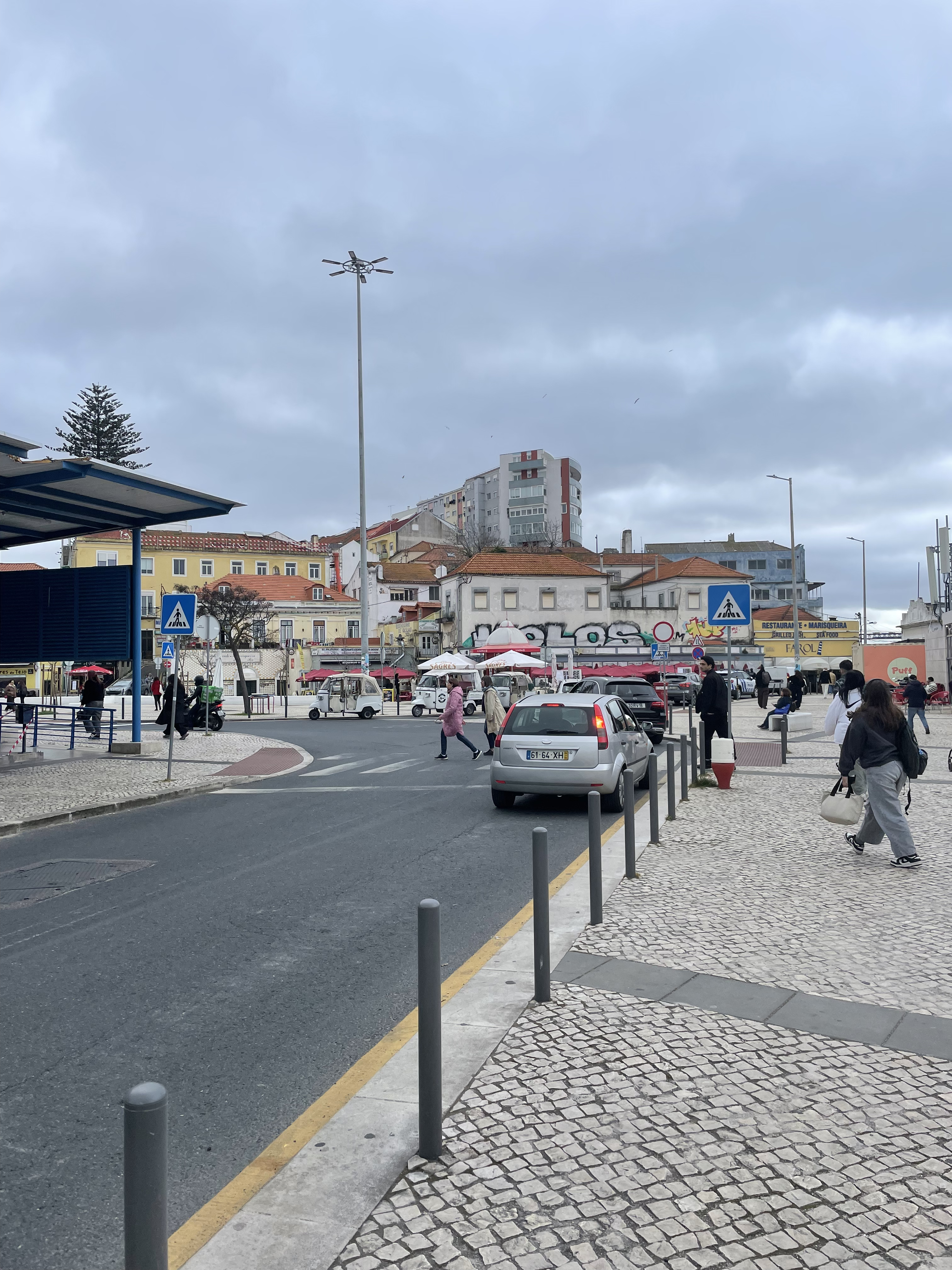
Public transportation is common, and many people rely on it instead of driving, which uses fewer resources and reduces pollution compared to everyone driving cars. The nearest metro station is about a 12-minute walk from where I’m staying, and I’ve even run into my professors on the metro over the past couple of days, which shows it is a normal part of daily life here. During a recent trip across the Tagus River, my classmates and I also took a short ferry ride and used buses and trains to get around on the other side, which showed me how many different transportation options people use in the Lisbon area. Portugal also invests in renewable energy like wind and solar. Local markets offer fresh, seasonal food with less packaging, which reduces waste and supports local producers. These habits are part of daily life rather than special environmental actions.
Experiencing these systems makes me think about sustainability in a practical way. Even small actions, like using public transit, recycling, or buying local food, help keep cities cleaner, reduce waste, and use resources more responsibly. It’s not about perfection, but small choices can have a meaningful impact. What everyday habits in your community could make a difference for the environment? Observing another country shows how personal action, culture, and policy can work together to protect resources for the future.