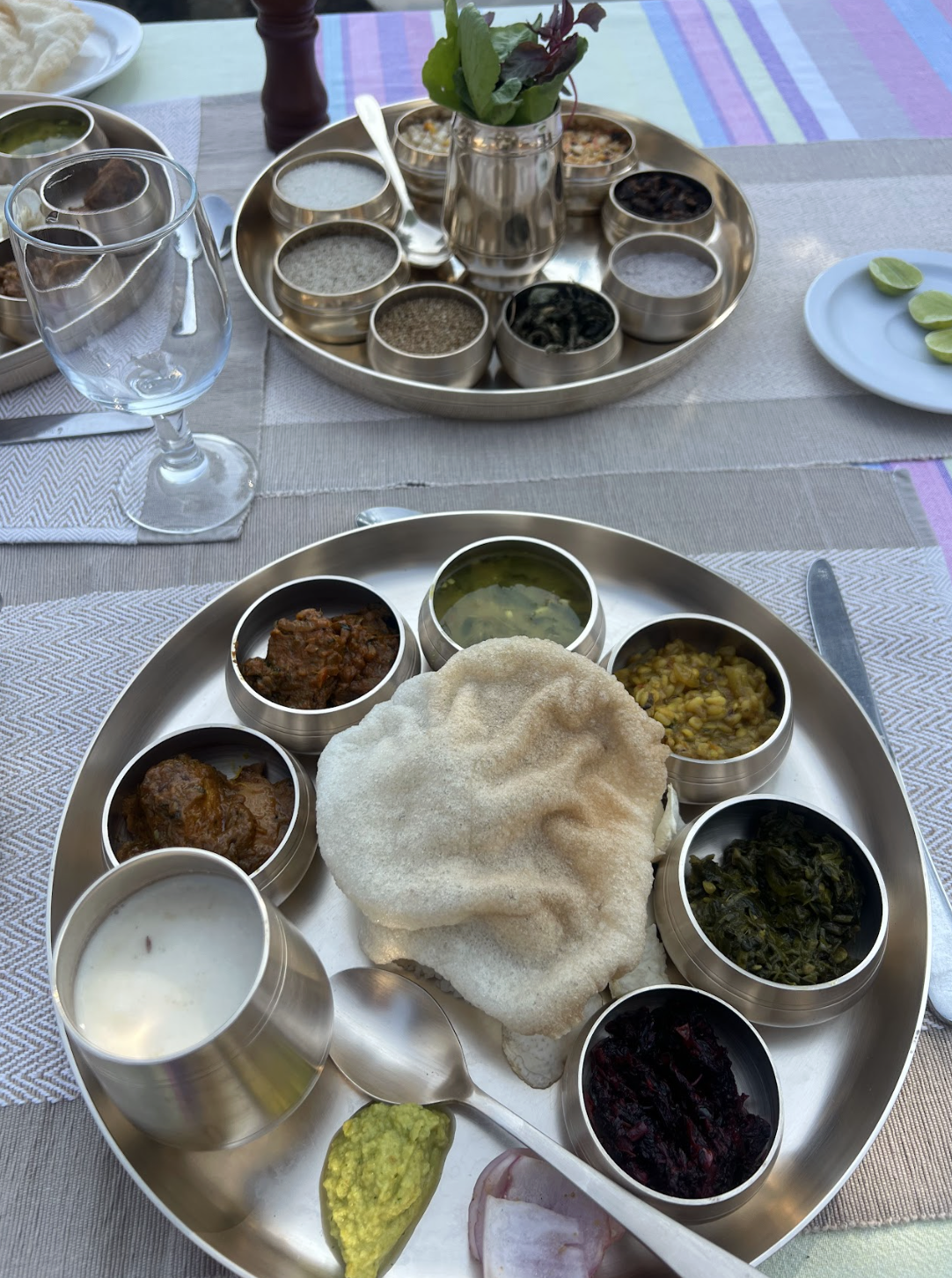
Grinding spices by hand or using fresh herbs is common, and meals take longer to prepare because there are so many more components. Flatbreads are cooked over open flames or hot griddles, and slow-cooked dishes allow flavors to deepen. Compared to Ladakh’s minimal techniques, Madhya Pradesh’s cooking shows how time, heat, and spice are used creatively when resources are more abundant.
The food in both regions is directly shaped by their environments. In Ladakh, the cold climate and high altitude limit what can be grown, so barley becomes a staple because it survives harsh conditions. Meat, noodles, and soups provide the calories needed to stay warm, and preserved foods help people endure long winters when fresh produce is unavailable. In Madhya Pradesh, the warmer climate and fertile land support farming and foraging. Rice, wheat, lentils, vegetables, and spices thrive here, and forest areas provide ingredients that appear in local dishes. Seasonal eating is common, with meals changing based on harvest cycles and rainfall.