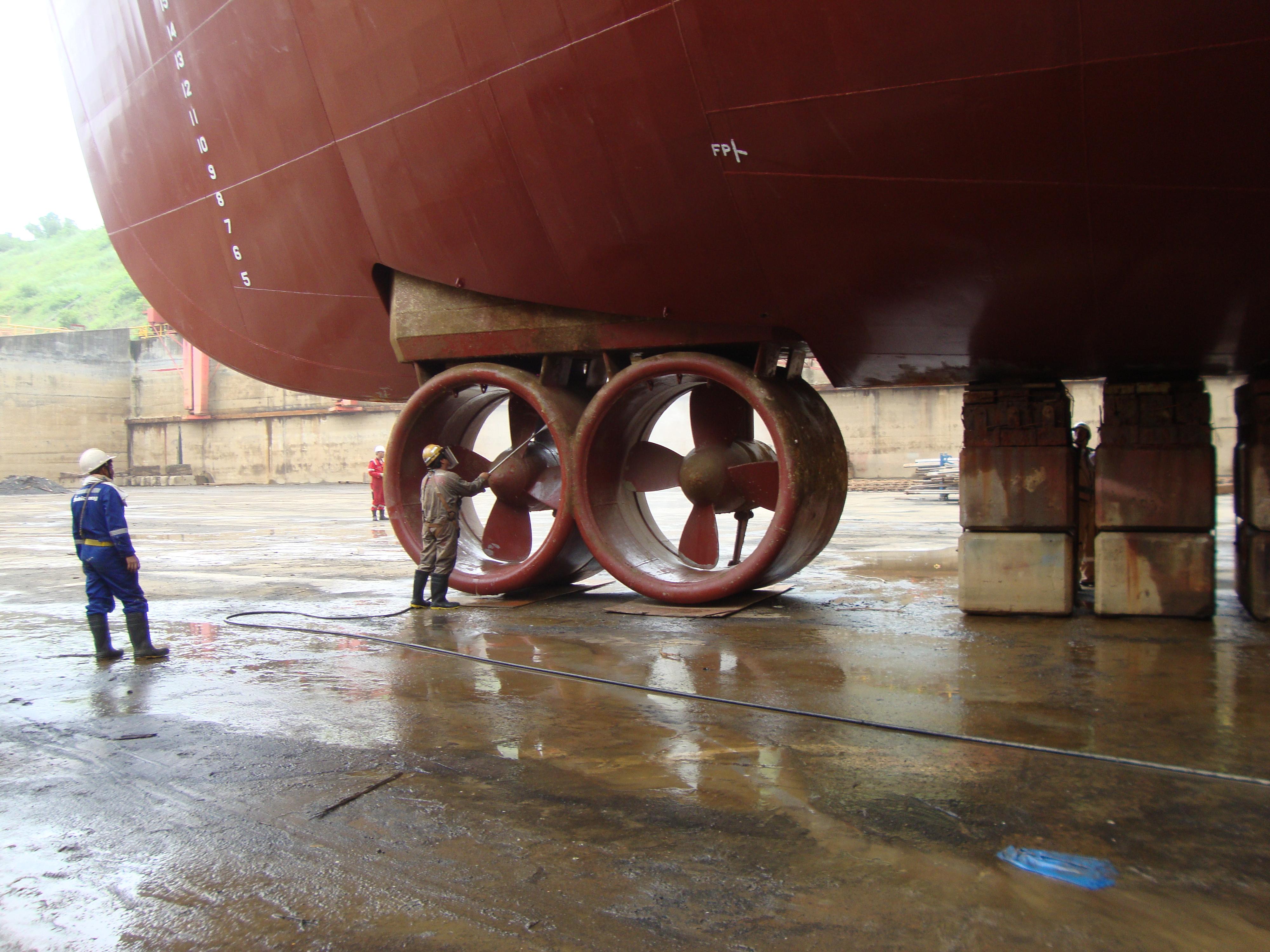
First, instead of an anchor, we need to lower the thrusters engaging our Dynamic Positioning (DP) system. This is comprised of five thruster pods, each equipped with two propellers, lowering below the ship, along with two fixed-mounted thrusters and the main propellers on the back, for a grand total of 14 propellers! They all work together to hold our position within a designated distance of movement, which is 5% of our water depth. It is incredibly important we remain within that safe circle of depth because we will soon have 3,500 meters of drilling pipe hanging from our vessel and connected to the sea floor. The DP system is how we control the ship, instead of using the steering wheel.
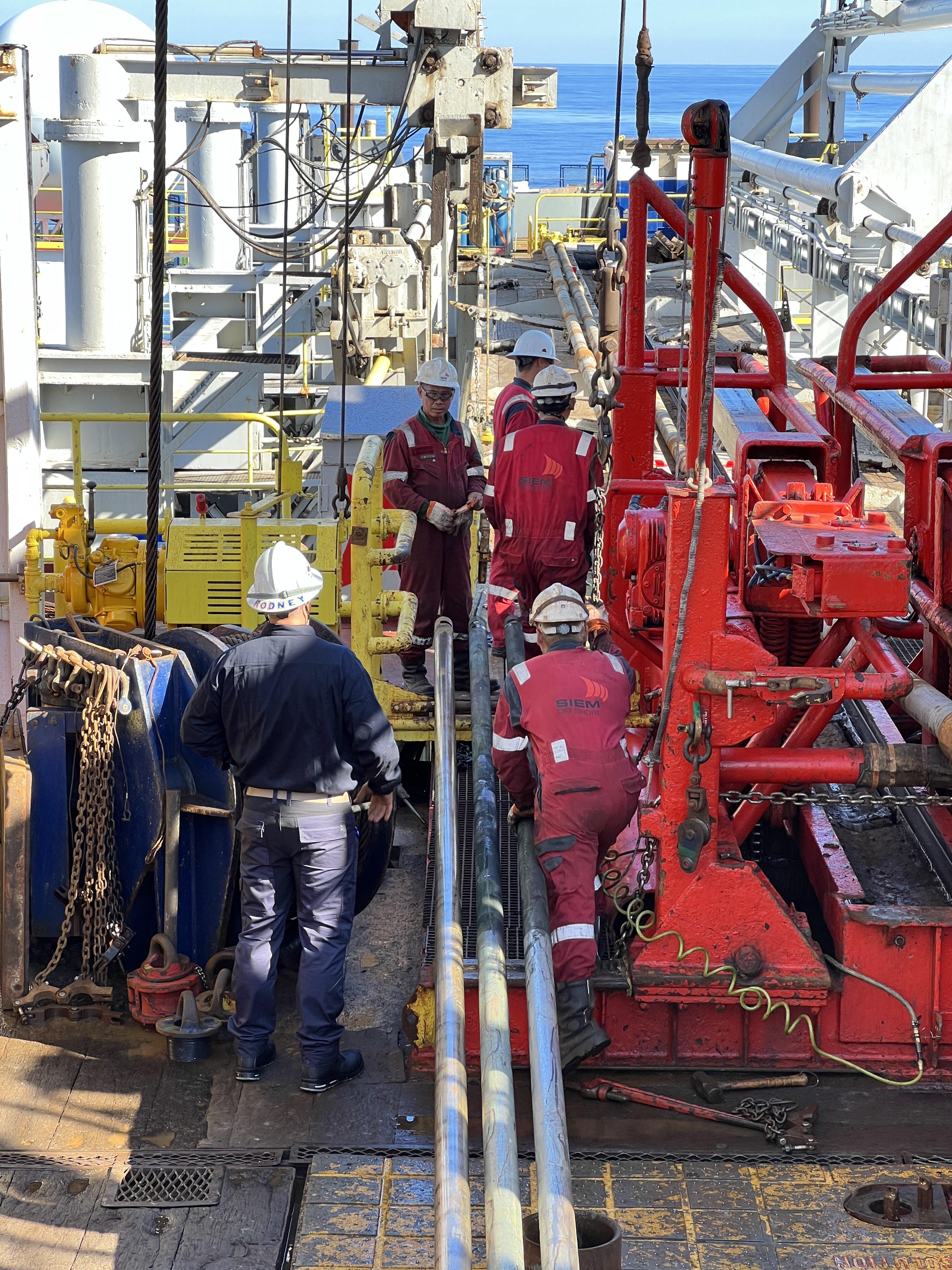
Meanwhile, the drilling platform crew, called the rig crew, is preparing all the pipe and bottom hole assembly parts that make up the drill string. Our drill string is made up of drill pipe stands or sections that are 30 meters long. Thus, if we are drilling into 3500 meters of water, we need at least 116 pipe stands to reach the ocean floor.
The rig crew also attaches a drill bit that is designed to drill into either soft sediment or hard rock, which is decided based on the previous evidence discussed in the first paragraph. If there's a lot of sediment, then we start with the sediment drill bit first. All of the drill string is built once the DP system is fully in place. It takes 12 hours to build the full drill string. If we are drilling sediment, we can get a new core almost every 30 minutes. However, if it is hard rock, then this process can range between 2 to 8 hours (the length of time depends on how hard it is to cut the rock with the drill bit).