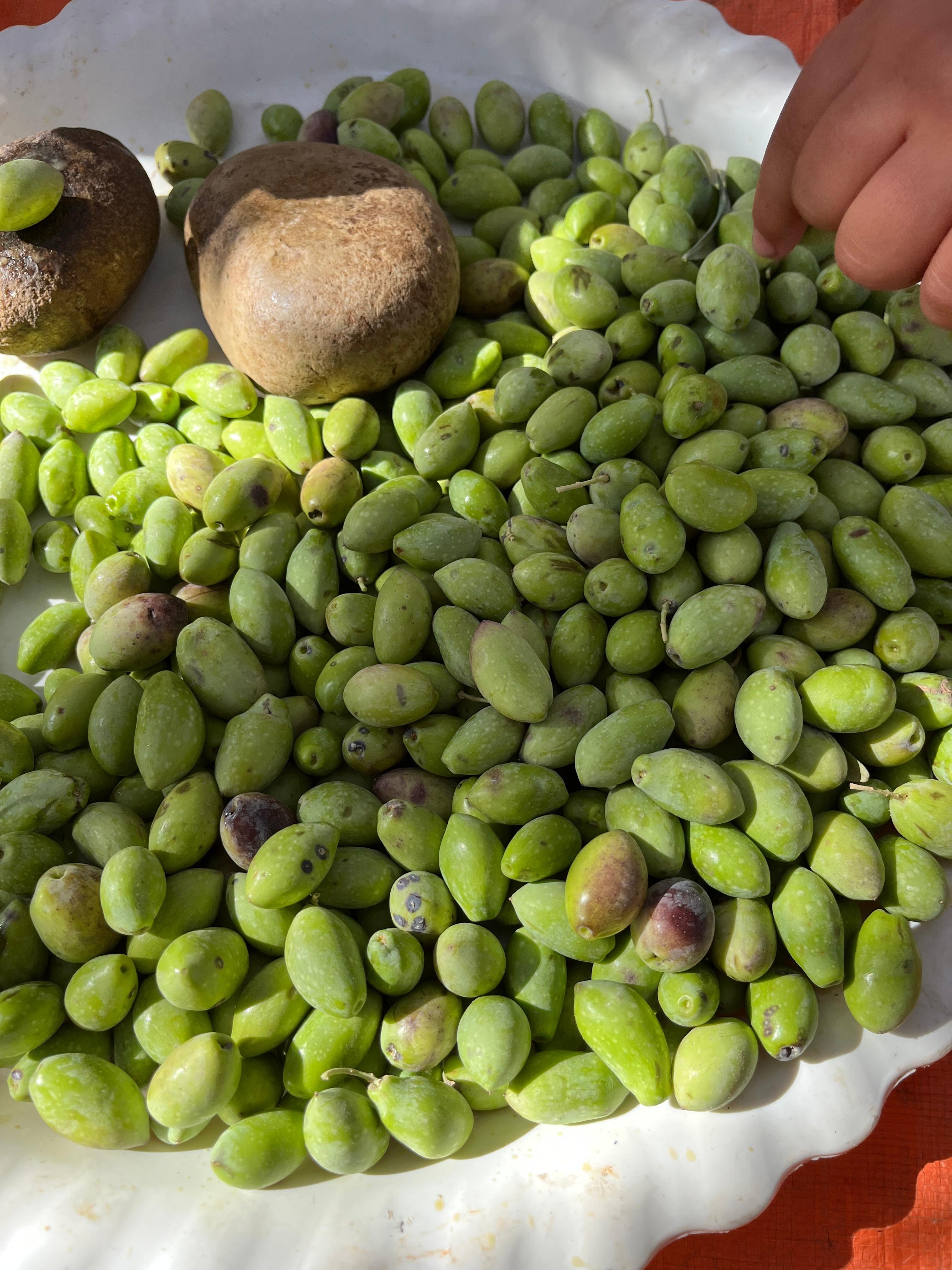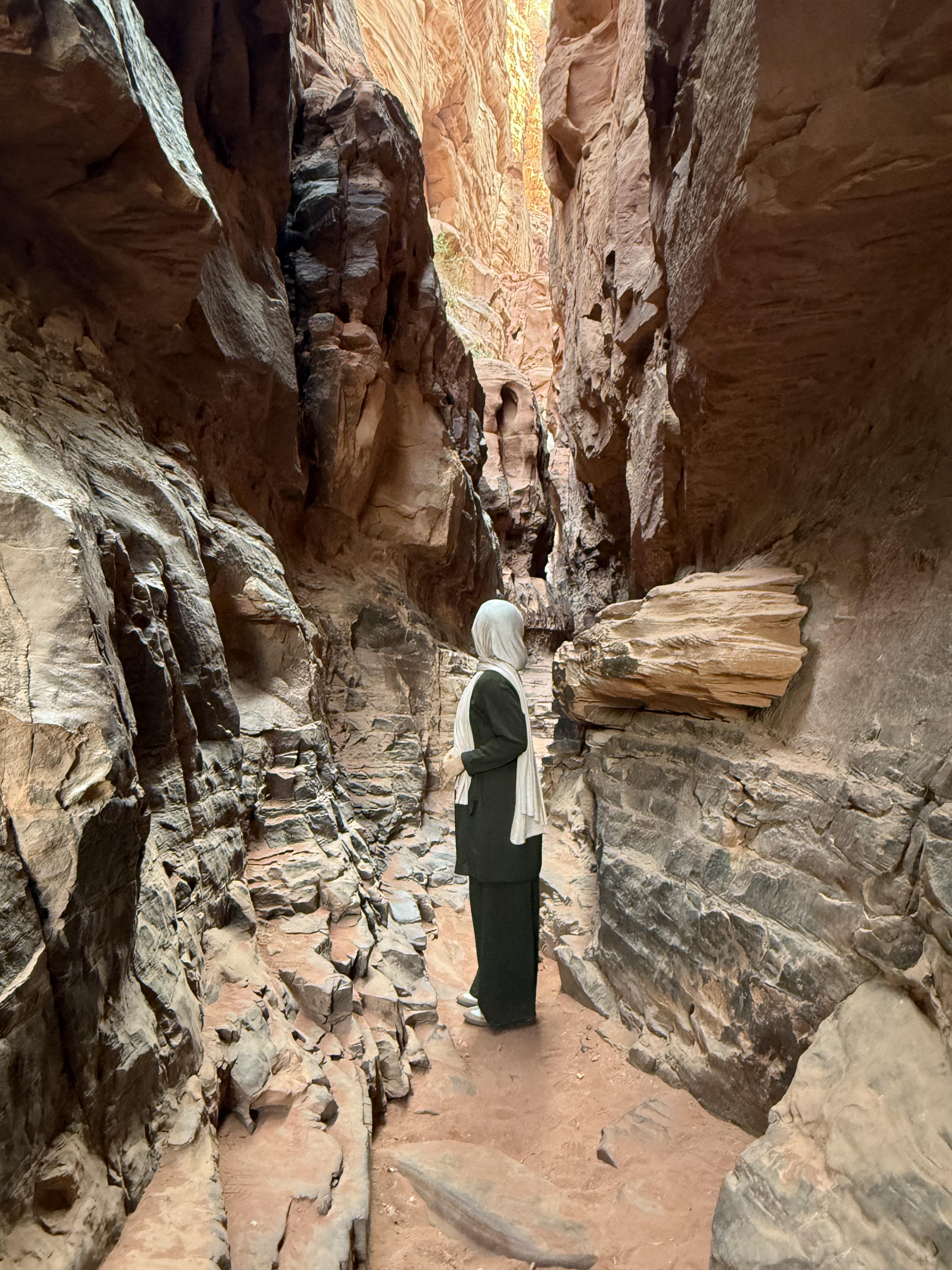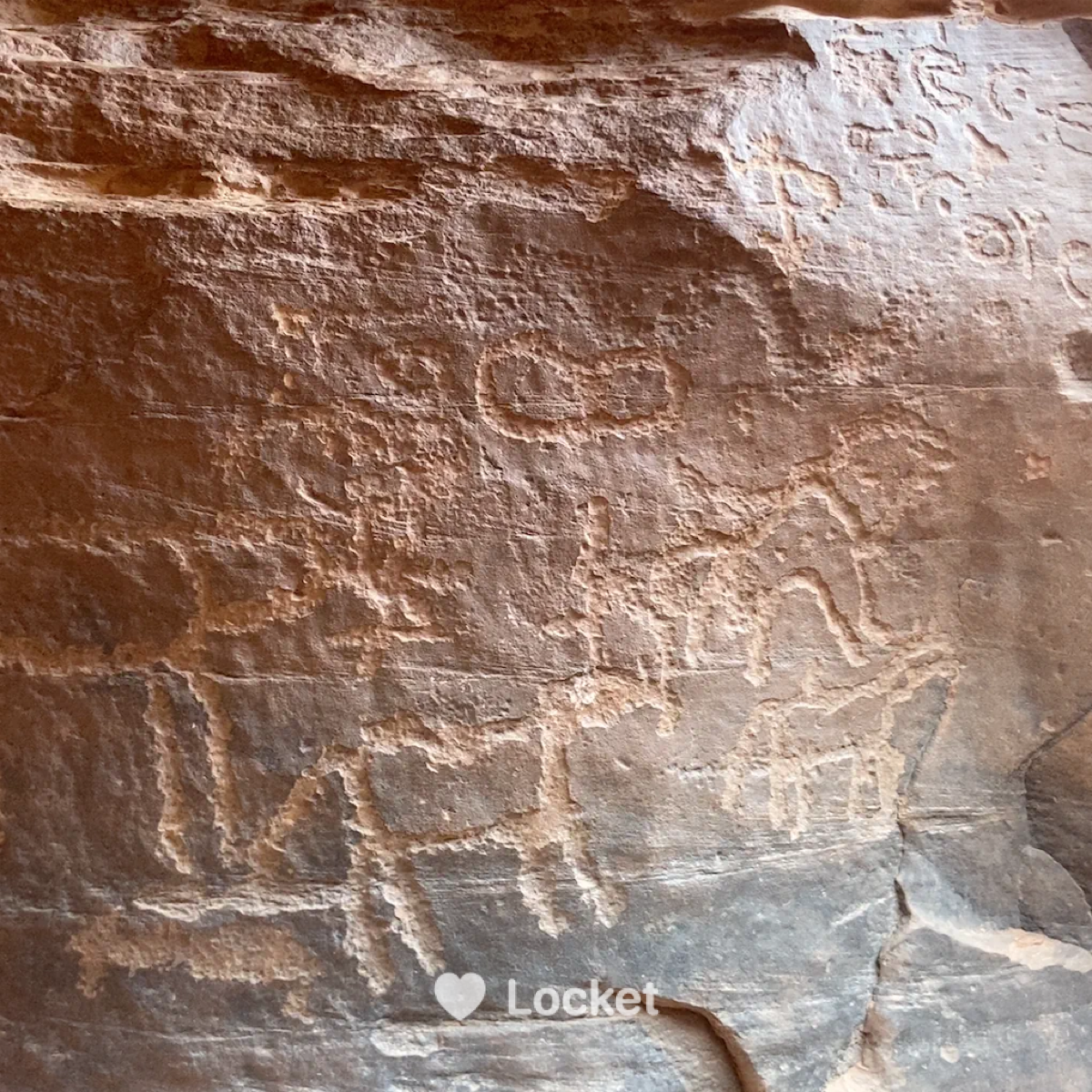
Olive trees have existed for thousands of years in the Levant, making the harvesting season an anticipated, culturally and historically significant time of year. It is observed through families gathering under olive trees with their young ones, singing and dancing as they gently pick from the branches. Some olives, particularly ones that are bright green in color, are pickled while others are pressed into fresh olive oil. In comparison, the desert valleys in southern Jordan called us to engage with the natural world in a different way. We traveled to Wadi Rum and hiked up rocky mountains, walked in valleys as mountains towered over us and slid down steep hills of bright orange sand. Along the adventure, we spotted petroglyphs and Arabic inscriptions in the sandstone rocks, which represent the presence of ancient Thamudic and Nabatean influences as well as that of Islamic civilizations in the region. We concluded the day with a freshly brewed cup of tea as we faced the setting sun. These experiences highlighted unique characteristics of the natural environment and illuminated their history.
Food Traditions
The natural environment is not just a key factor of Jordan’s rich environmental and historical diversity, but it’s culinary diversity as well. The family that generously hosted us in Ajloun prepared an incredibly tasty lunch spread prior to beginning the harvest. We were treated to an array of vegetable based dishes and dips, each complemented with freshly pressed olive oil that brought out an aromatic and rich flavor. It was, without a doubt, the best meal I had in Jordan! Each dish is enjoyed with fresh taboon bread, which is prepared by placing flattened dough on hot stones in a rounded clay oven.