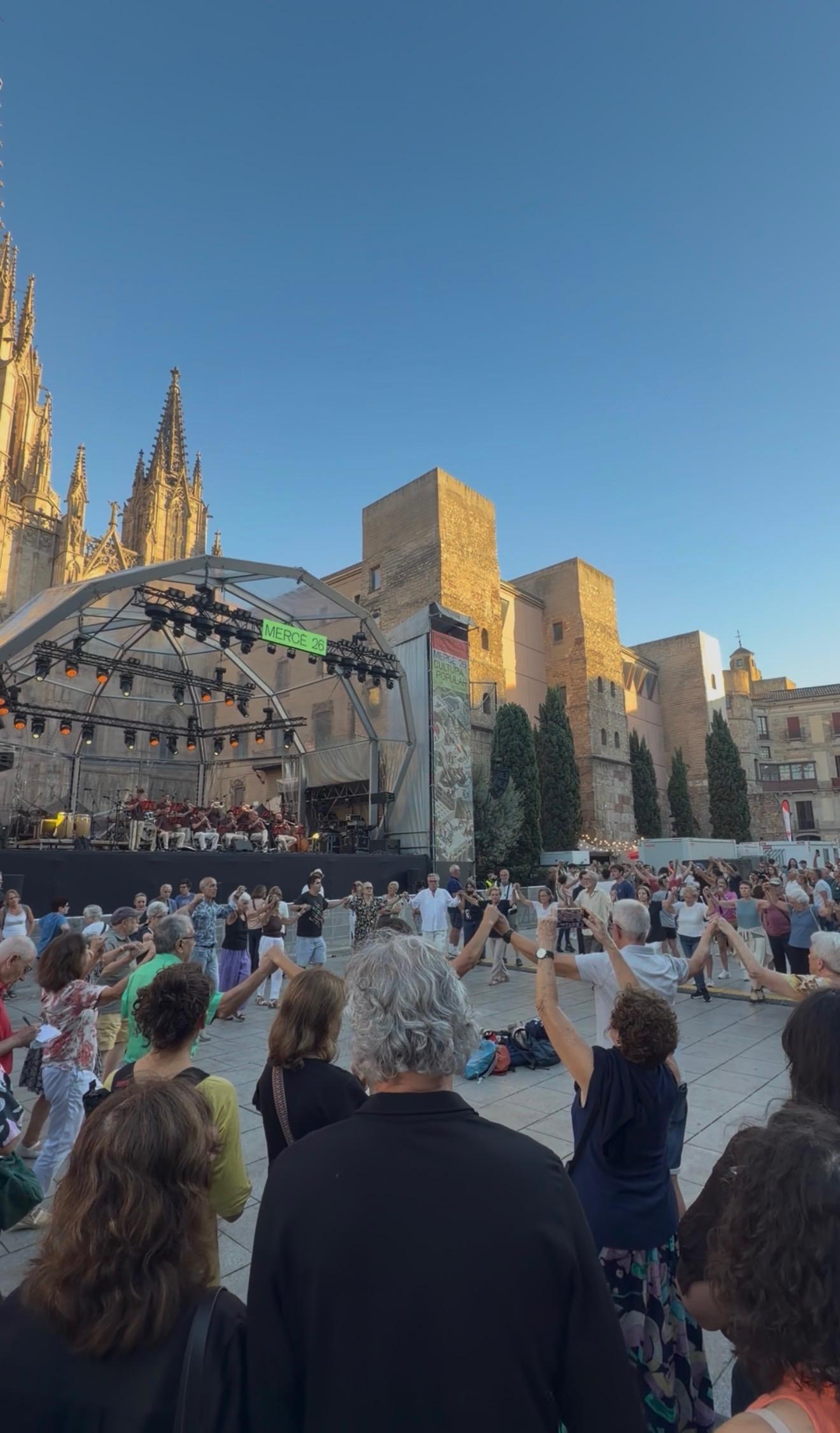
Truthfully, it seemed like the elderly community was leadingt the charge, which was an amazing reminder of the knowledge and traditions that we can learn from previous generations. It is a beautiful way for people to celebrate culture together, and I was honored to have been included in this dance. It is pure joy being able to participate in something as meaningful for the community.
La Sardana is much more than just a dance. It represents unity and Catalan identity. By holding hands and dancing together in a circle, people demonstrate that everyone is welcome and that they are all part of the same community. The tradition has been passed down through generations and helps preserve Catalan history and cultural identity, especially with the political history of Catalunya wanting to be independent from Spain. During La Mercè, Barcelona’s biggest annual festival, the dance brings together locals and visitors to celebrate the city’s traditions. It also gives younger generations an opportunity to learn about their heritage and continue practicing traditions that have existed for generations before them.
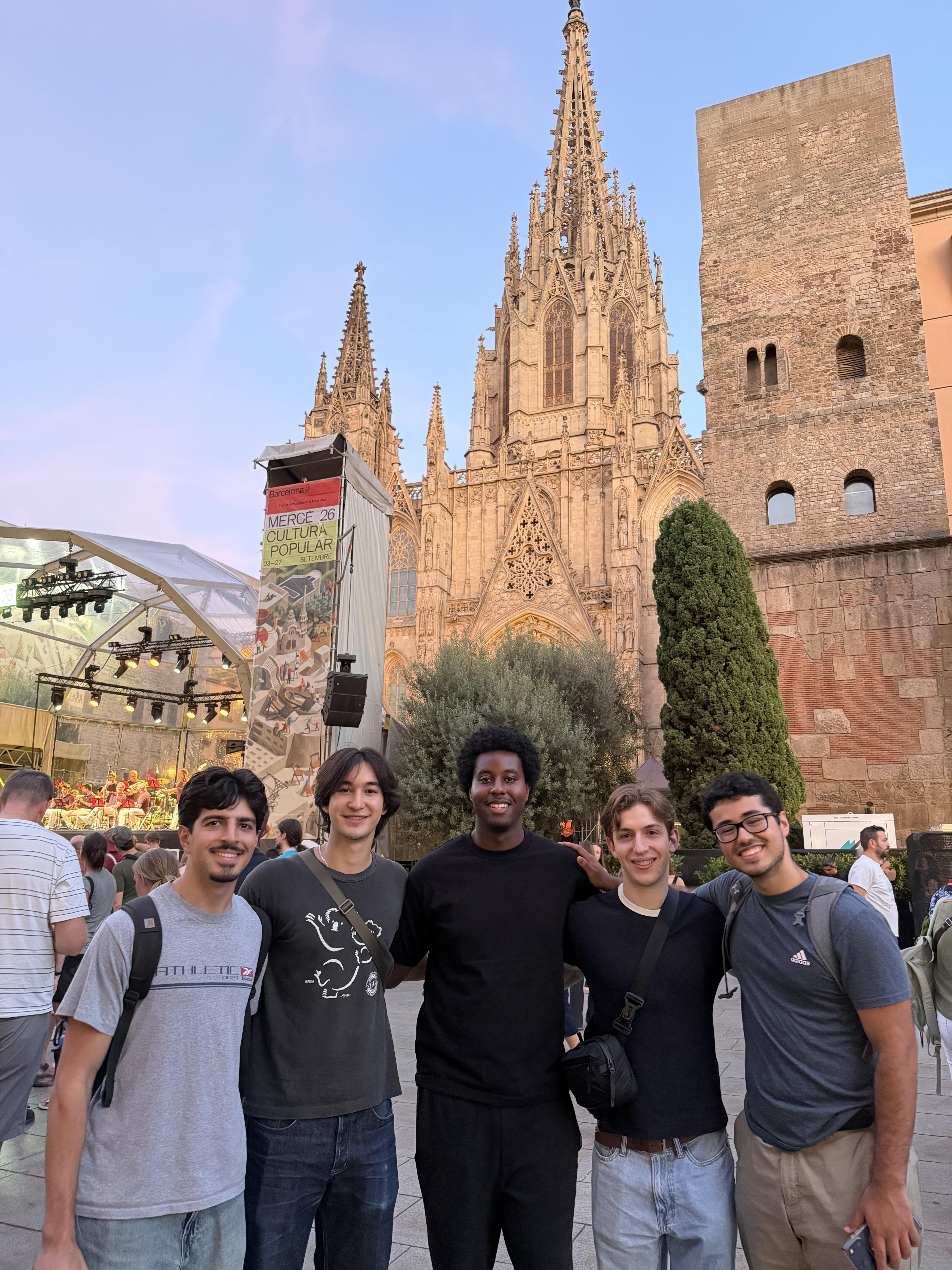
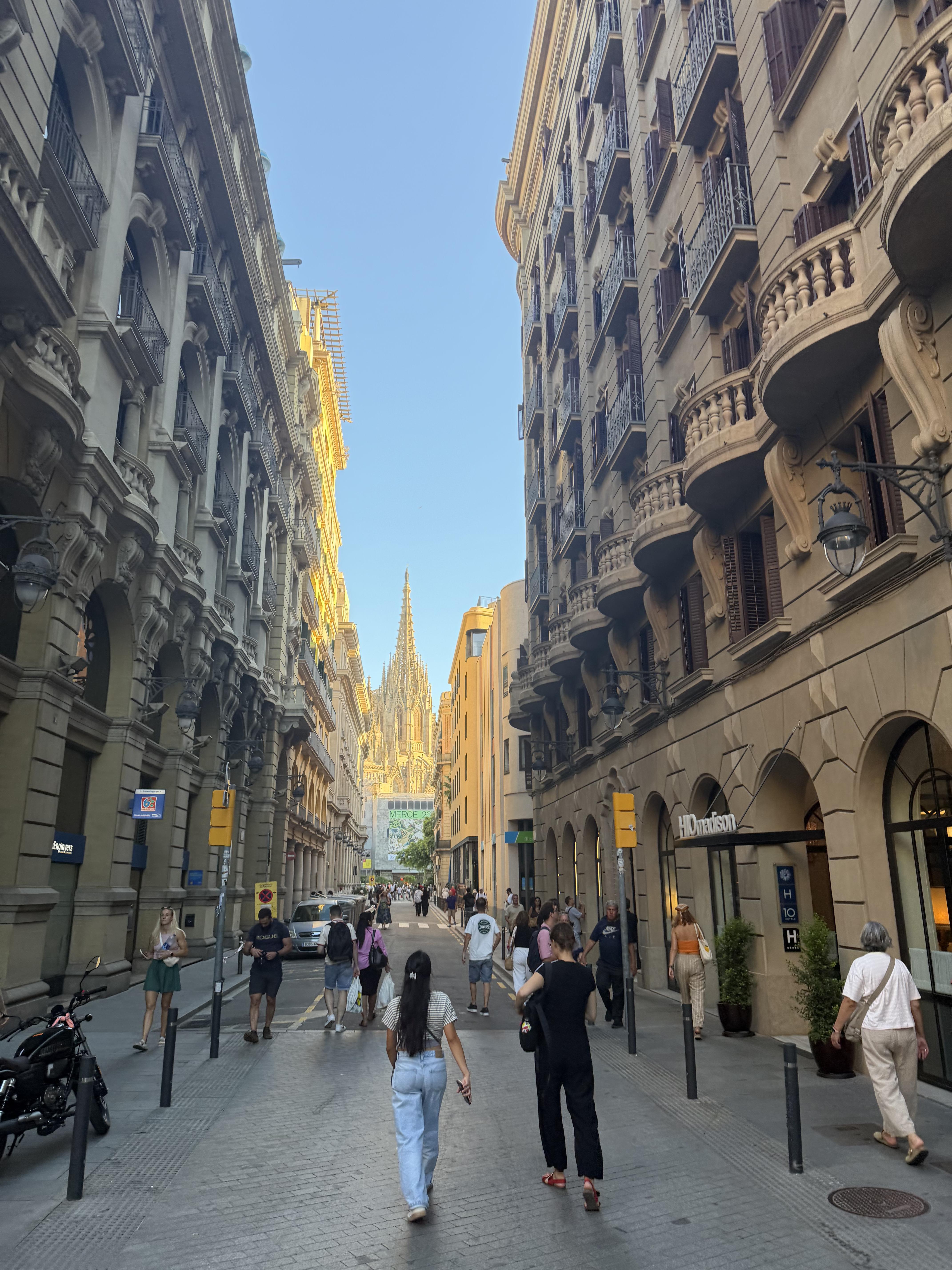
Yes, La Sardana is connected to its environment, specifically through the public spaces where it takes place. In Barcelona, the dance is often performed in historic squares, including the square in front of the Barcelona Cathedral. These open spaces allow large groups of people to gather and celebrate together. The architecture of the Gothic Quarter also creates a meaningful setting for the tradition because it connects modern celebrations with the city’s history.