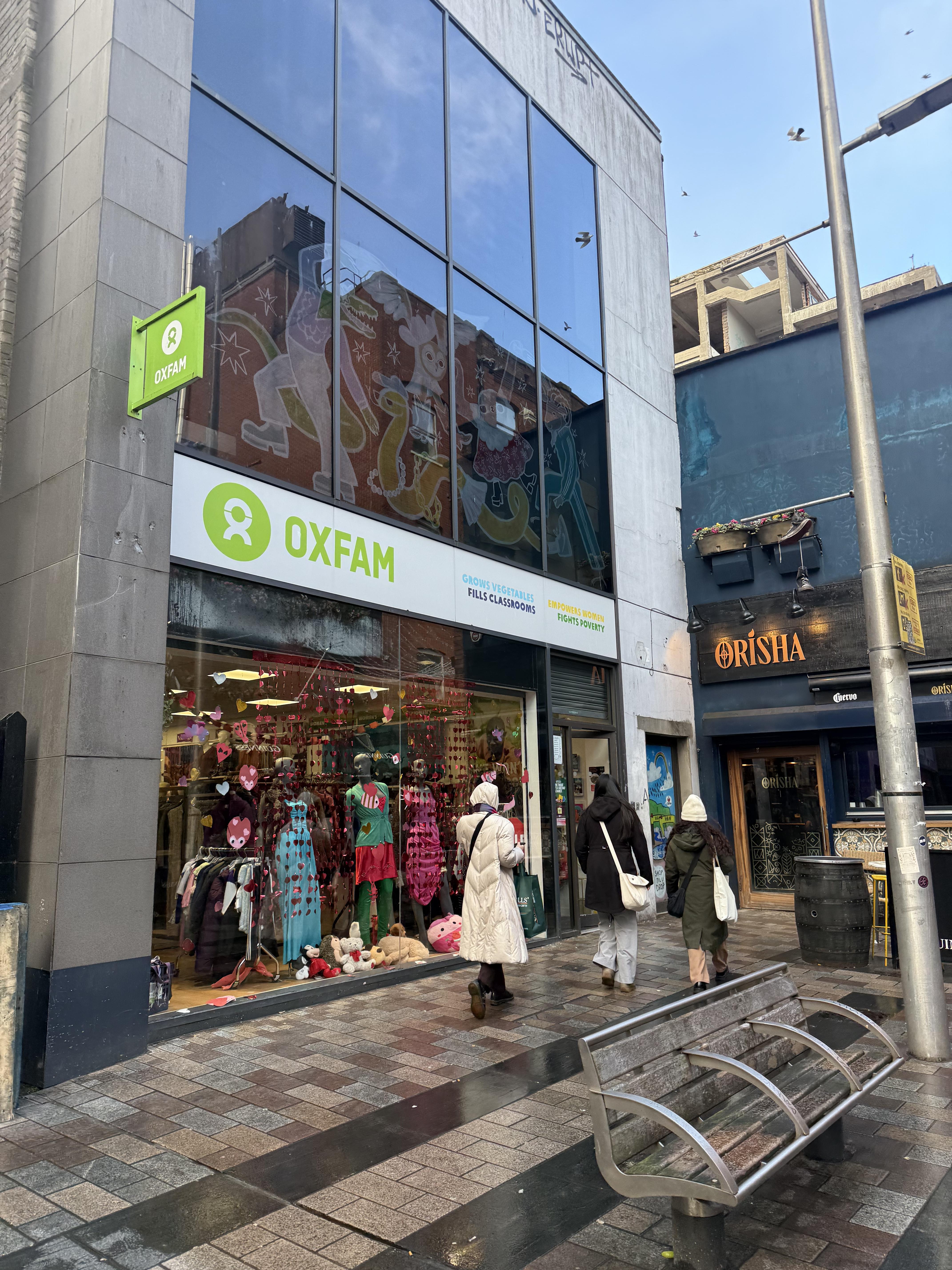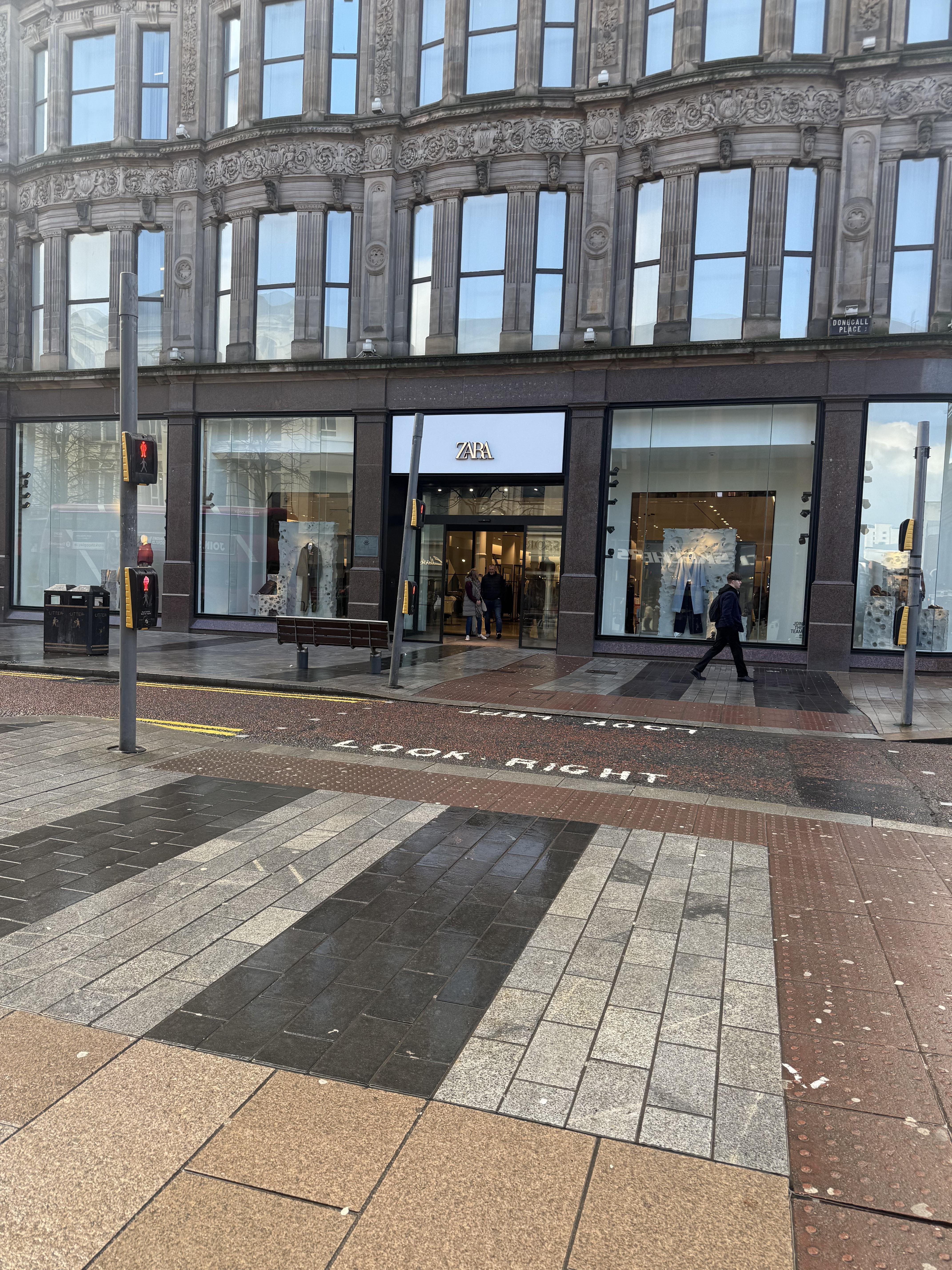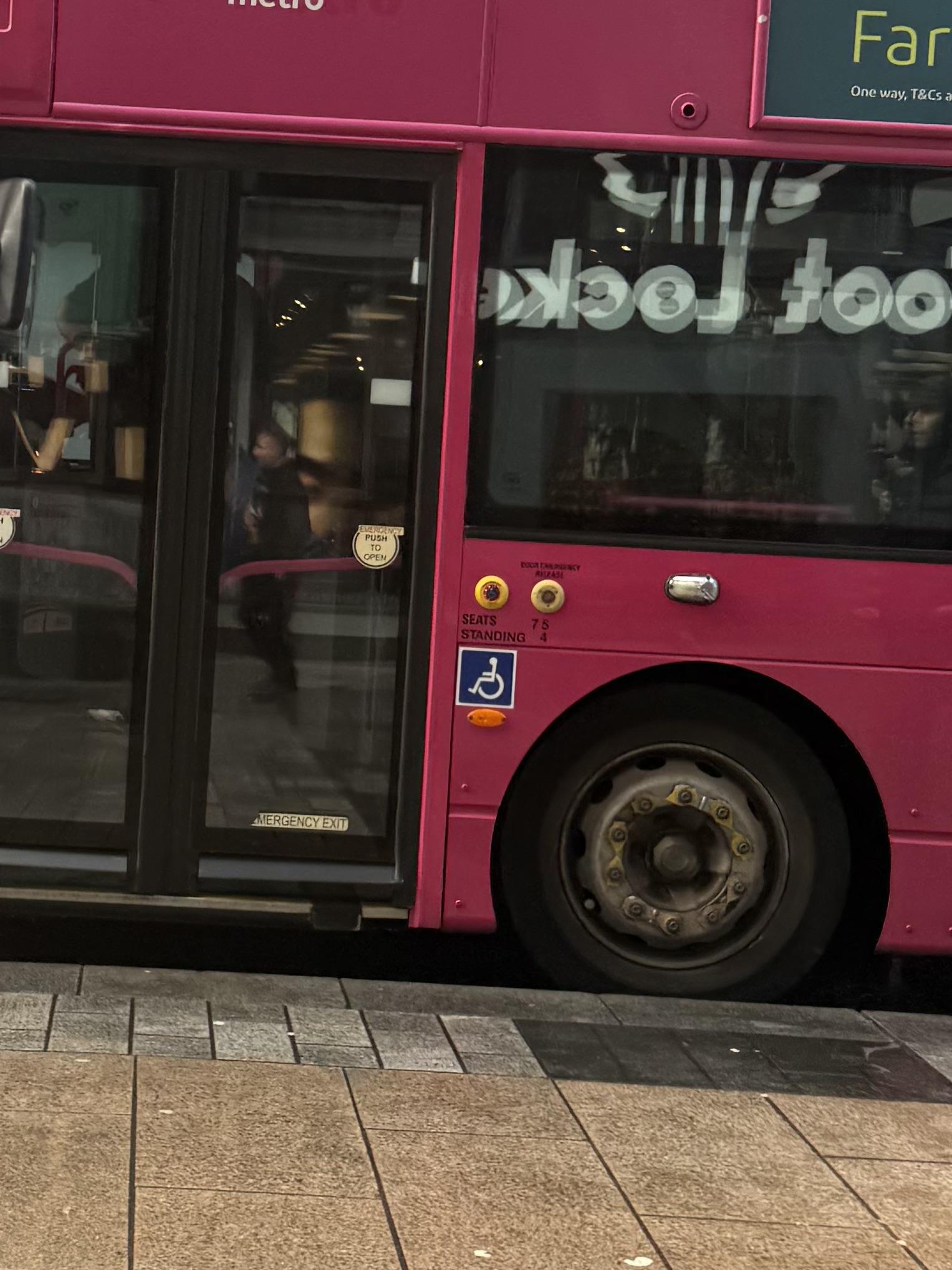
In one of my classes, we learned about something called "access to the city," which is a way of studying how a city and its parts, like public restrooms and buses, are designed and can best accommodate people in all kinds of situations. Some groups that may struggle if a city isn't made with their needs in mind are those with mobility needs, like wheelchairs, people with children, especially in strollers and people without cars. I took a walk around Belfast to show how the city makes small changes to include everyone and how charity shops help people support each other.
I learned that walkable cities can still be hard to get around for people who use wheelchairs and other mobility aids, like canes, when cities are not planned with care. Also, for people without cars or who cannot take public transportation, important places like post offices and job centers can be hard to reach in areas designed mainly for cars.
Different groups of people in every community have many specific needs, and it works best when a city is planned with the most vulnerable groups in mind so everyone is included. In my class, we talked about how parents may have specific needs, like access to public restrooms and buses that can fit strollers. Some people’s needs can cross a few categories.