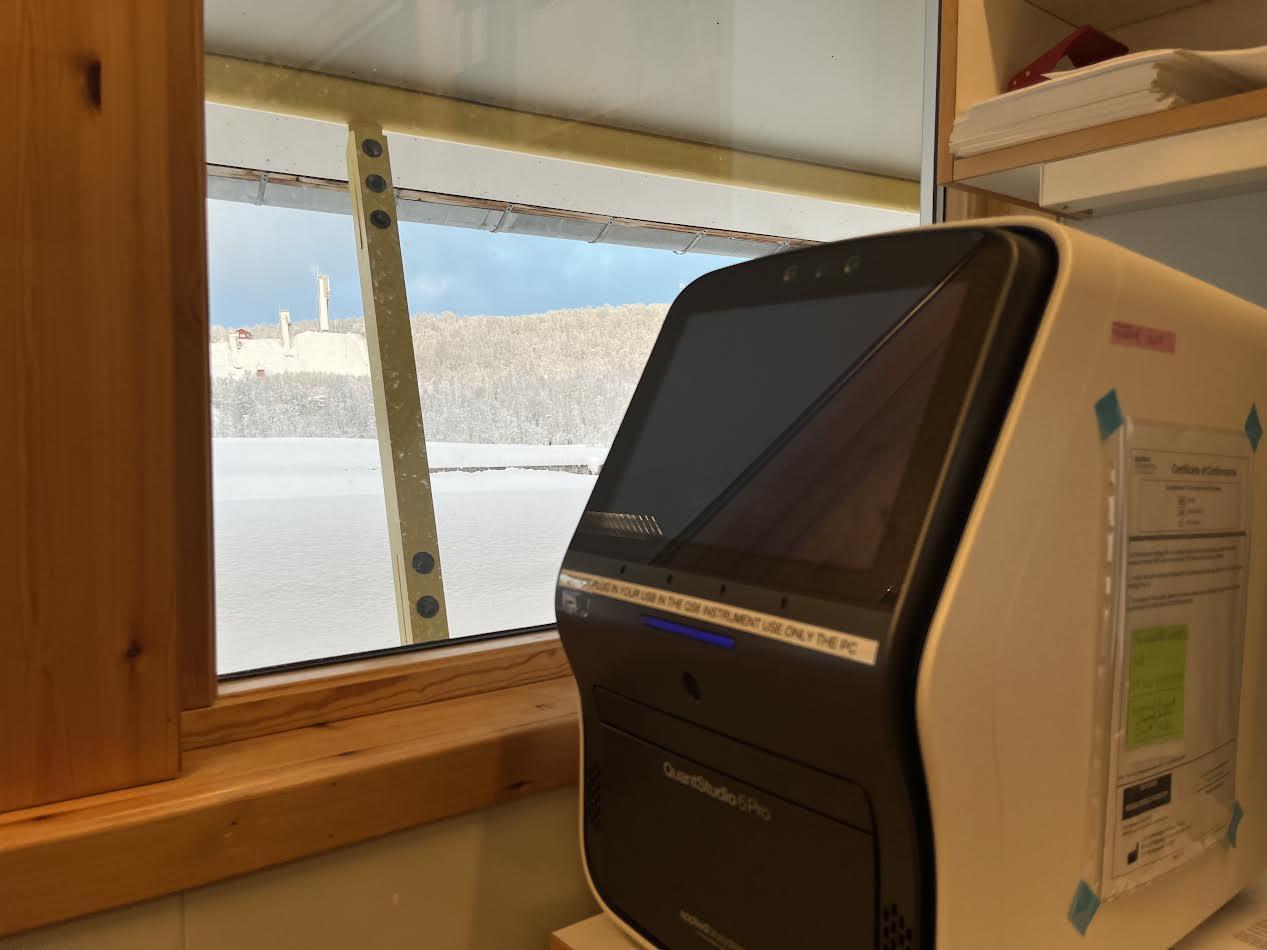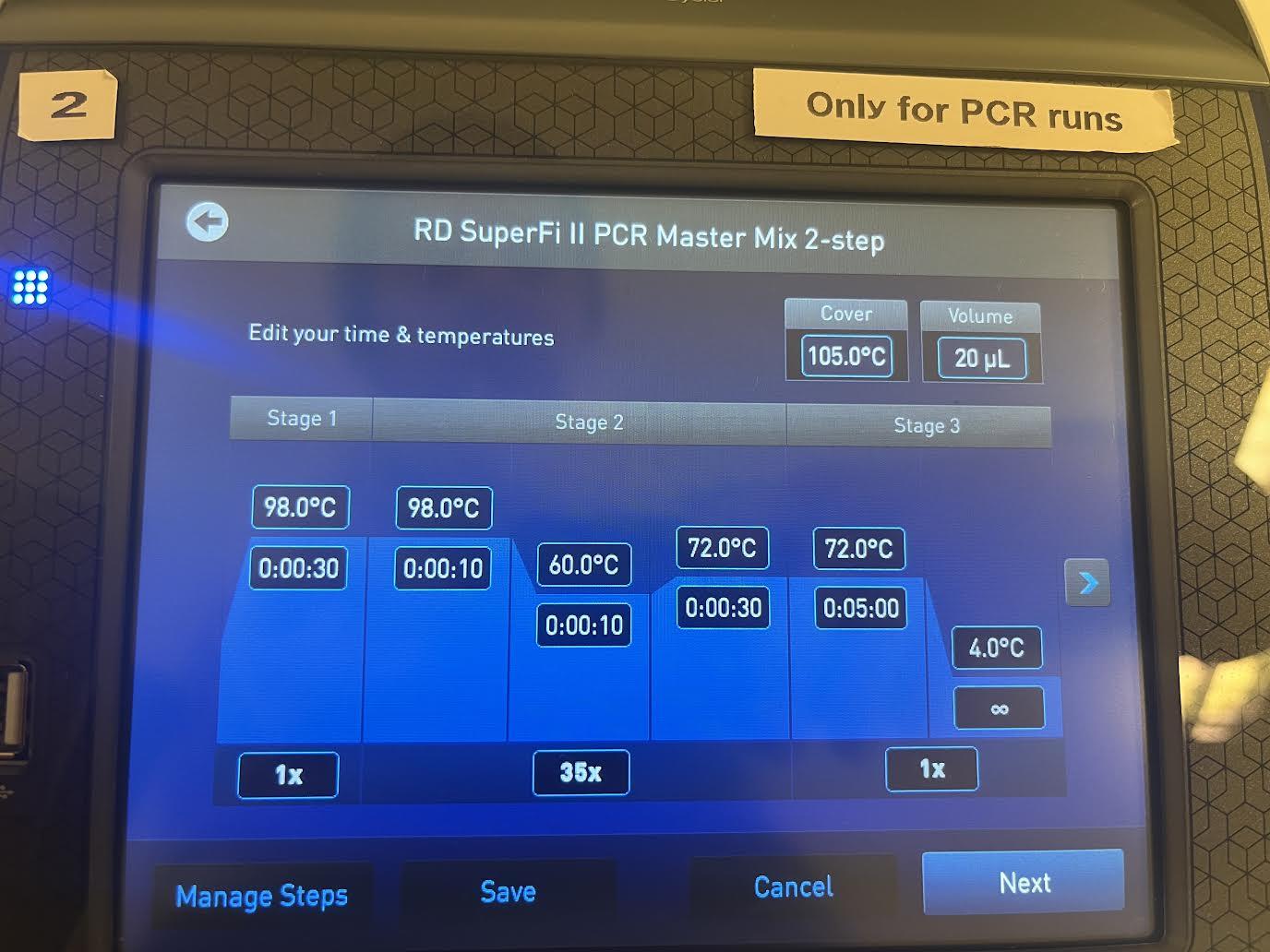
With my project, we want to take a step further and tell you if a shark from a specific family is there. In other words, if you were a shark, I would want to be able to tell you apart from the unrelated classmate sitting next to you. Why do you think this could be an exciting tool for the scientific community?
My second project is creating a new assay measuring the telomere length of the sharks to age them more accurately. Currently, the only two methods we have to inform us of how old a Greenland shark are: (1) measured length of the shark and (2) radiocarbon dating of the eye nucleus. One issue with radiocarbon dating is that the method has quite a large confidence interval of +/- 120 years. Is the shark 80 years old, 200 years old, or 320 years old? This is a fundamental question to ask for the conservation of a species. Does a female shark have another 120 years of breeding left? Can we validate that a shark reaches maturity at 150 years old and can begin having pups? Can you think of other reasons why having an accurate, cheap, and rapid aging technique is vital for species conservation?
I hope you see how passionate I am about the biodiversity on our planet. After living centuries in the ocean, the threatened Greenland shark does not deserve the fate of being bycatch in our fishing nets. Every day this happens, and these run-ins with humans are expected to increase alongside the pressures to fish in a warming and bountiful Arctic. I hope the DNA tools I create in Norway help in some way. I sincerely look forward to connecting with each student in Mr. Collin's class. I am always learning right beside you.