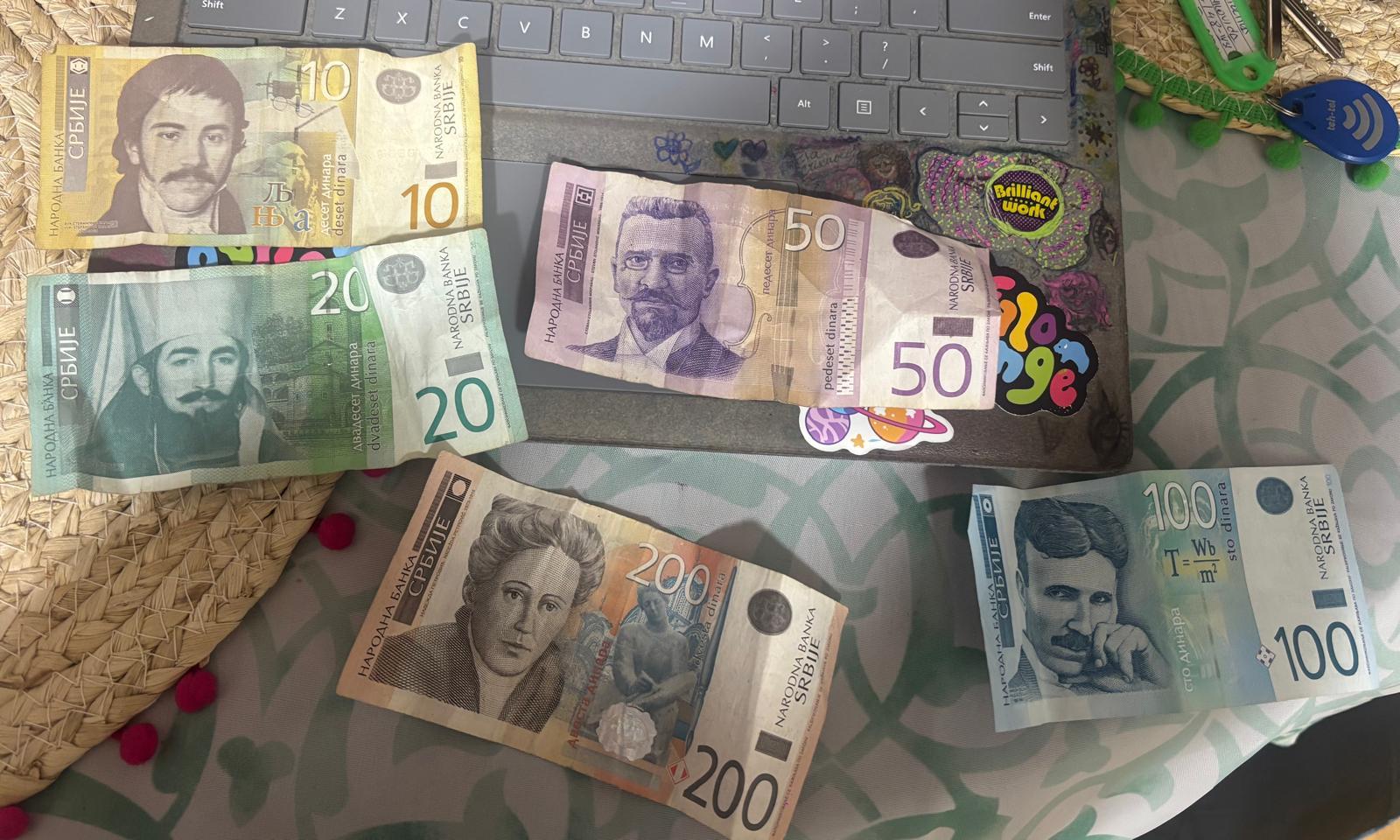
The banknotes are very colorful, and each features an important figure from Serbian history or culture. One figure Americans may recognize is Nikola Tesla, who appears on the 100-dinar bill. Tesla was a Serbian-American inventor and electrical engineer best known for his groundbreaking work on alternating-current (AC) electricity, which helped make it possible to transmit electricity efficiently over long distances. The 100-dinar bill is worth slightly less than one U.S. dollar.
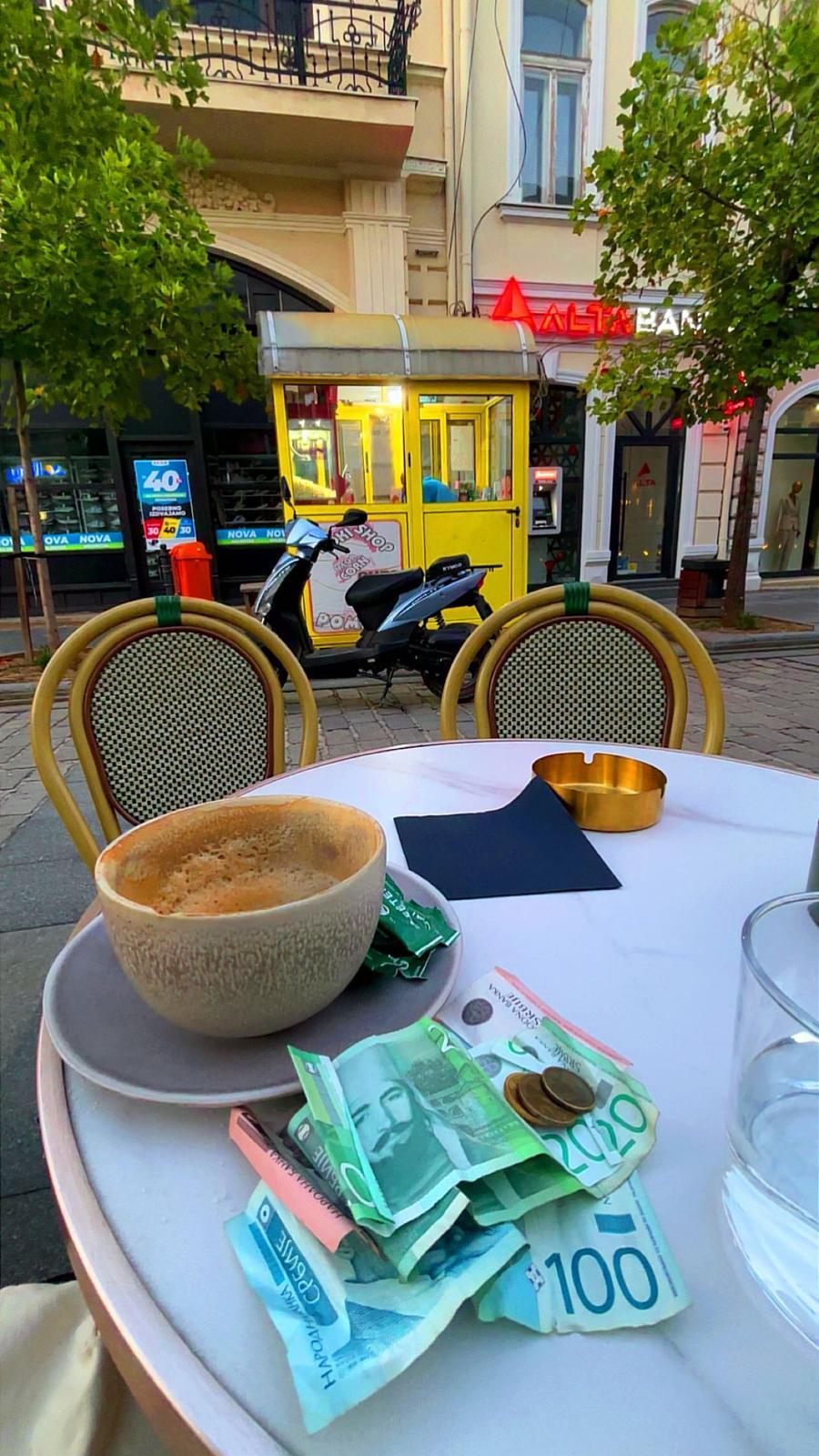
Serbian coins are also in circulation, although I rarely come across them. I have, however, possessed both a 1-dinar and a 5-dinar coin. Unlike American currency, Serbian money often has much higher numbers printed on it, even though each unit is worth considerably less. As a quick rule of thumb, dividing a price in dinars by 100 will give you a rough estimate of its cost in U.S. dollars, although the actual exchange rate varies.
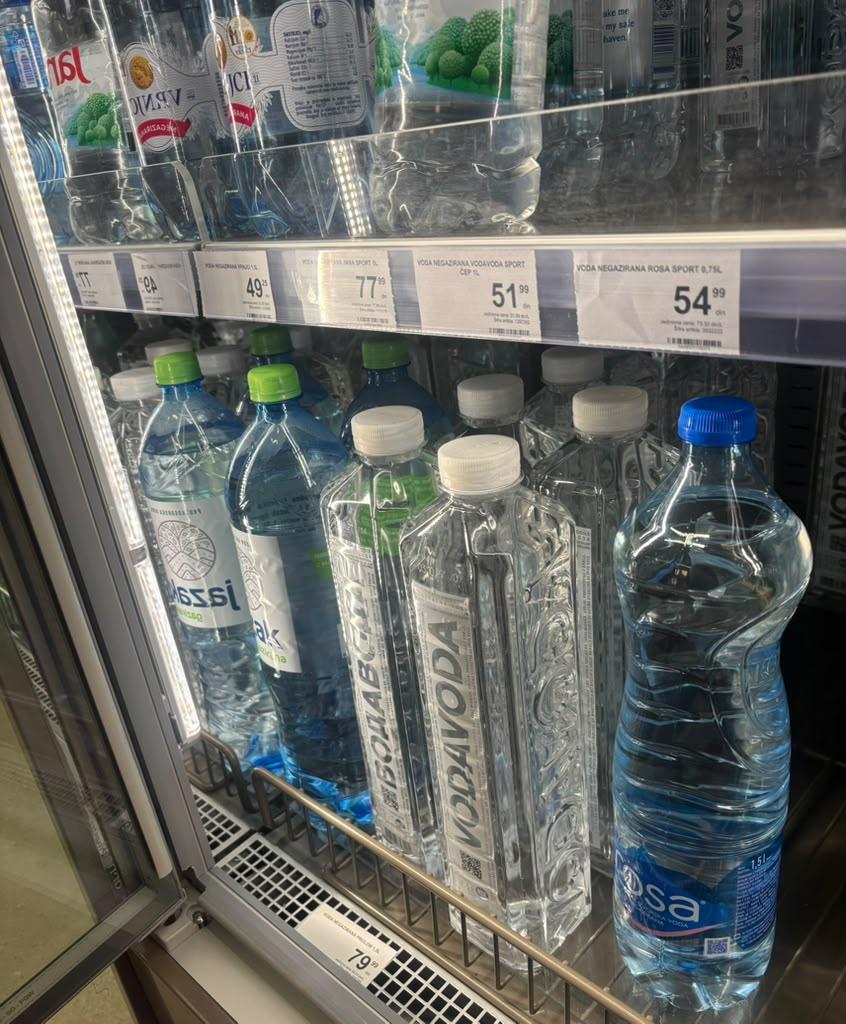
The price of bottled water varies depending on where you shop. I recently visited Maxi, a Serbian grocery-store chain, where I purchased a 1.5-liter bottle of water for 34.99 RSD, or about 33 U.S. cents. However, my closest grocery store, Univerexport, is only about a five-minute walk from my apartment. There, I typically buy Rosa still water, which costs 54.99 RSD, or approximately 57 U.S. cents, for a 1.5-liter bottle.