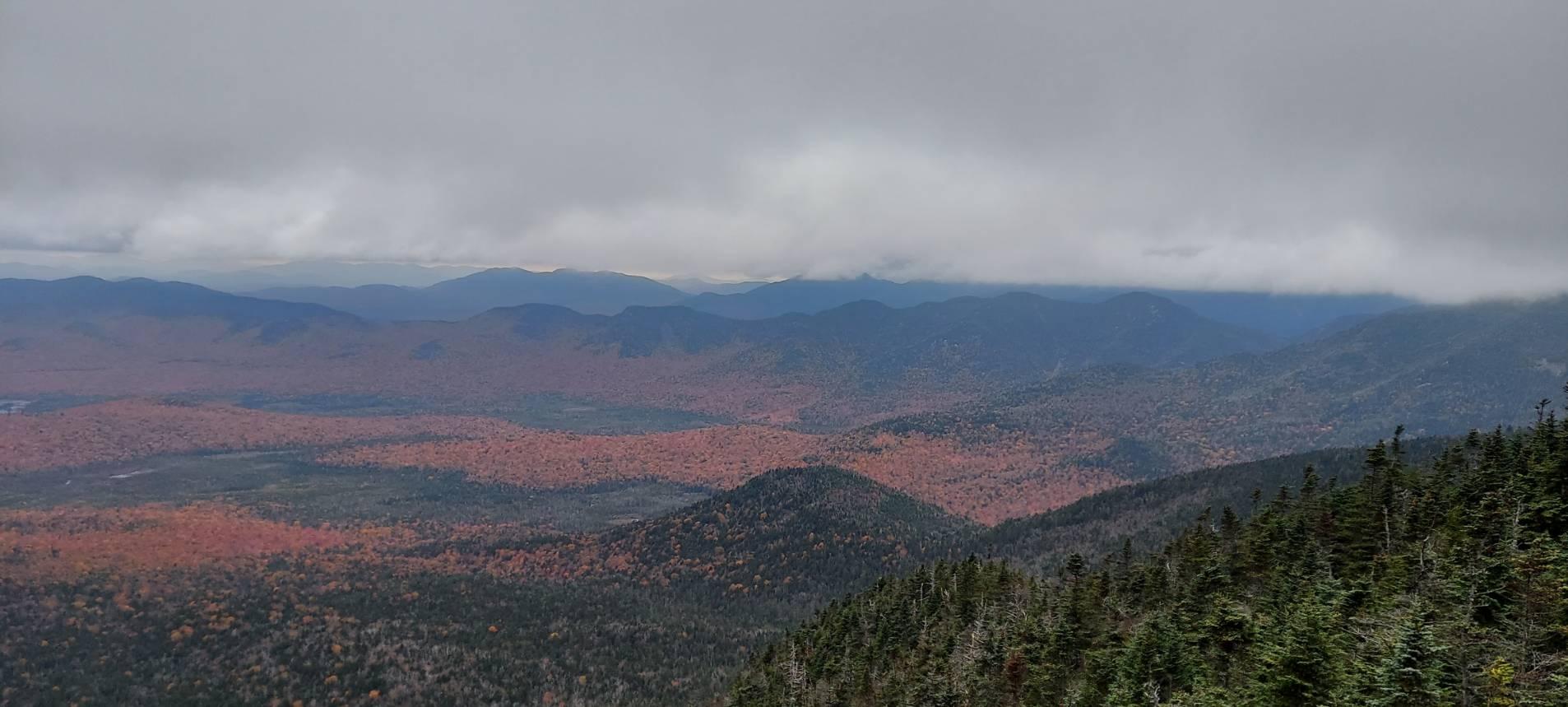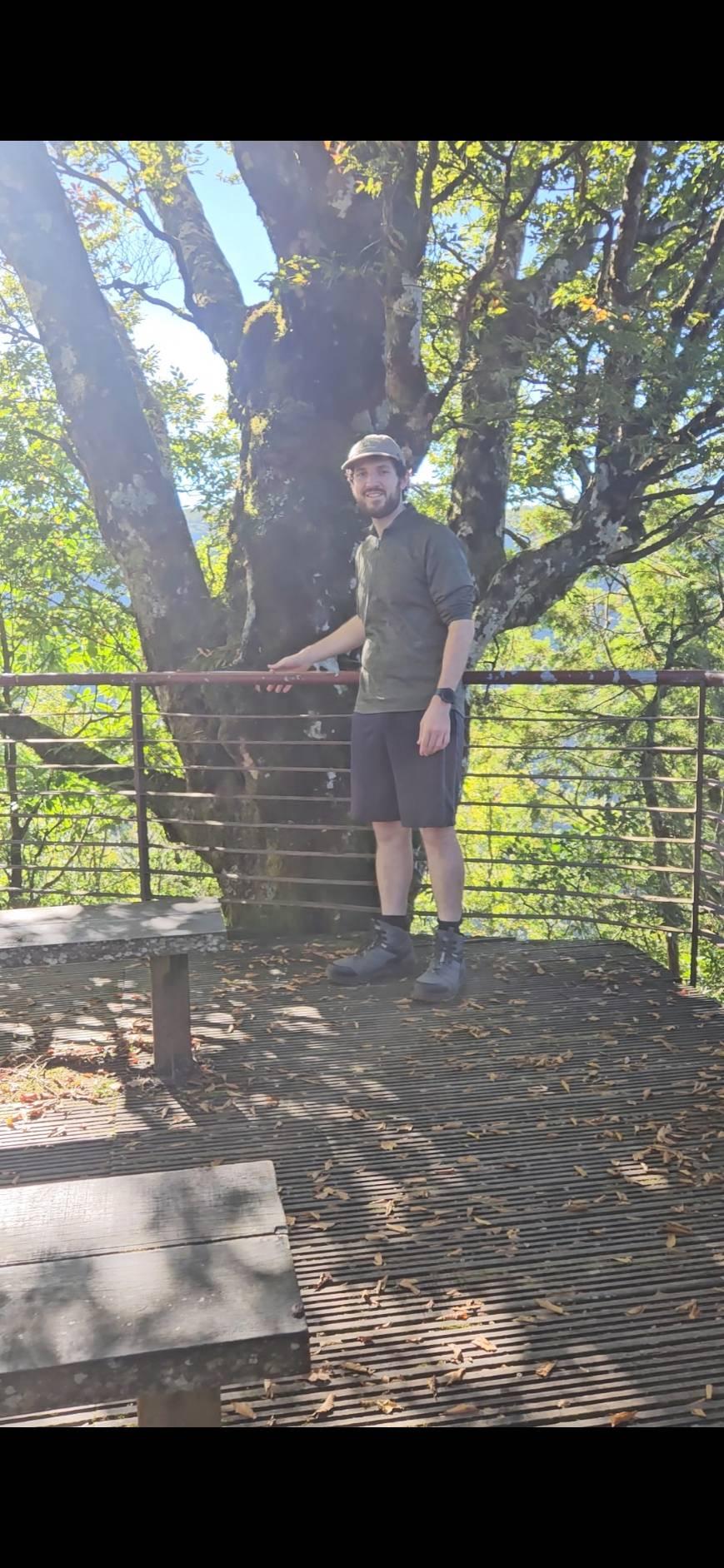
Interestingly, the Taiwan beech I saw in the Taiping Mountain Forest Recreation Area form a largely pure stand, so there are very few other tree species growing alongside them.
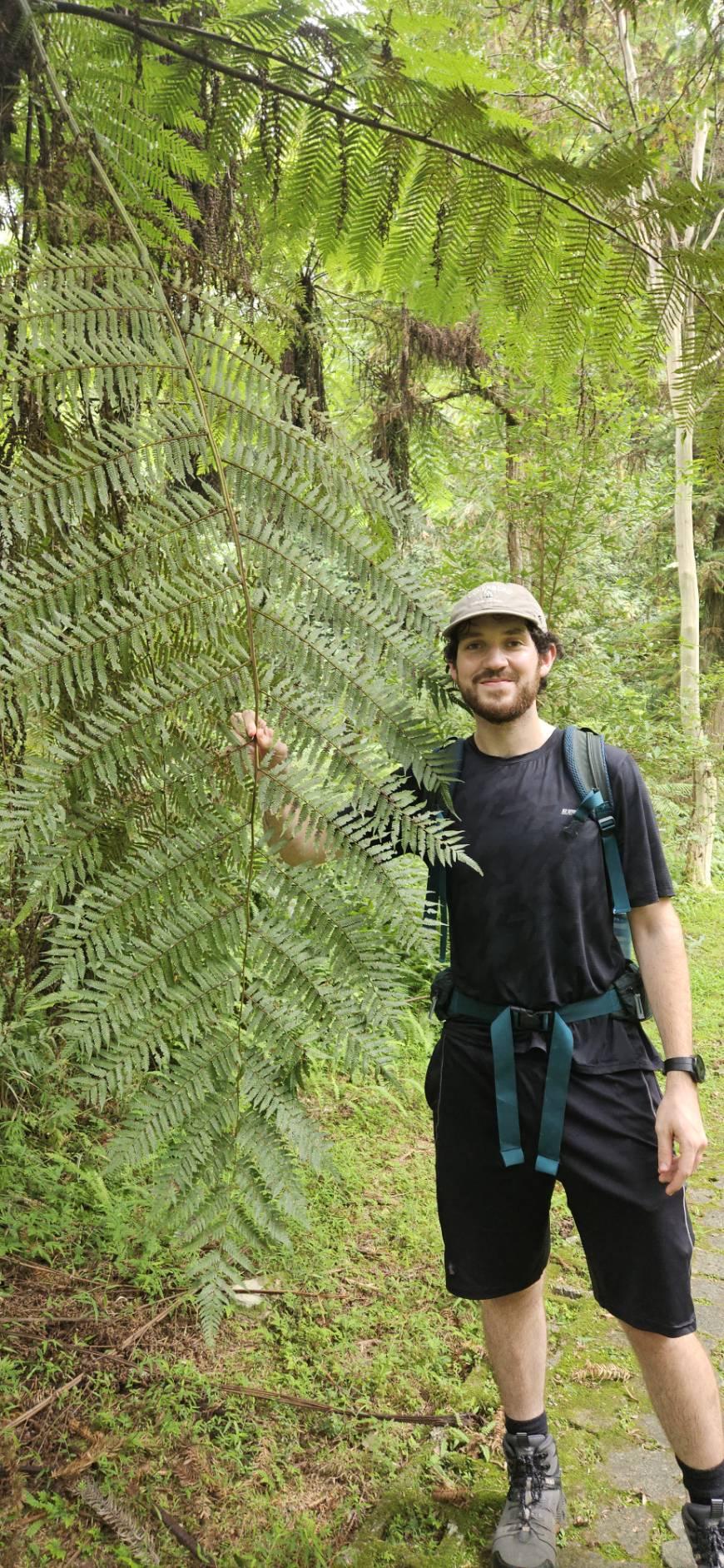
The Taiwan beech forest is nestled between two other forest types in this mountain area. Lower down the mountain slopes are forests that feel like tropical rain forests, with a lot of big-leaf plants growing close to the ground. Higher up the mountain, at around 6,500 feet above sea level, there is a mixed evergreen forest of Taiwan cypress and Japanese cedar trees. These evergreen trees are adapted to tolerate cold temperatures and wind, so they are the best at surviving the climate at the highest elevations. Compared to other broadleaf trees that grow only in lower-elevation areas, the Taiwan beech must adapt to withstand colder temperatures. Like those other broadleaf trees, the Taiwan beech loses its leaves every winter and survives this colder season by entering a dormant phase. A dormant phase is like a time of rest. The tree will slow its growth in the winter because there are less of the resources it needs, like liquid, water and sunlight. It will have to wait until spring when it grows new leaves to continue photosynthesis, enabling it to grow in size.
There is a rare butterfly known as the Taiwan beech hairstreak butterfly that is dependent on the Taiwan beech. Its lifecycle is in sync with the yearly changes in the leaves of Taiwan beech. The butterfly's eggs hatch in the spring and the caterpillars feed on the young leaves. However, this is not a dangerous pest that could lead to the beech's death.