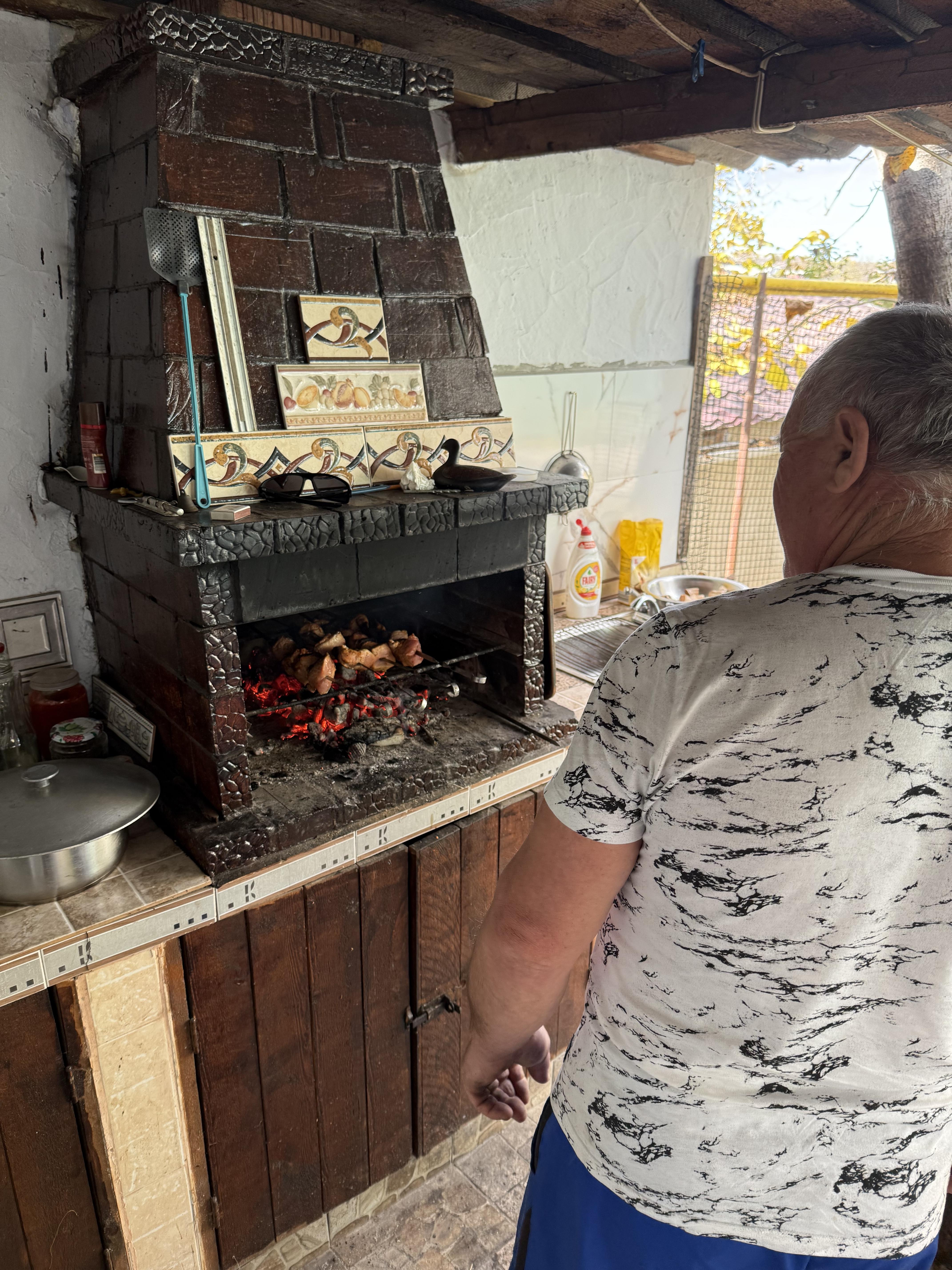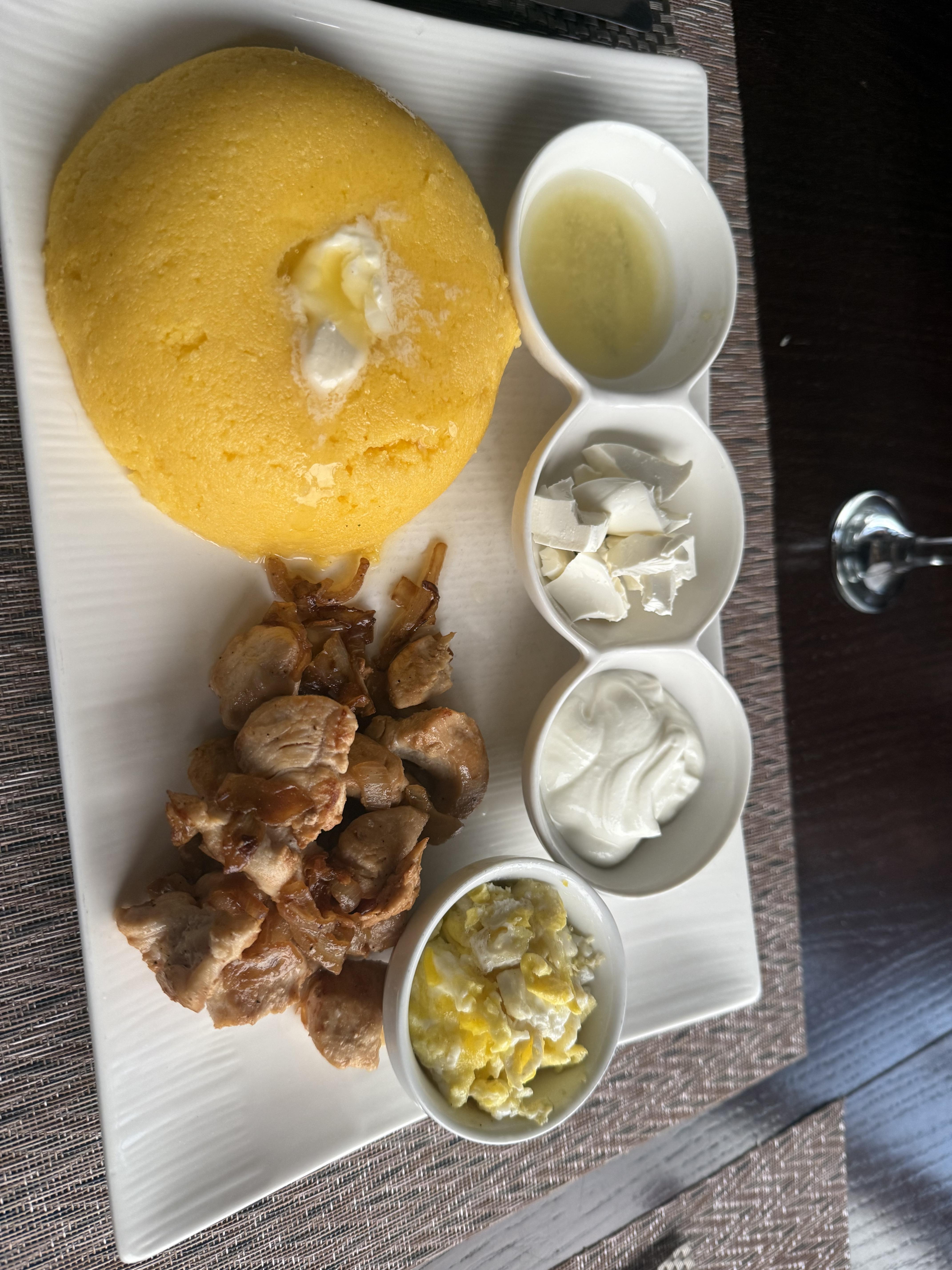
I have done some traveling throughout the Balkans, and have noticed that every nationality has some form of flaky dough with fillings. This is likely a remnant of the Ottoman Empire, which once ruled over Moldova. Other dishes directly influenced by the Ottomans are shashlik (barbecue pork skewers) and mici (ground meat in tube form, similar to Turkish kofta). While the Ottomans influenced Moldovan cuisine from the south, Ukraine and Russia influenced it from the east. All over Moldova, Soviet-style canteens, which sell a variety of dishes popular throughout the former USSR, serve hungry patrons cheaply and efficiently. My go-to canteen lunch consists of olivier (a potato, vegetable and ham salad dressed in mayonnaise), pickled vegetables, herring under a fur coat (herring salad under a layer of potatoes and beets) and Ukrainian borscht. In addition to popular Soviet dishes, there are certain dishes from Romania that are also considered part of Moldova's national heritage, since Moldovans are a Romanian people. These include mamaliga (polenta) and stewed rabbit.
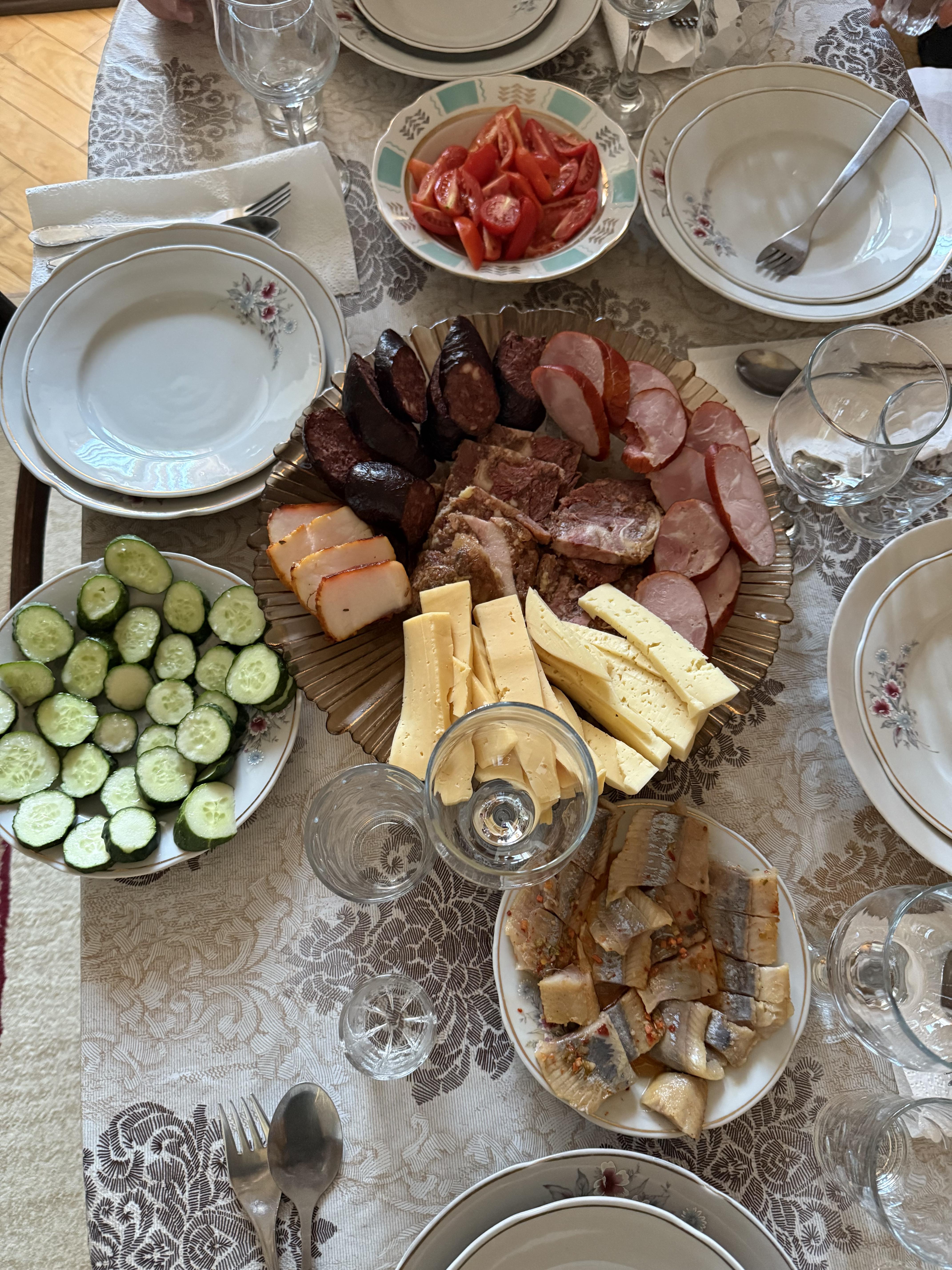
Food in Moldova always tastes the best when it is prepared in people's homes. I have been fortunate enough to visit the homes of several Moldovan families, and the pride and love that they exude through their food is astounding.
Moldovan meals, particularly when guests are involved, are massive, with more food on the table than the number of guests present could possibly consume in one sitting. In the summertime, food is often prepared outside, in a summer kitchen. This reduces the risk of fire and overheating the main house.