Both types of movement create a build-up of pressure, or stress, in the crust. Over time, this pressure reaches a breaking point and is released when the ground suddenly moves along one of these cracks, as blocks of rock on either side shift past each other during an earthquake.
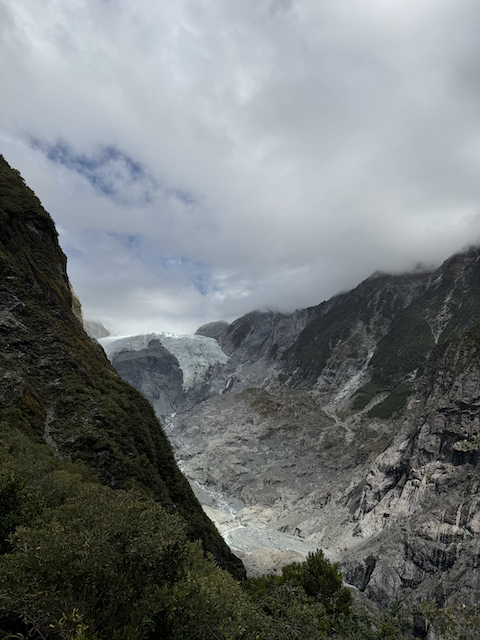
The movement of these plates also pushes sections of nearby land upward, forming mountain ranges like the Southern Alps. At the same time, rain, rivers, glaciers and ocean waves slowly wear that rock back down through erosion. Because uplift and erosion are happening together, the landscape remains steep, with high mountains and deep valleys. Most of the time, you cannot actually see the crust moving because the changes happen very slowly, over thousands or even millions of years. However, when pressure builds up along a crack in the crust and is suddenly released, it causes the ground to shake, which we feel as an earthquake. Earthquakes are one of the clearest signs that mountain building is still happening in New Zealand, even though the process is so slow that we cannot see it over a human lifetime.
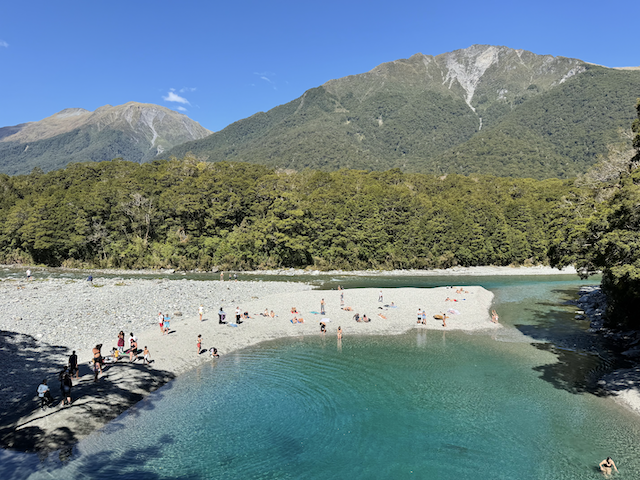
Although the tectonic setting creates hazards, it also provides important benefits. The steep mountains and high rainfall produce fast-flowing rivers. These rivers are used to generate hydroelectric power, which supplies a large portion of New Zealand’s electricity. The shape of the land makes it possible to build dams where water can be stored and released to produce energy.
In the North Island, volcanic and geothermal activity provide another energy source.