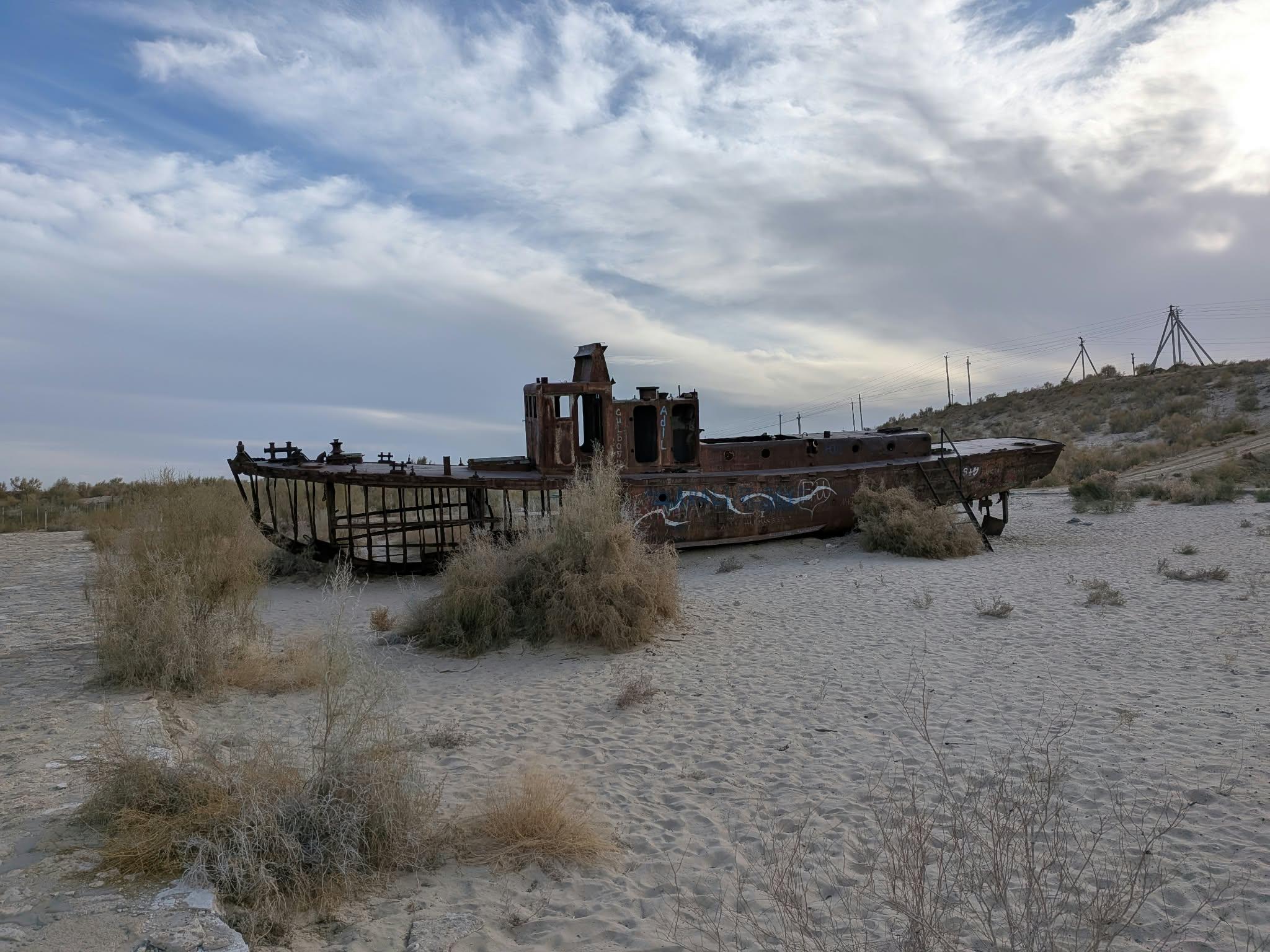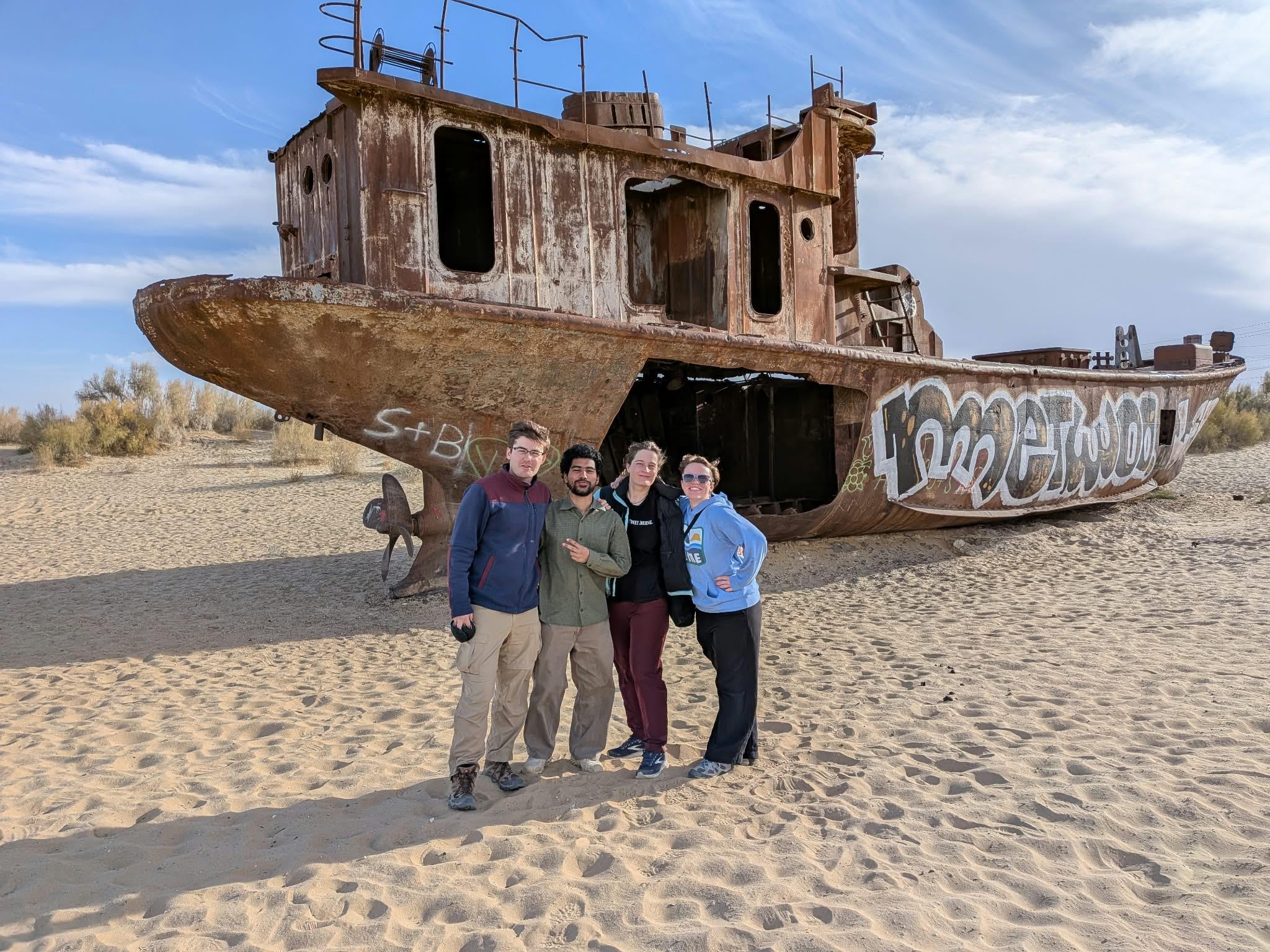
During the day we explored the beautiful canyons, the abandoned cemeteries of the nomads, the salts flats, the ancient caravanserais, the retreating seacoast all salty foam and deep muck, and hunted for shark teeth. Shark teeth? Before it was the Aral Sea, it was an ocean. We call it the Paratethys, full of strange creatures like dwarf whales, giant elephants, and Megalodon. The hills around the sea remember this time, and are full of shark teeth and whale bones—you can pocket them as a souvenir when you visit. The Paratethys eventually dried up (foreshadowing) and separated into three seas, the Black, Caspian, and Aral.
When you visit the Aral Sea, you feel like you are at the ends of the Earth itself—as if the Earth truly is flat, and you have reached the end, where the fabric begins to thin and fray. Beyond is nothing—just the sea, slowly dying. An Uzbek friend of mine told me that preceding sentence was too much of a cliché, that everyone writes of the Aral Sea like it is the ends of the Earth, so we tried to come up with a better one. Here: Visiting the Aral Sea feels like visiting the bones of the Earth—all the flesh and blood has been eaten or drank (by humans), and only the bleached bones remain, wind blowing through them. And it was windy! By mid-October the Aral basin is already cold, with the winds blowing from Siberia and midday temperatures in the 40s Fahrenheit. It’s only going to get colder though, the surface of the sea used to freeze in the depths of winter.
We drove back after two nights, and returned to Nukus. It was a fantastic adventure, and one I wish more people—especially regular Uzbeks (and not just Italian and French tourists)—could make.
There’s one last thing though.