Tagging mantas means using a modified Hawaiian sling, which is similar to a spear, to place small devices on the mantas. We place devices that recieve signals from tags, called recievers, throughout the study site.
The acoustic tags are about 4 inches long. We use the modified pole spear to place the tags on an area of the manta’s lower top side, in an area far from its vital organs. You could think of this like getting stung by a bee, or getting your ear pierced. When tagging is done responsibly, it doesn’t hurt the animal, and sometimes they don’t even notice when the tag is placed.
Once the tags are placed, every time the manta swims within range of the acoustic receiver, the receiver gets a message from the tag that records the location and presence of that animal. With this technique, we can learn how often the mantas visit, how long they stay, and where they are during their stay - how close to the surface? How warm is the water? Over time, accumulating this knowledge helps us to learn how the mantas use their habitat. The better we know how the mantas use their habitat, the better we can learn how us humans can share that habitat without disrupting or hurting the mantas.
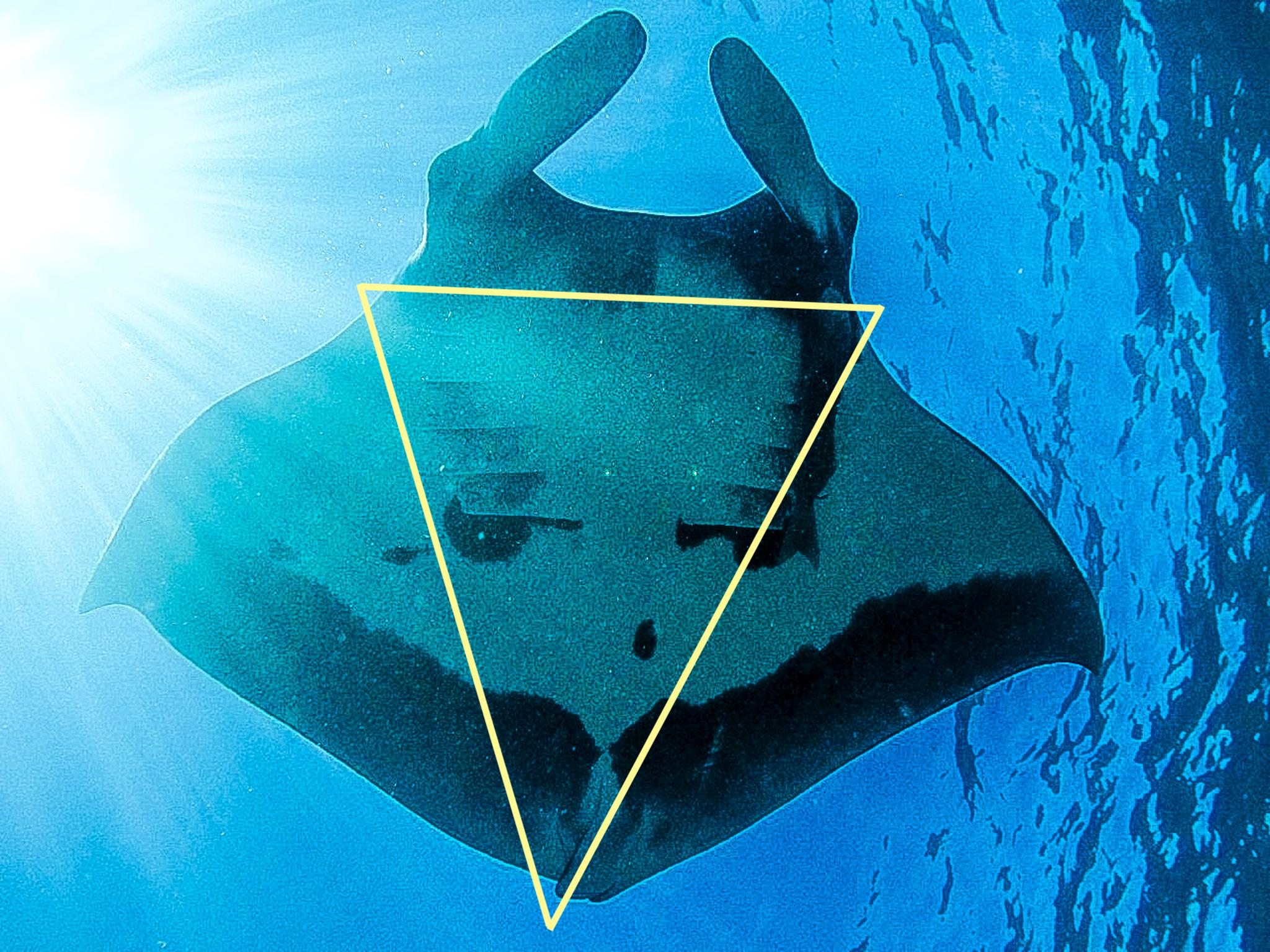
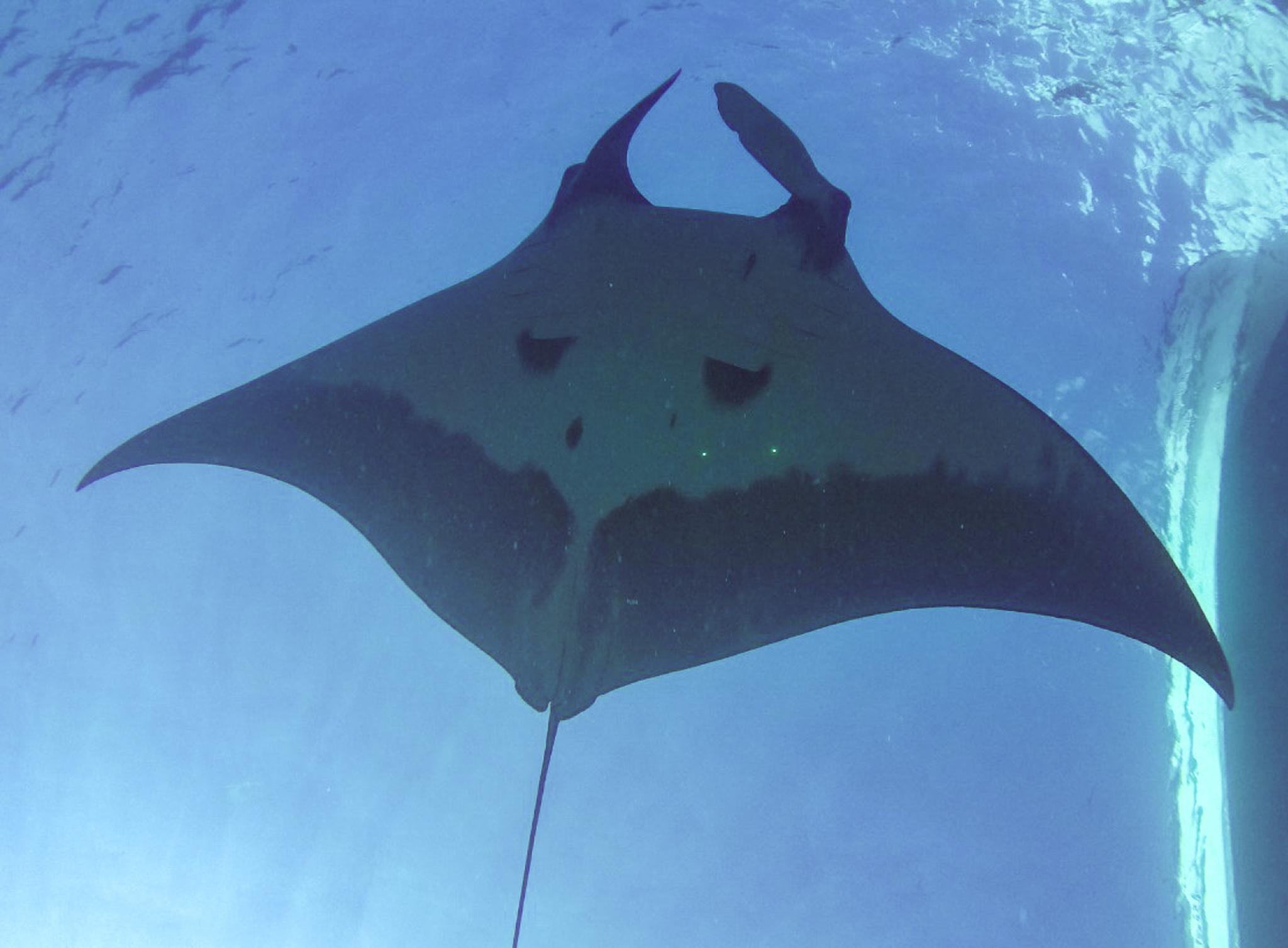
Besides tagging methodology, we are using mark-recapture. This name is misleading, because it doesn’t involve "marking" or capturing any animals. All of the marking and recapturing is done using photography. By accumulating these many images over time, we can see how the mantas are growing, if they are getting injured, which ones are returning, and which ones might be pregnant. When we are using mark recapture, we use a two-laser system to project two dots onto the mantas.