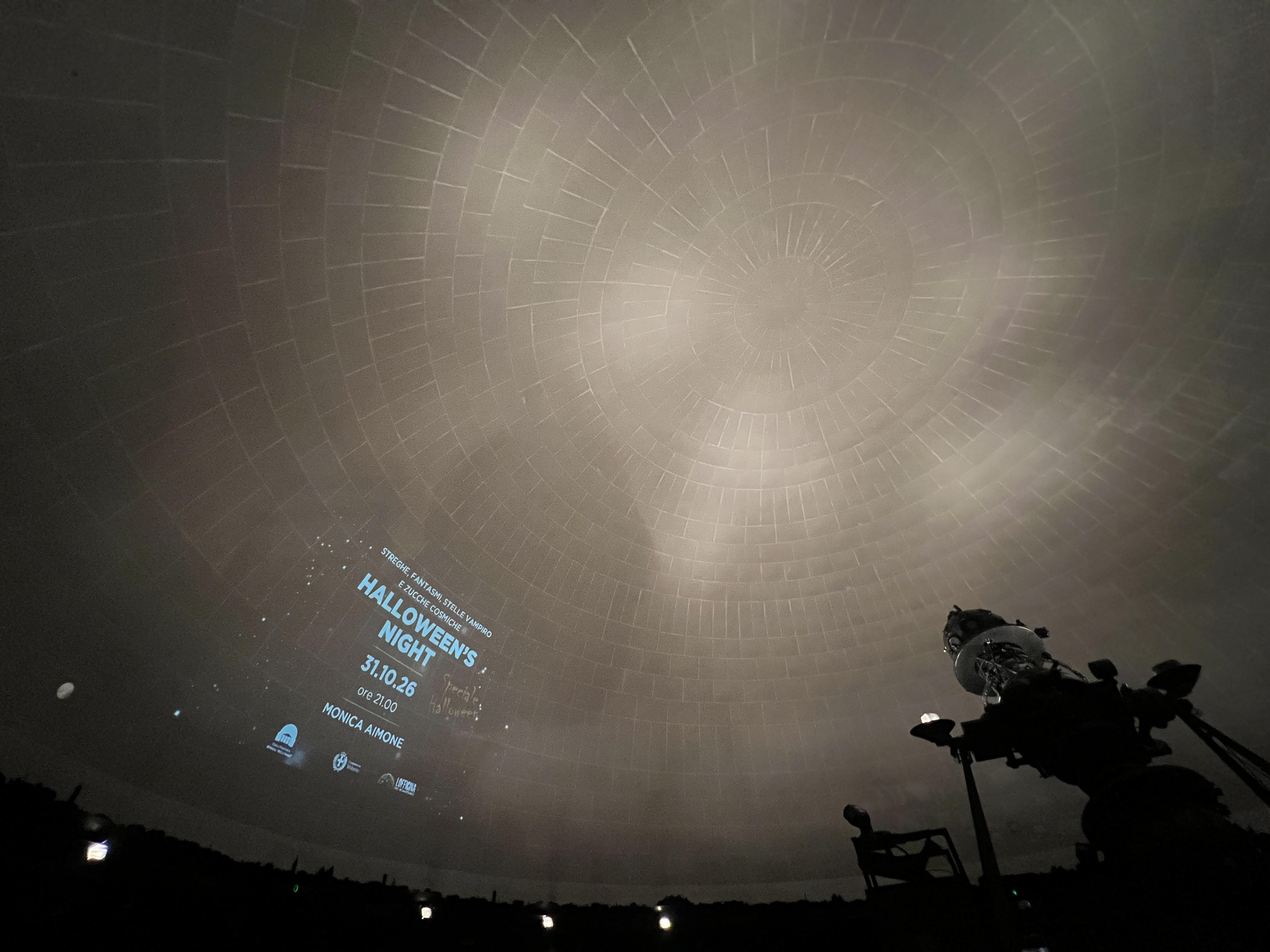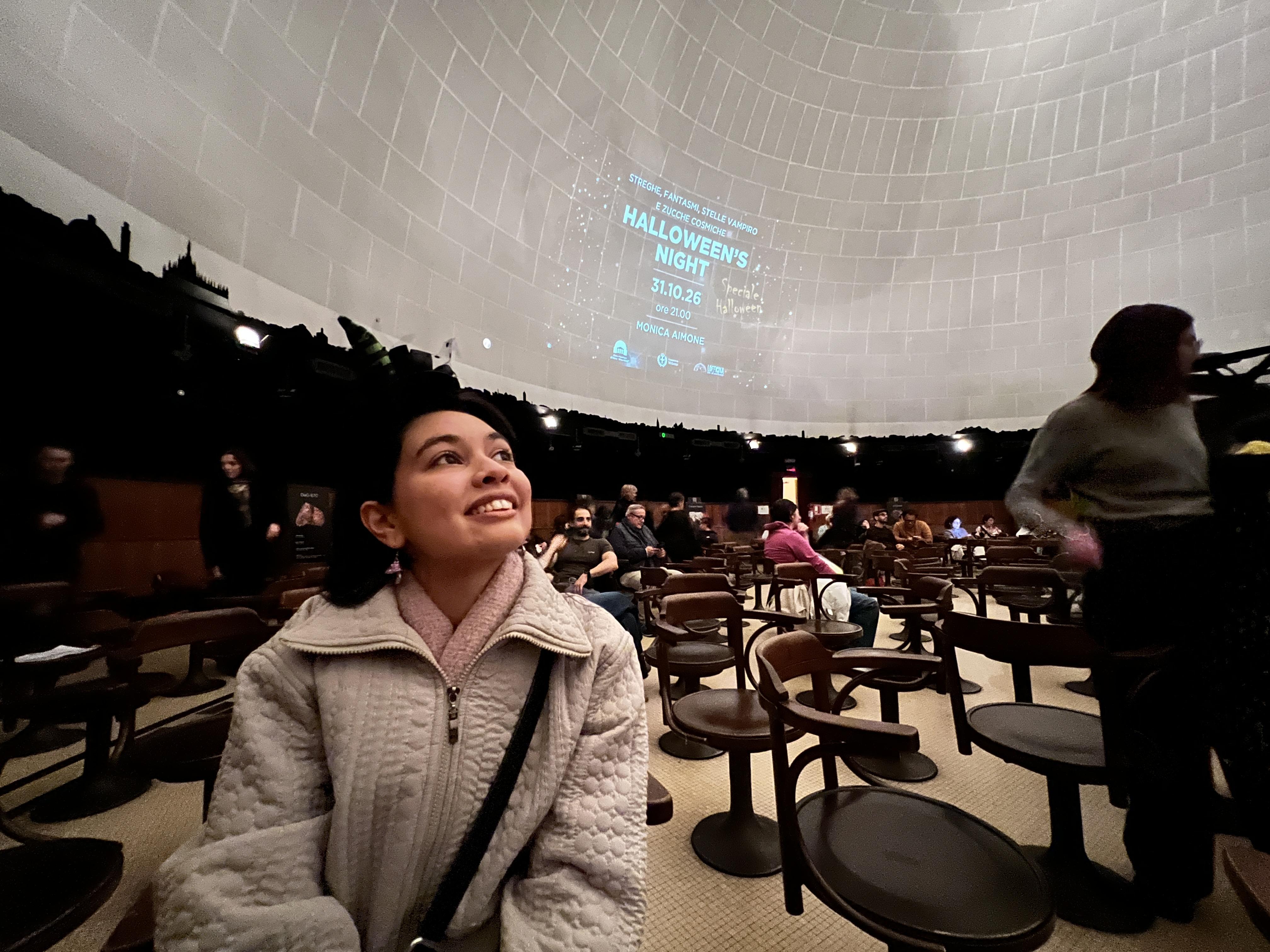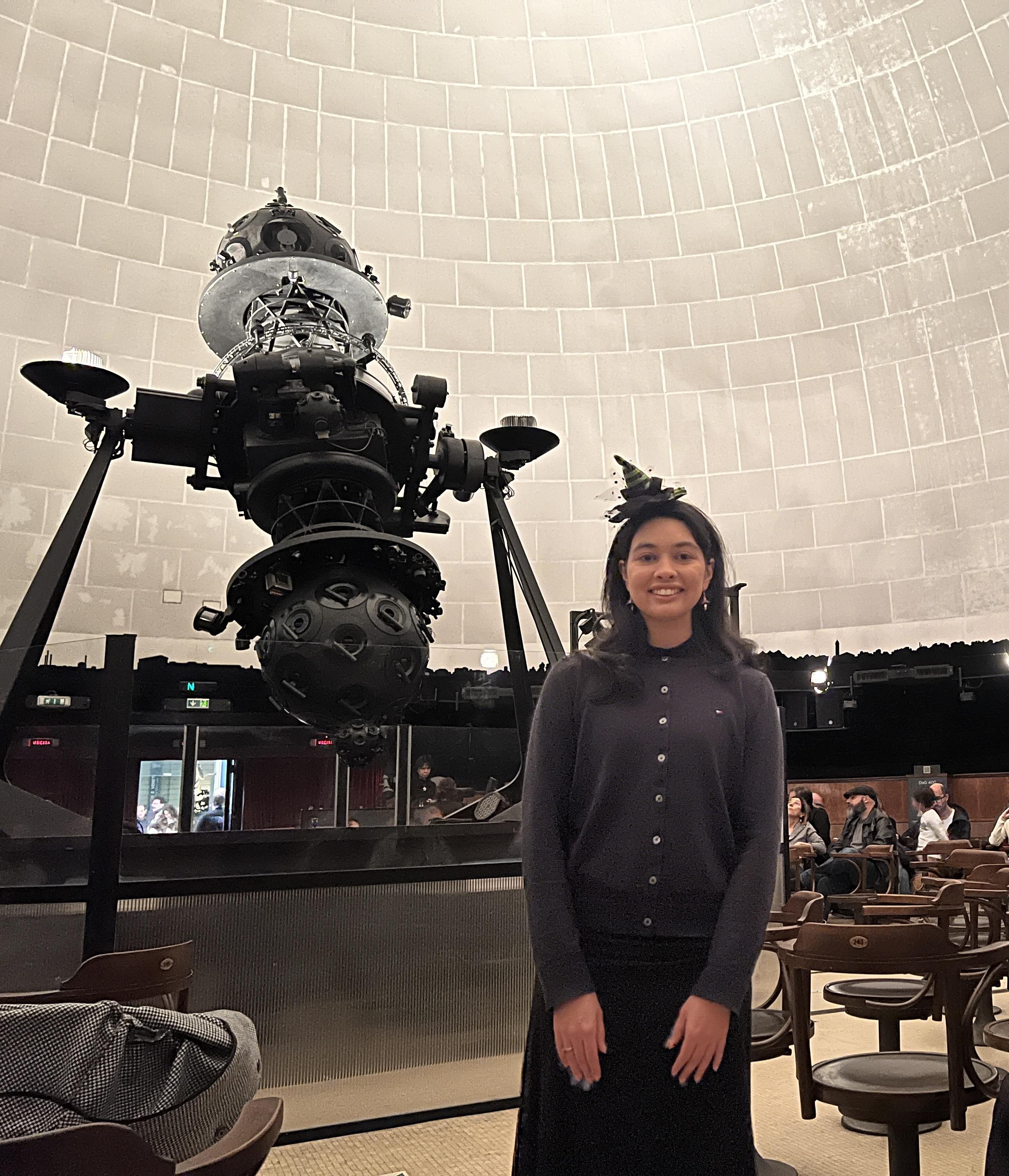
It is among Italy’s oldest and largest planetariums, with room for 375 people beneath a dome almost 20 meters, or about 65 feet, across.
Inside, many of the wooden swivel chairs date back to the 1930s. They allow visitors to turn toward different parts of the projected sky. Even the star projector has its own history. The Zeiss Model IV has been in use since 1968, and the silhouette of buildings around the base of the dome represents Milan’s skyline as it appeared in the 1930s. There was a lot of local history tucked into a room I had come to visit for astronomy!
During the presentation, there was a funny moment when the presenter showed how people decorate their houses for Halloween in the United States. The audience seemed surprised. I had been surprised to find Halloween decorations in Milan, while people around me were surprised by the decorations back home. Something so familiar to me was a new discovery for someone else.
Looking at the projected sky also came with an Italian vocabulary lesson. The star pattern I know as the Big Dipper is called the Grande Carro, or “Great Wagon,” in Italian. I’m used to imagining a ladle, so it was interesting to picture a wagon in those same seven stars. We also explored Orion and the Pleiades, a cluster of young stars often called the Seven Sisters.
Then came the objects that gave the evening its Halloween theme, including pumpkin-colored celestial images and “vampire stars.” The vampire nickname describes stars that gain material from a companion star. When two stars orbit close enough to each other, gas from one can be captured by the other’s gravity. The “vampire” gains material at its companion’s expense.