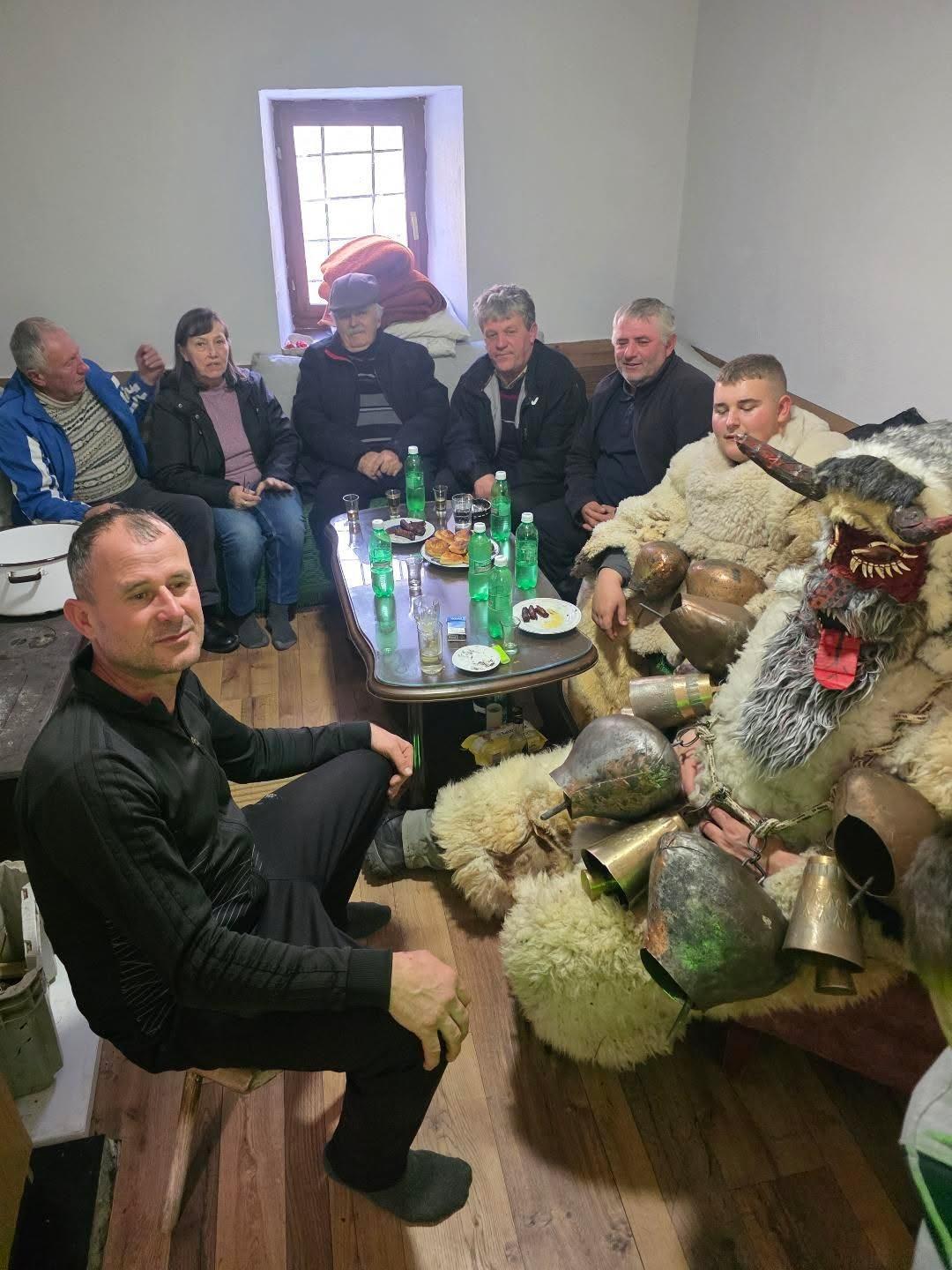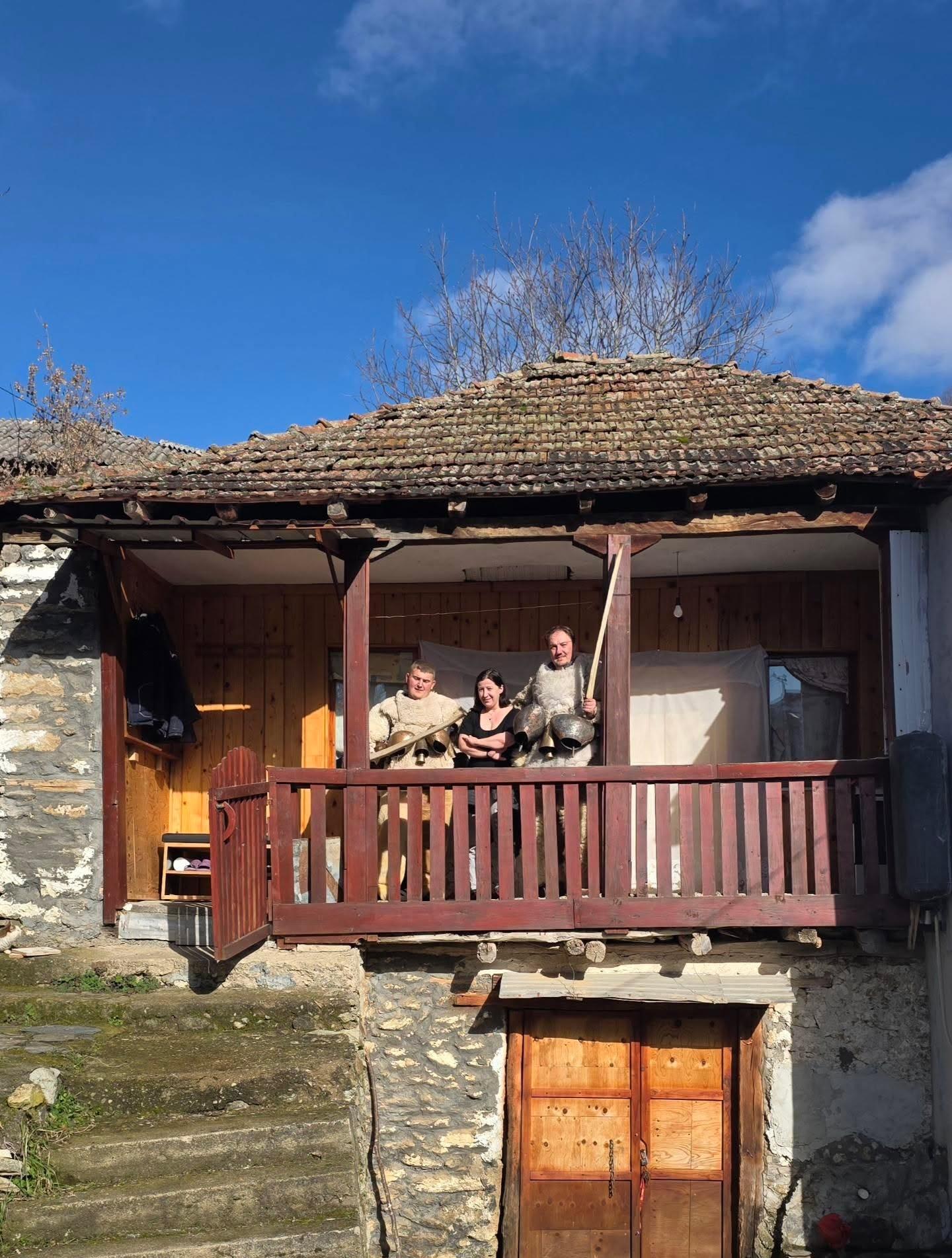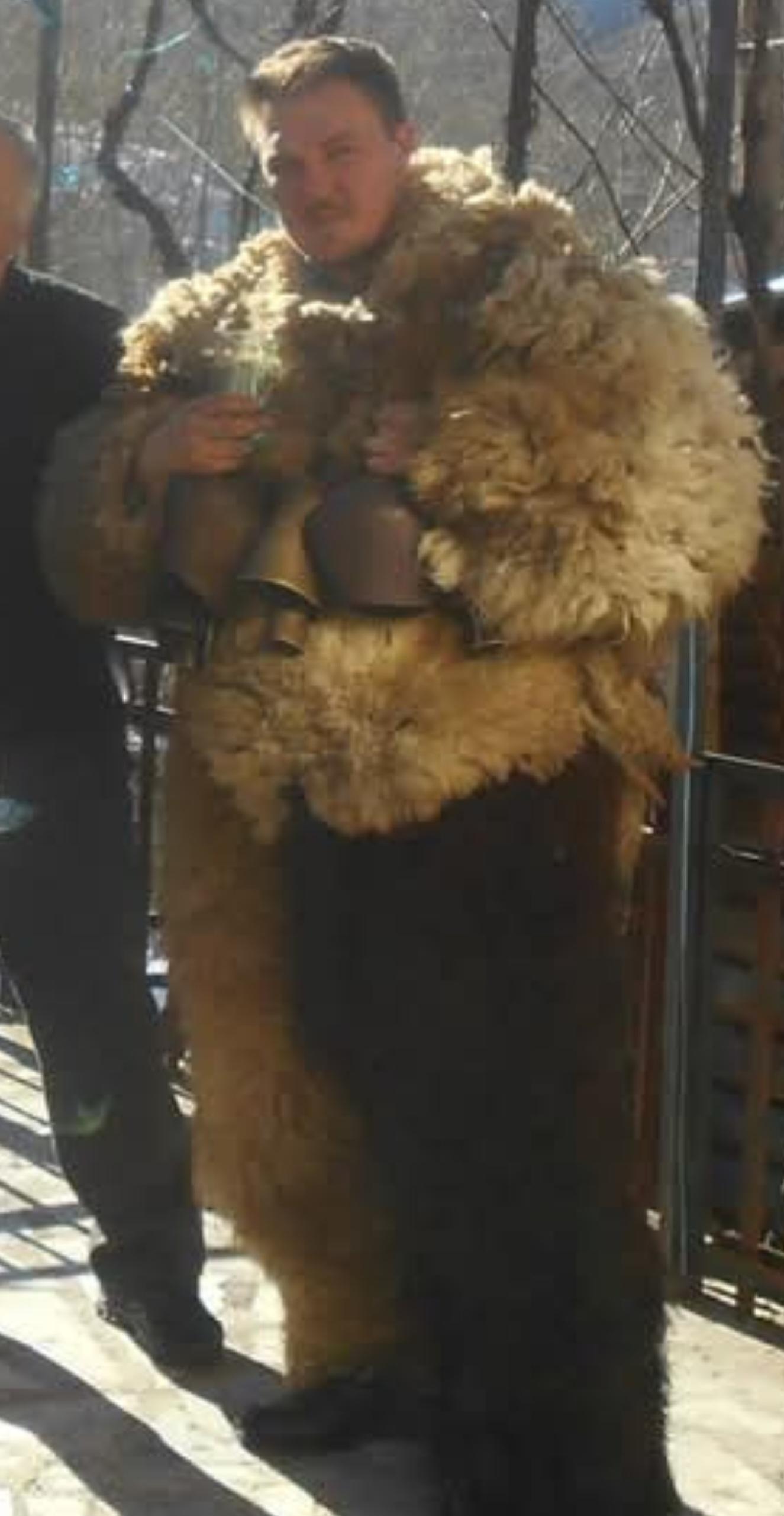
The welcoming village kidnaps the visiting village's Brides and takes them to a house. The Babar follows them and stands outside the house, shaking his bells to make as much noise as possible. While the Babar is doing this, one of the Brides enters the house and looks for a pie that has been hidden by the homeowners. The Bride brings the pie outside, and the Babar is the first to eat a piece. After him, everyone else gets to eat. Afterwards, the host invites everyone inside and serves them a drink. The visiting village's group then continues around the village, visiting each house to collect gifts.
Once they have finished, the group returns to their own village, where they cook all the food they have received as gifts and share it among themselves. Any extra food is given to the villagers who contributed the bells and animal skins used to make the Babar's costume.
The tradition of Saint Basil's Day, or Vasilica, is maintained by the communities in North Macedonia as a way of preserving their cultural heritage, bringing people together, and passing customs from one generation to the next. It is also connected to Orthodox Christian beliefs and the celebration of the new Year according to the Julian calendar.The festivities, including the Babar, symbolise leaving the troubles of the past year behind and welcoming a new year with hope, good fortune,and prosperity. By continuing this tradition every year, the community strengthens its sense of identity and keeps an important part of its history alive.