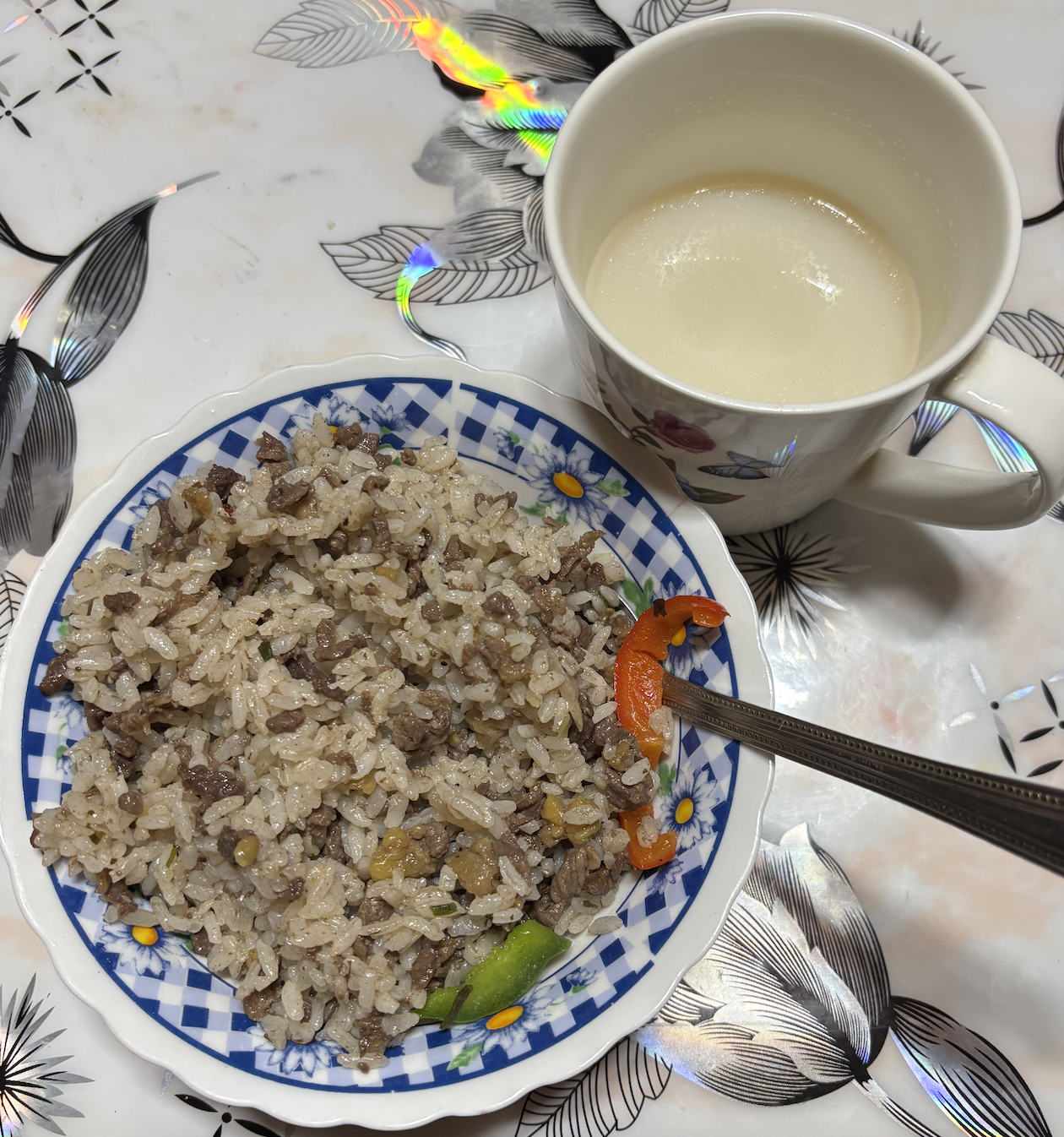
Meat is central to Mongolian cuisine and is often cut into large chunks rather than thin slices, making meals filling and energy-dense. Seasoning is typically minimal, mainly salt and sometimes garlic or onions. The focus is on the natural flavor of the meat rather than strong spices or sauces.
Foods are most often boiled, steamed or fried (either pan-fried or deep-fried). Many dairy products are made through boiling, fermenting and drying, which allows them to be stored for long periods (an important practice for nomadic people who traditionally moved seasonally).
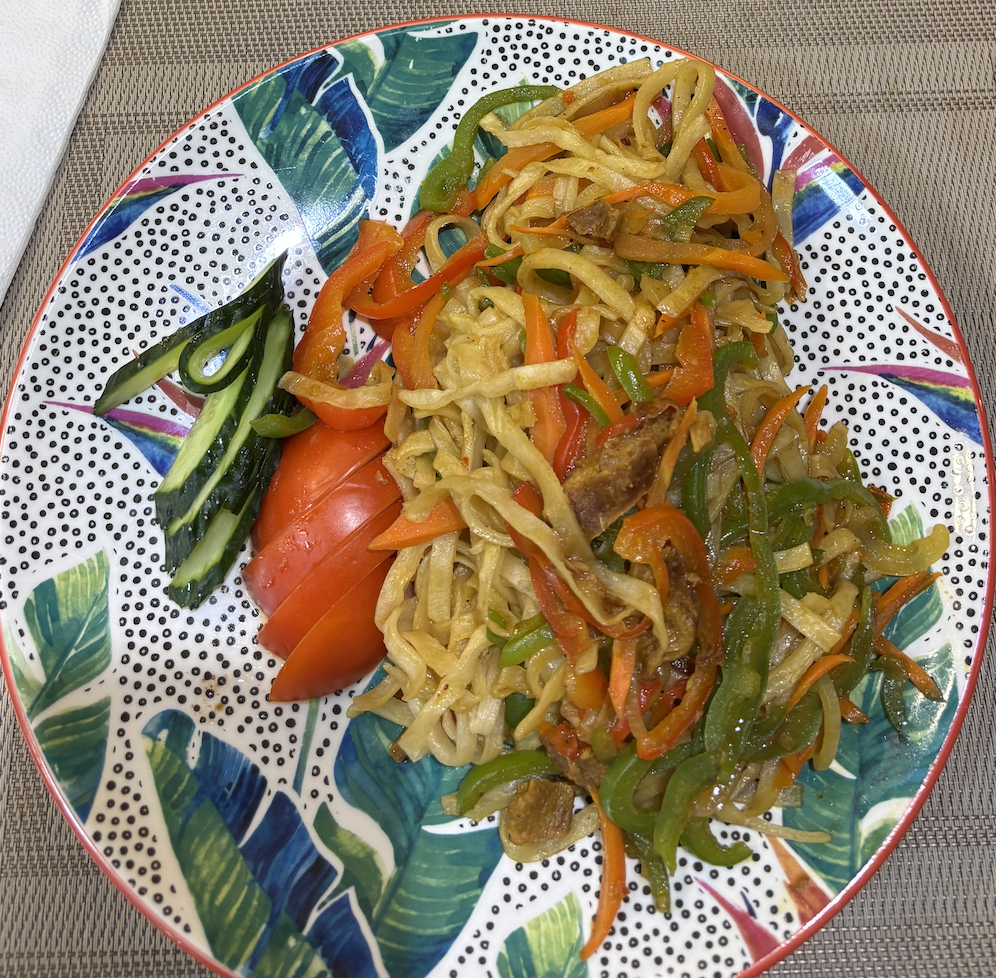
Here is how цуйван (tsuivan, noodle dish), my current favorite Mongolian dish, is prepared. Tsuivan is made by cooking homemade noodles together with meat and vegetables in one pot. First, dough is made from flour, water and a little salt. The dough is rolled out thin, lightly oiled, folded and cut into long strips. Next, beef or mutton (sheep meat, or lamb) is sliced and fried in oil in a large pan or pot. Onions are added first, followed by vegetables such as carrots, cabbage or potatoes. The noodles are then placed on top of the meat and vegetables. A small amount of water is added, and the pot is covered so the noodles steam rather than boil. After a few minutes, once the noodles soften, everything is mixed together and lightly stir-fried. Although the dish is seasoned simply, usually with just salt, it is unlike any stir-fried noodle dish I’ve had, and I’ve tried many!