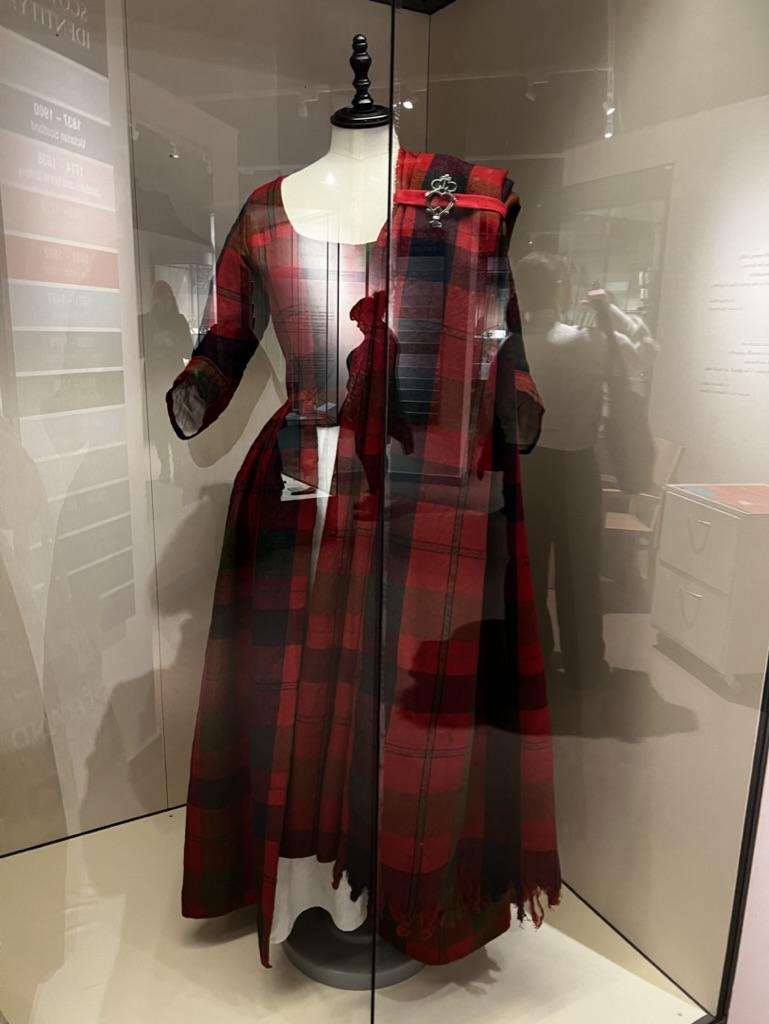
Somewhat controversially, this process made traditional Scottish culture more “palatable” to the broader British public, as the Crown aimed to forge a unified British identity. This process, some argue, was just a continuation of the colonial subjugation of Scotland.
Now, you can find kilts in shops across Scotland, especially in stores catered to tourists on the Royal Mile, where you can also find all sorts of tartan wool products and kitschy memorabilia harkening back to traditional clan culture. Some argue that this commodification and exoticization of Scottish traditions is disrespectful and a whitewashing of the country’s violent past. It also generalizes Scottish culture by overemphasizing Highland traditions while ignoring cultures from other regions of Scotland. But the prominence of this imagery can be traced directly back to the influence of Sir Walter Scott. Outside of a tourist context, many Scottish people proudly wear kilts as an expression of pride in their culture.
Not only did Sir Walter Scott’s literary works influence fashion, but they also determined desirable tourist destinations, as droves of his fans traveled to Scotland to find the landscapes featured within the pages of his novels.