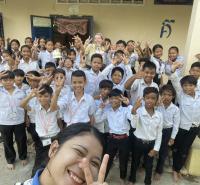
Sixth graders are more independent and enjoy challenging themselves, especially when speaking English out loud. Teaching multiple grade levels means adjusting lessons, pacing, and activities throughout the day.
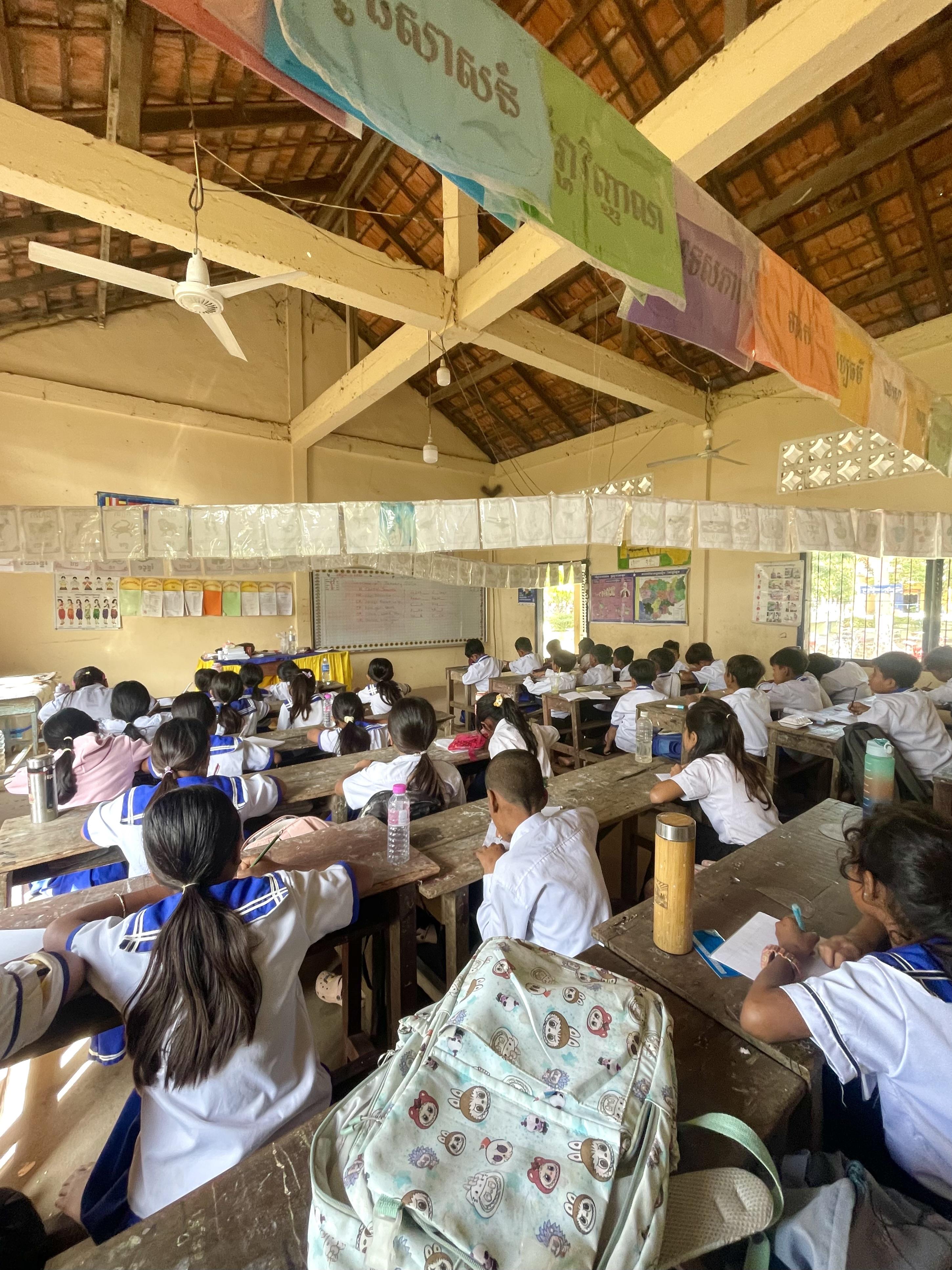
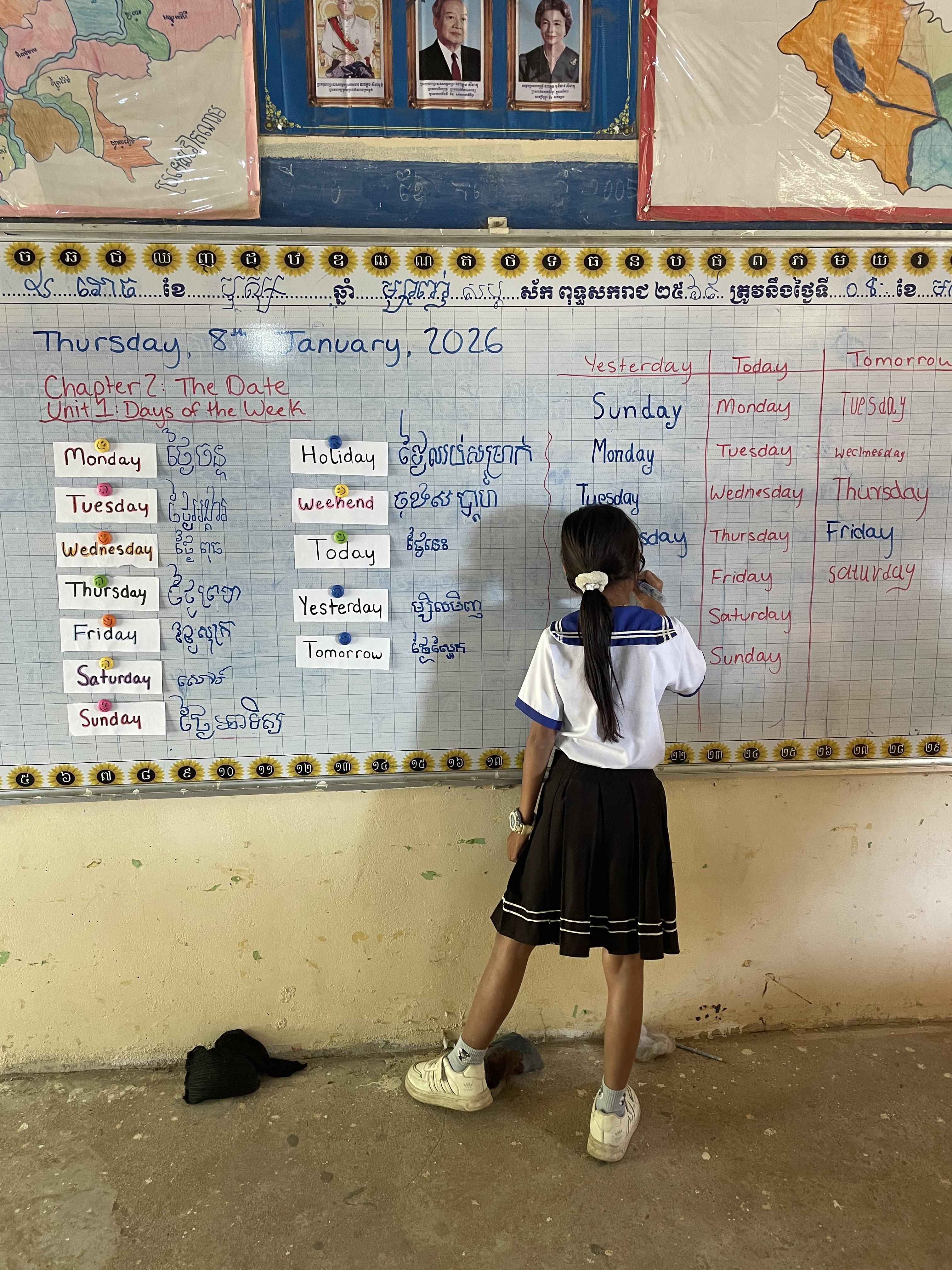
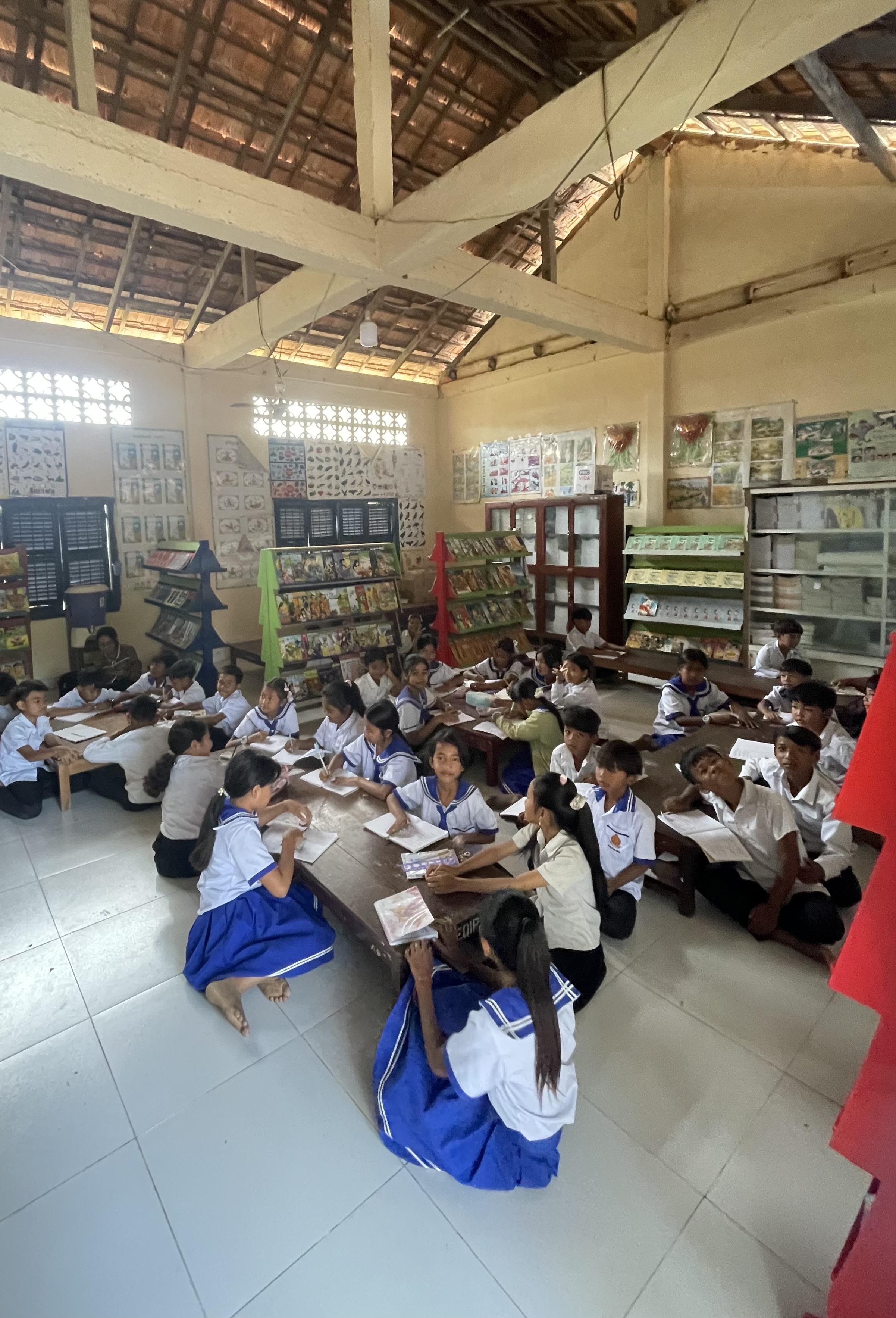
English class is often lively and social. Students repeat new words together, practice careful handwriting, and help one another when someone is unsure. It is common for students to turn to a classmate for support before asking the teacher. Even when lessons are challenging, students are eager to participate and try.
I don’t teach alone. I work alongside a Cambodian teacher who helps facilitate each class. While I focus on teaching English, my counterpart supports students with classroom management, explains instructions when needed and helps keep everyone on track. This teamwork creates a supportive learning environment and helps lessons run smoothly.
Teachers are highly respected in Cambodian schools, and students show this through their behavior. They greet their teachers, listen attentively and follow instructions closely. At the same time, many students balance school with responsibilities outside the classroom, such as helping their families at home or working in small businesses.
School in Cambodia is not just a place to learn academic subjects. For many students, it is also a place of community, routine and connection. While classrooms may look different from those in other countries, the goals are the same everywhere: to learn, grow, and build a better future.