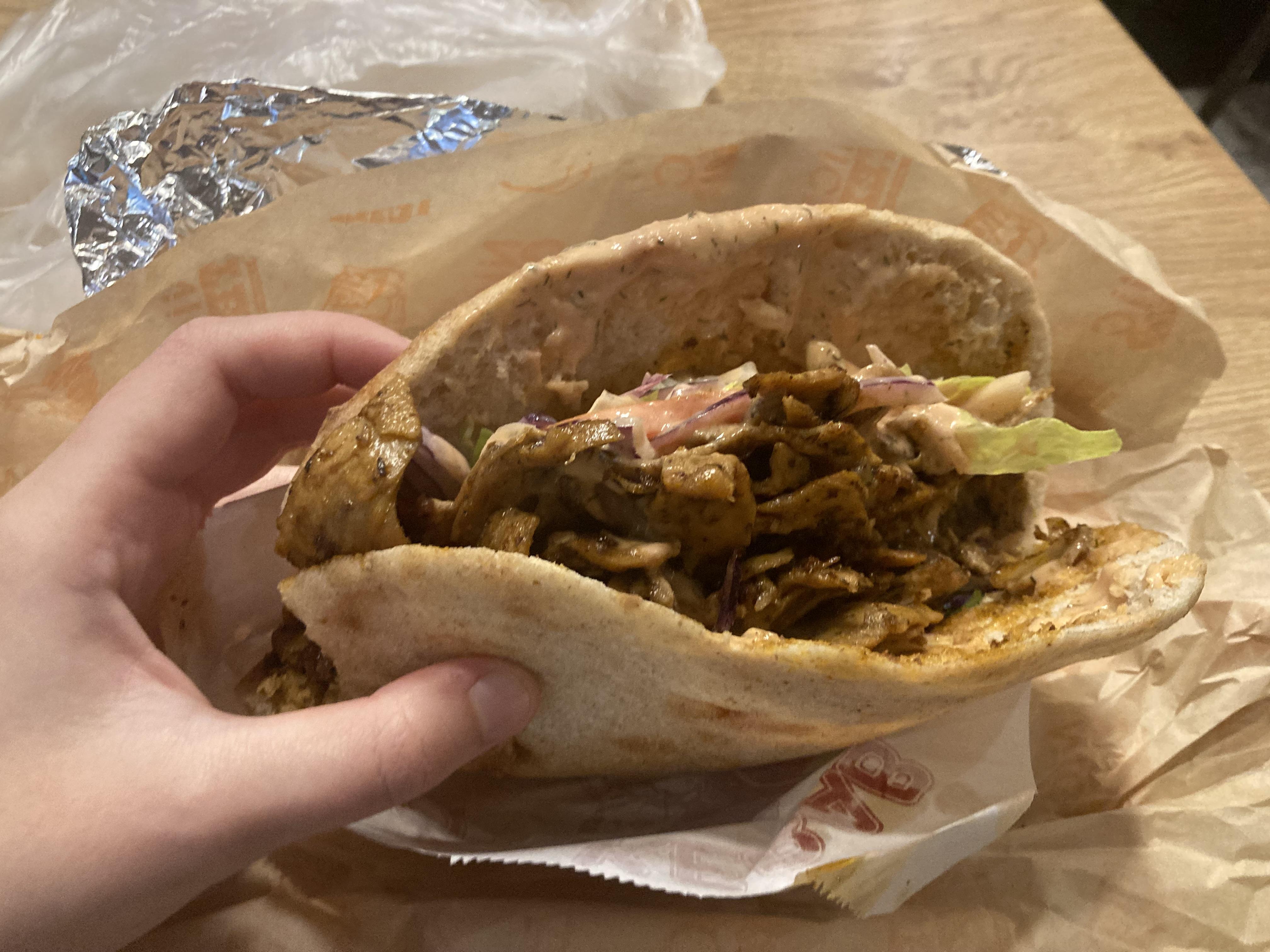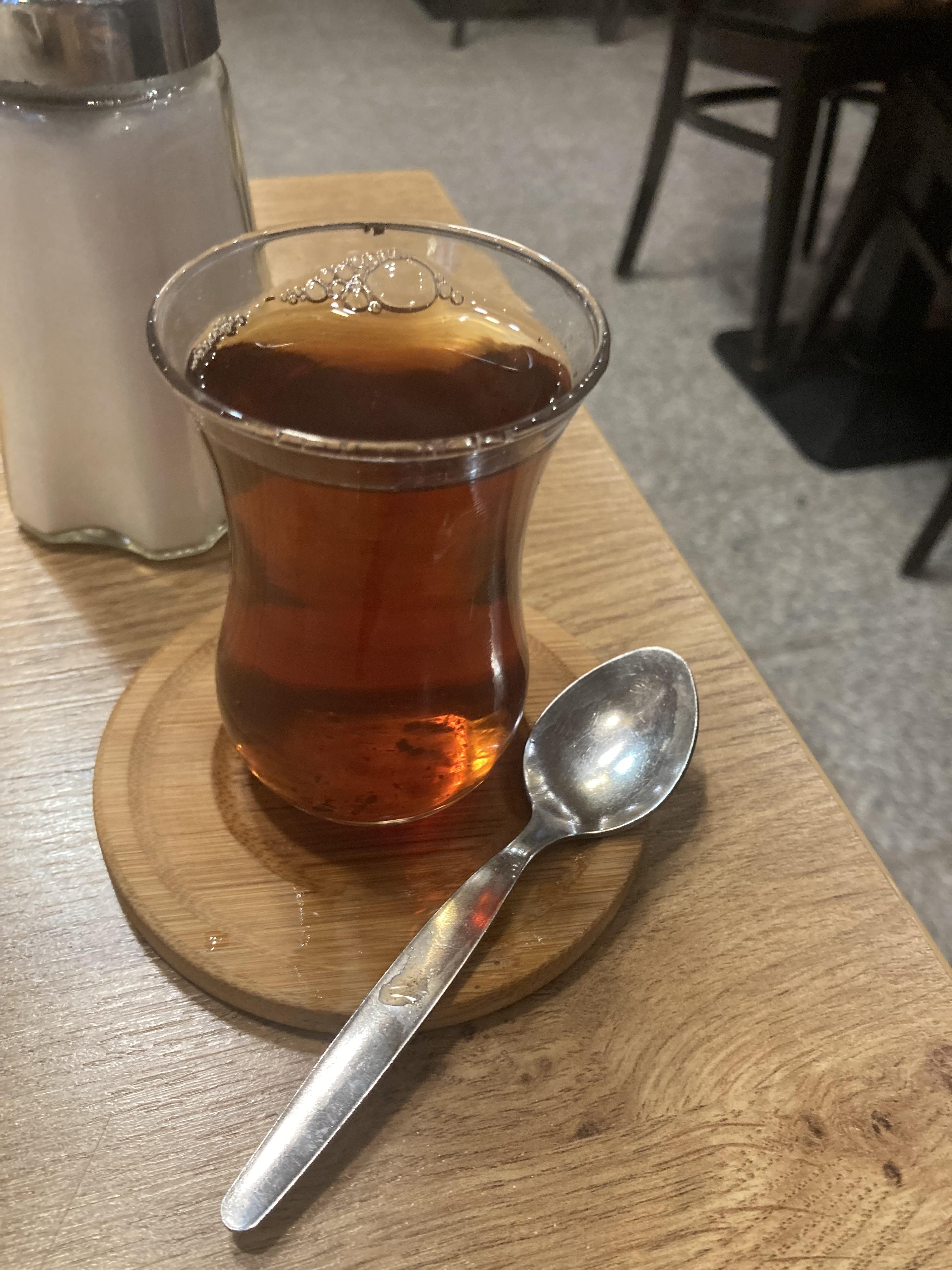
There were a few other people eating in the restaurant, but most of the orders the guy at the counter was preparing were take-out and delivery. His daughter was seated at a table in the corner. She looked to be about 6 or 7 years old and was doing some homework and coloring in her coloring book. The guy at the counter was very friendly, and when he found out I was American, we got into a conversation about what brought each of us to Germany and how I liked Mainz. He was also really sweet and brought me a glass of traditional Turkish tea to enjoy with my döner, free of charge.
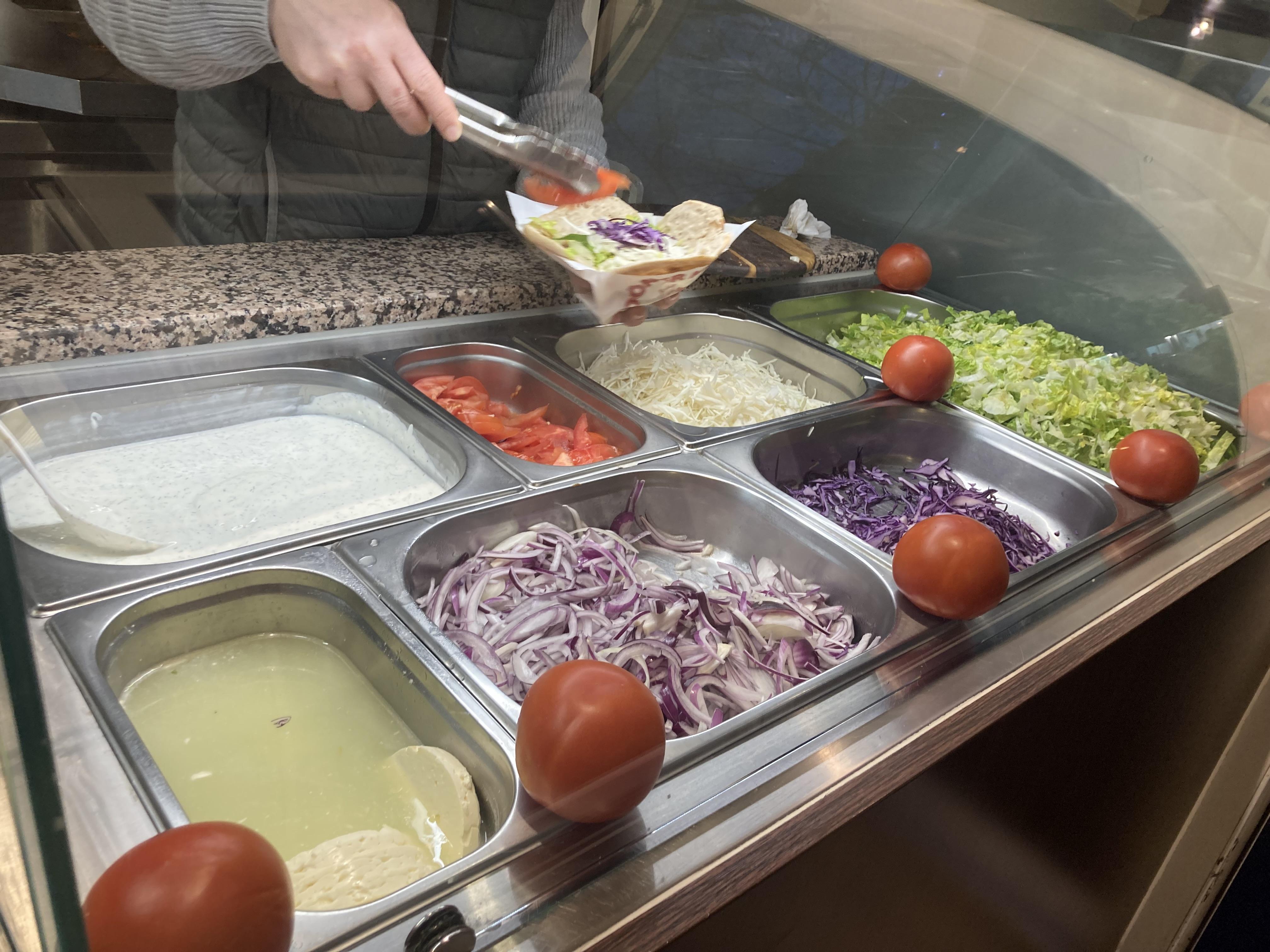
Döners are usually made with pita bread. Vegetables, like cabbage, lettuce, onions, and tomatoes, are then added along with yogurt sauce or hummus, parsley and garlic. Then, the cook adds the rotisserie-cooked meat (or in my case, seitan) and wraps the sandwich in paper and tin foil. He then puts it in a bag, being sure to add lots of napkins since döners are very messy, and the sauce, fat and juice get all over your hands.
The döner is closely connected to Turkish-German culture. They reflect the diversity of modern Germany, with immigrants from all over the world and the local traditions they bring. Döner shops are also little shrines to Turkey and Turkish culture. Many have pictures of famous sites in Turkey covering the walls. Some have Turkish books, usually including a Turkish translation of the Quran (the Muslim holy book) on a small shelf, and you can hear the workers chatting with each other in Turkish, often switching between Turkish and German mid-sentence.