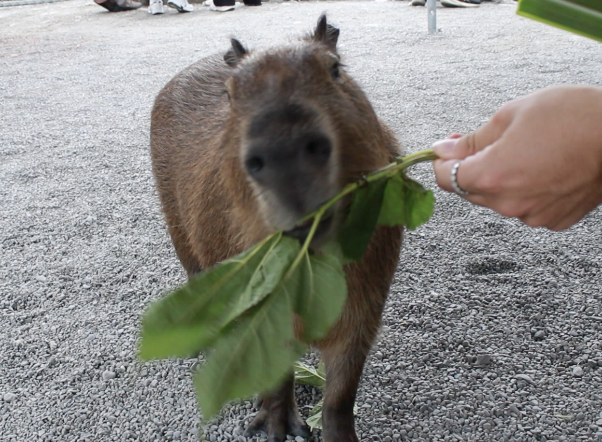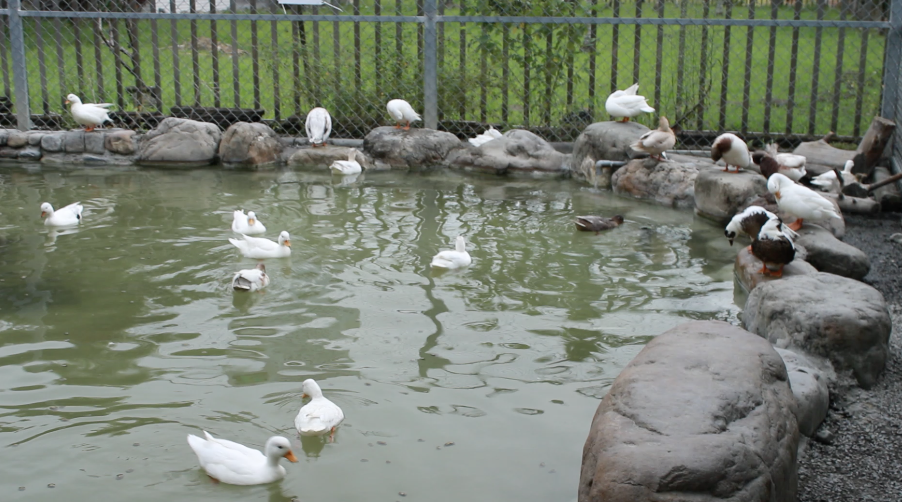
Last month, I visited Zhang Mei Ama’s Farm (張美阿嬤農場, zhāng měi āmā nóng chǎng) in Yilan County (宜蘭縣, yí lán xiàn), an area in eastern Taiwan known for its dramatic landscape: mountains to the west, black sand beaches to the east and rolling plains and rice paddies in between. At the farm’s petting zoo, I saw animals ranging from roosters and meerkats to alpacas and guinea pigs, but the capybaras were the clear highlight. I had never seen one in person, and meeting the world’s largest rodent up close for the first time was a truly refreshing experience.
Capybaras look like guinea pigs except they are much, much larger. Their bodies are barrel-shaped and sturdy, covered in fur ranging in color from reddish-brown to grayish-brown. Because their hair tends to be more coarse and thin, they can be prone to sunburn. As a result, they often cover themselves in mud for natural protection. Adult capybaras are usually 3 to 4 feet long and weigh about 80 to 150 pounds, making them the largest rodents in the world.
I also noticed that capybaras possess several traits built for their lifestyle near water. With their eyes, ears and nostrils sitting higher on their head, they can stay afloat with most of their body submerged underwater, yet still breathe, hear and see their surroundings.