Our general experimental protocol, regardless of the research question we are trying to address, is to: 1) stock bird feeders with seed across the vast forests of Latvia (near Riga, we have numerous study sites in Gaujas and Kemeri National Parks), 2) note the Diversity Index of a flock (an equation that takes into account the total number of birds, the total number of species present, and the relative proportions of each species to the others), 3) perform the experiment we need to and gather our data!
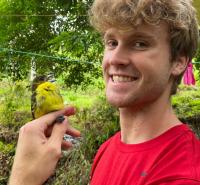
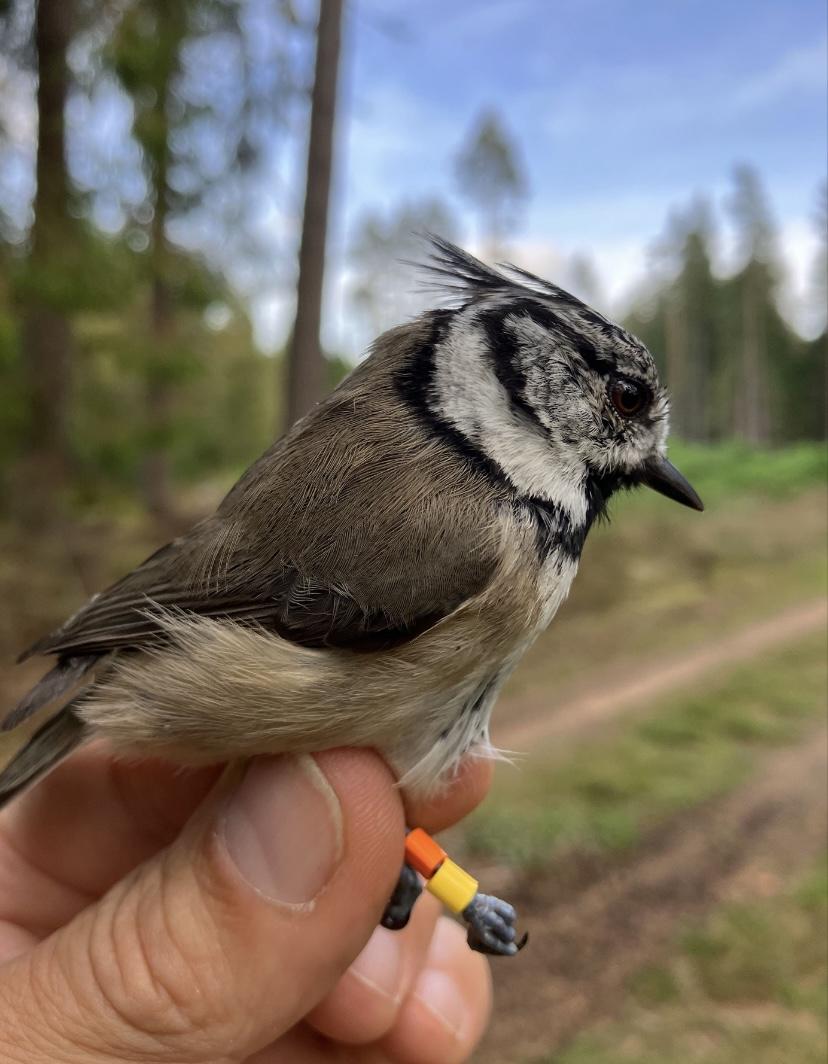
We currently have multiple projects ongoing with the bird flocks. One of them involves mist-netting birds, which is how they are typically captured (it is completely safe for them!). Once a bird flies into the net, we extract it, take multiple body measurements, and draw around 1 mL of blood from under its wing. We will then use DNA microscopy to analyze the length of telomeres within the strands of an individual's DNA. Telomere length is regarded as a reliable indicator of health, where increased stress leads to shorter telomere length. We are netting birds in urban and rural settings, and we predict that birds caught in urban settings will be more stressed and have shorter telomeres than those caught in more natural settings.
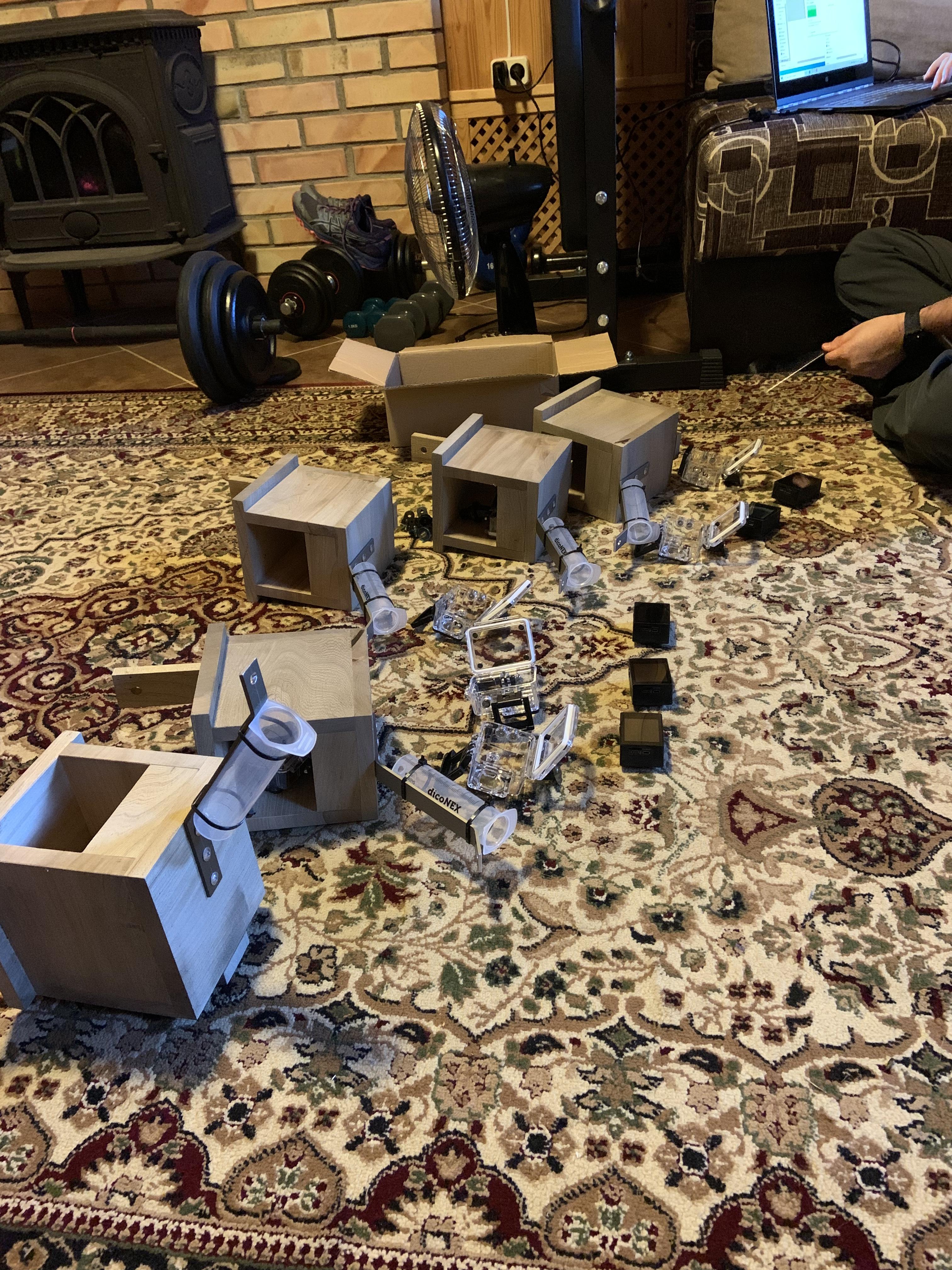
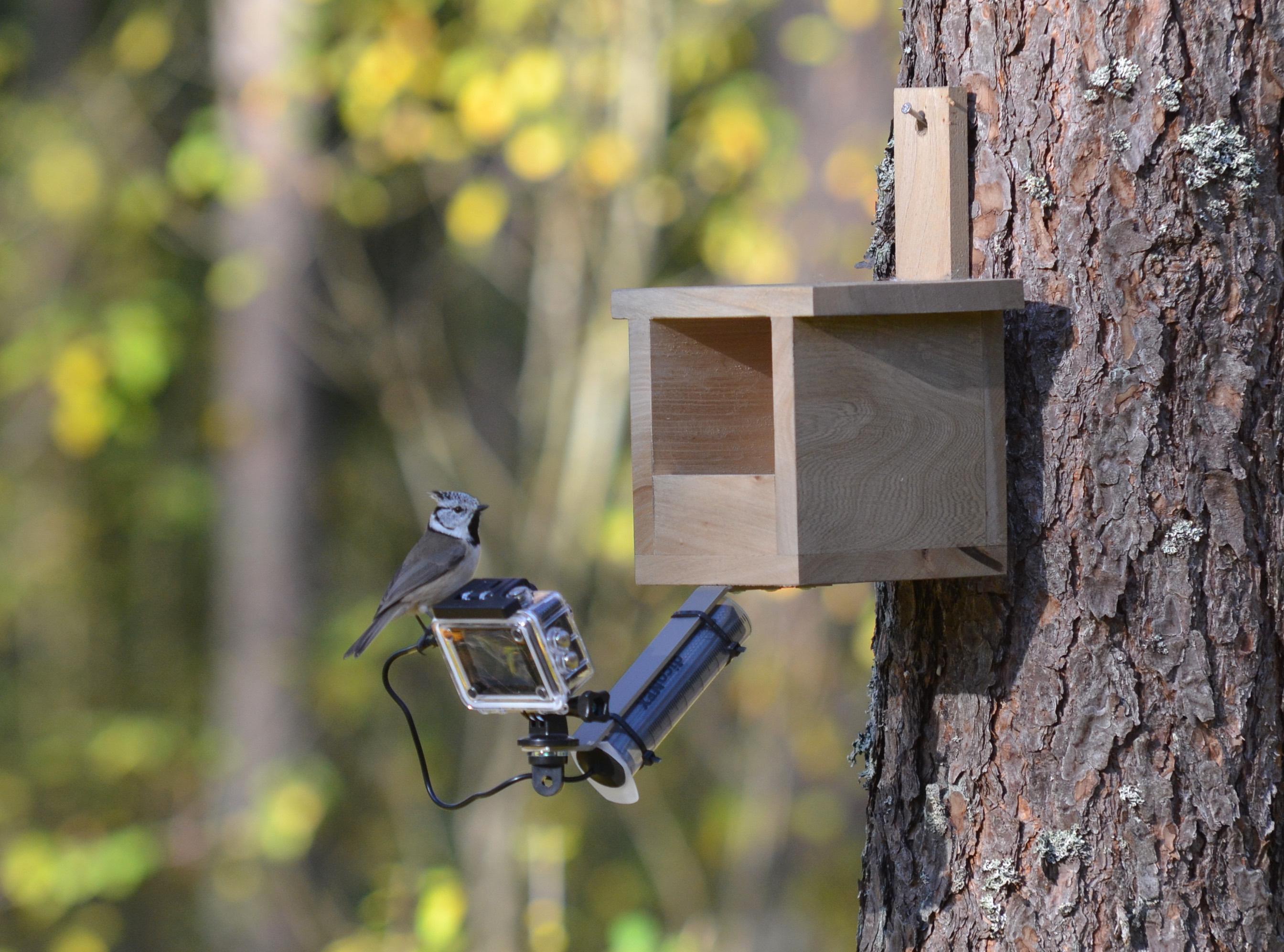
Another one of our studies involves monitoring where flocks feed at different times of day. We have five feeders set up roughly 100 m from one another in a certain plot of forest. Each of these feeders has a GoPro style camera attached to it to record bird visitors for one hour at 9:00a.m. (9:00-10:00), one hour at 1:00 p.m., and one hour at 5:00 p.m..