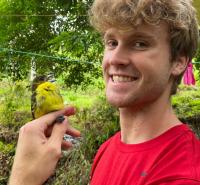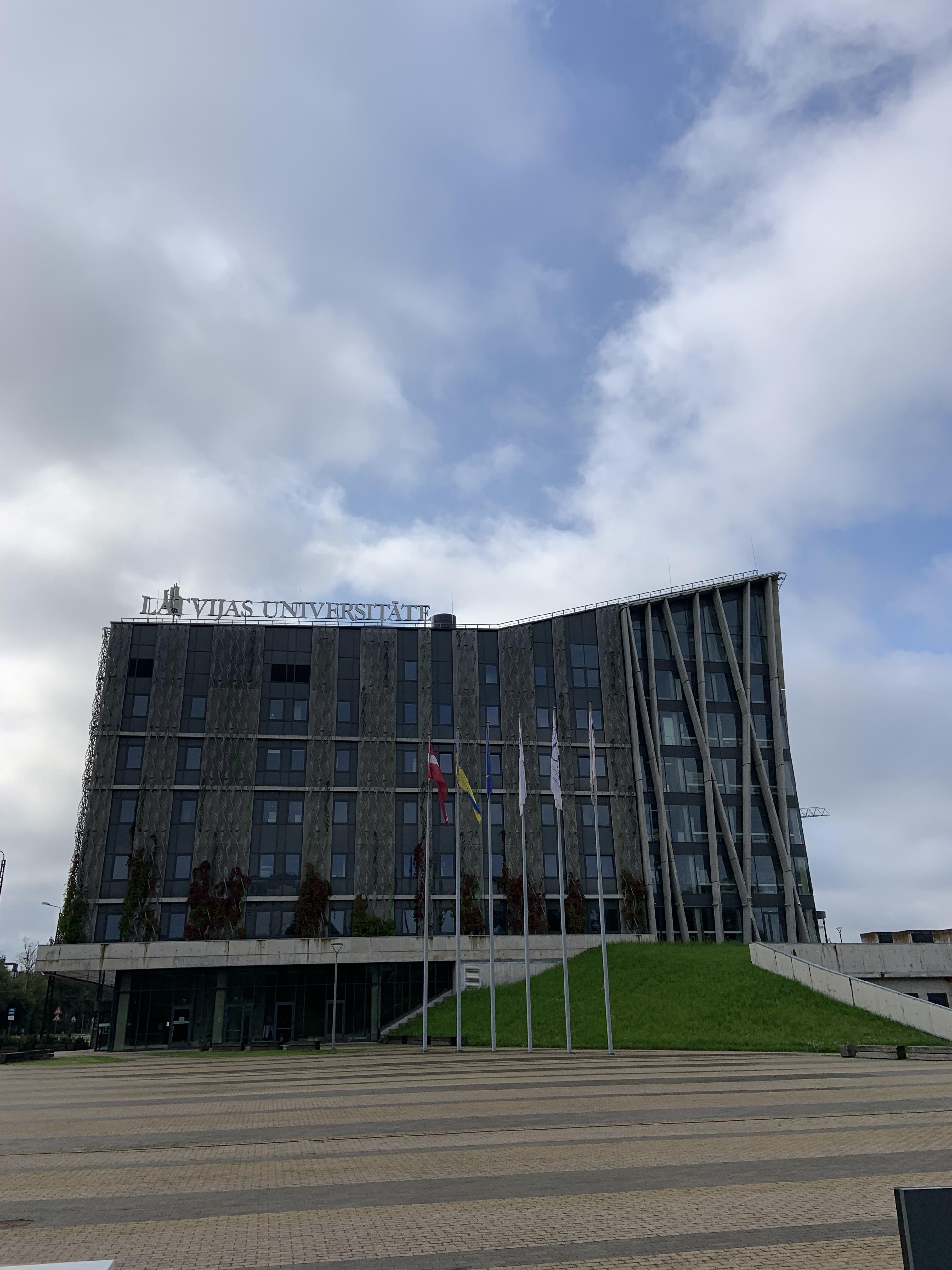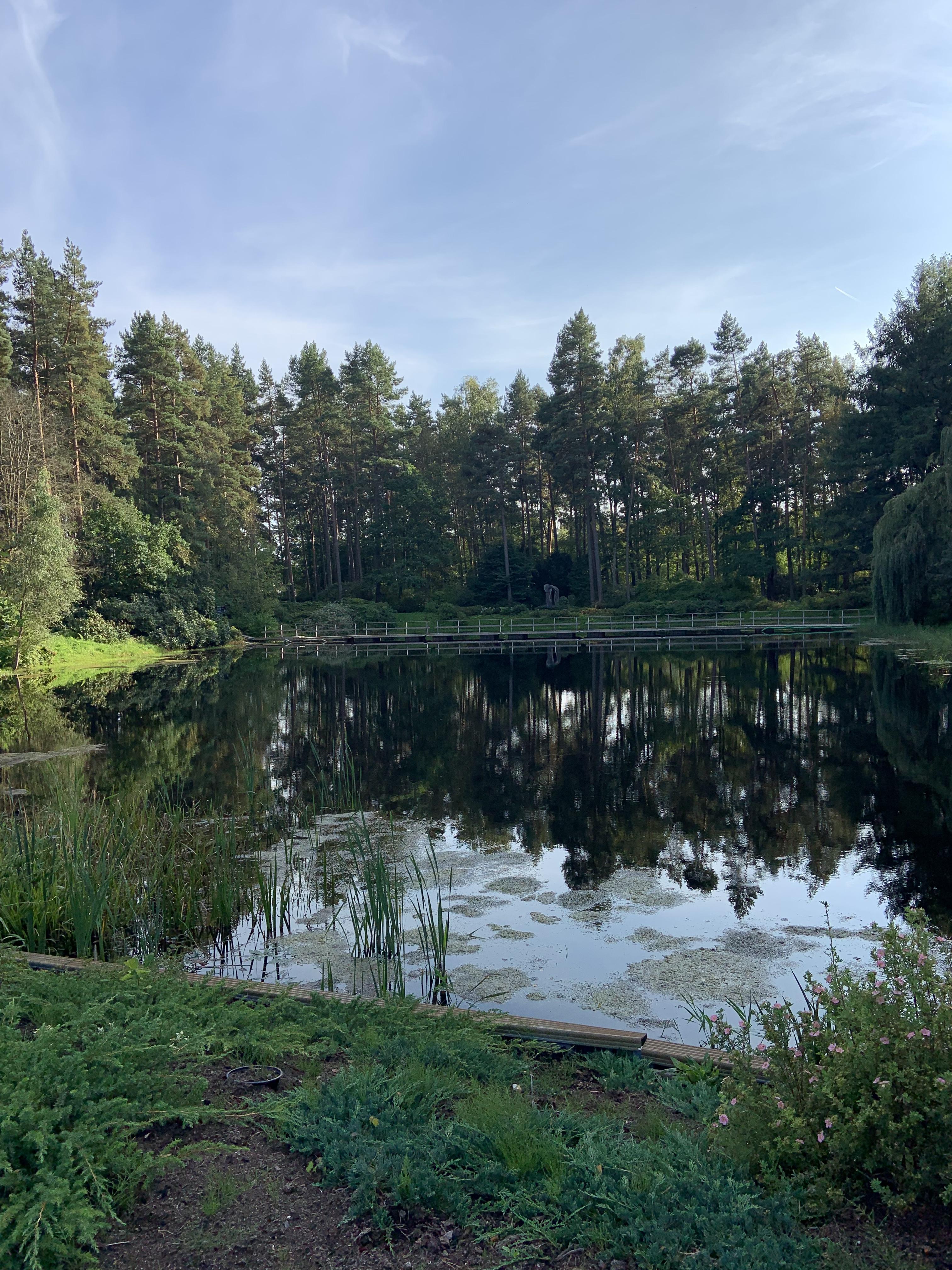
In collaboration with Doctor Indrikis Krams and the University of Latvia, I am studying the behavioral and ecological dynamics of mixed-species flocks of birds. The birds within these flocks have very complex vocal repertoires, meaning they can produce an incredible variety of calls and songs. They are also very intelligent, both individually and socially. As individuals, they have been observed to cache seeds, where they take a seed from one of our feeders, hide it in a tree, and return to it later when they’re ready to eat it. In a social group, the birds will operate as a cohesive flock that is connected by the vocalizations that the birds make in relation to other birds and their environment. So, even though they are completely different species, they can effectively communicate and understand the “language” of each other!
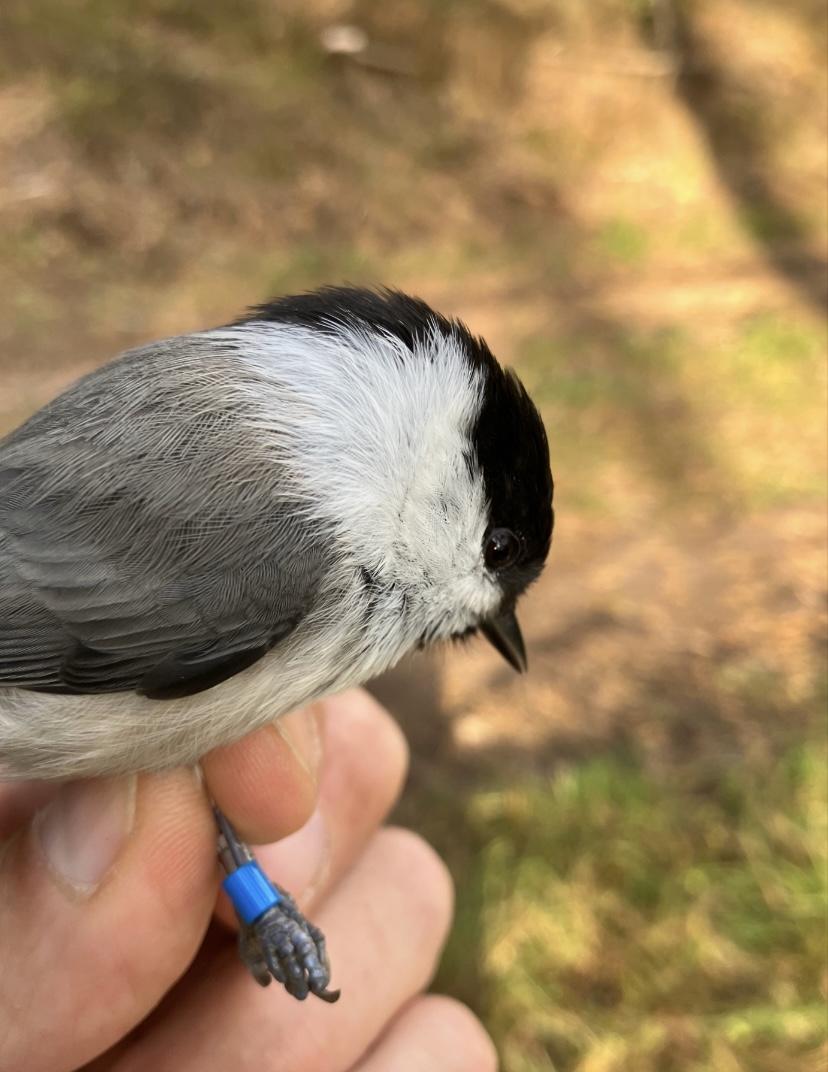
And now for my favorite part: the species of birds I study. I swear scientists are being funny on purpose when they name some species because how do you unironically name an entire taxonomic family of birds… tits. If you were bored up until now, I think I have your attention. Yes, the family of birds I’m studying in Latvia are all some species of tit. Specifically, we perform experiments using mixed-species flocks of great, crested, coal, willow, blue, and marsh tits.