This is important work that helps keep the community healthy.
However, there are challenges. Because members change every two years, there is a lot of turnover. Some members may not have previous training in water system management, and sometimes people are elected even if they did not plan or want to serve. These challenges can make it harder to keep water and sanitation services running smoothly in rural Perú.
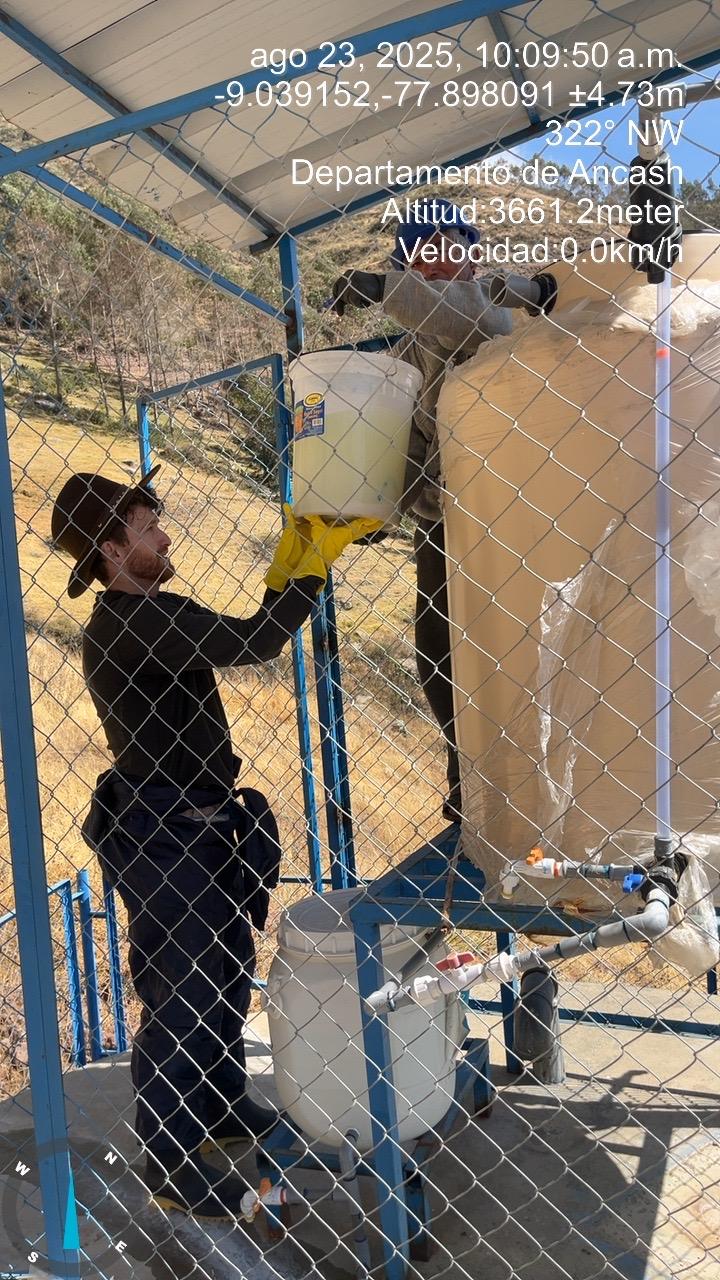
This question can be a little hard to answer. Since I arrived, there have been many improvements, and I don’t want to overlook those. For example, the water systems are now being chlorinated regularly, and we built fences around the water sources to keep farm animals out. These are important steps forward. However, there is still more work to do. Even though chlorine is being added, the amount is not always high enough to meet the government’s minimum safety standards.
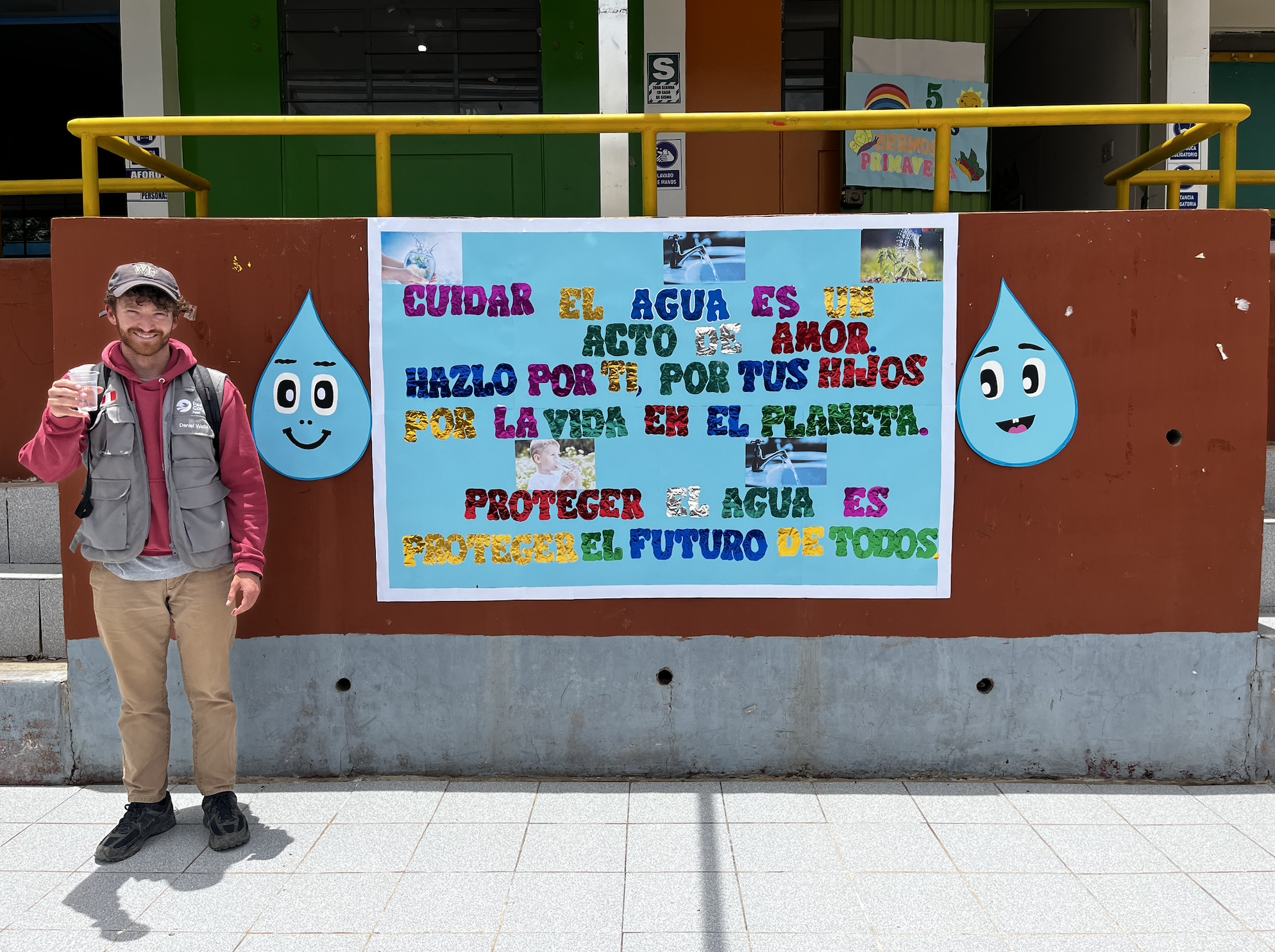
Many people think that building pipes and tanks is the hardest part of improving a water system. In reality, the most challenging part of my job is education. It takes time to help people understand how their actions—or inaction—can affect water quality and health. Giving hygiene talks is an ongoing process, but each time I do it, I feel more confident, and community members can see how much I care about their well-being.
Because the JASS leadership changes every two years, one of my biggest goals during my service is to create a succession plan. Since a new group is elected regularly, progress could be lost if the new members are not prepared.