Besides decorations, a lot of the Christmas markets also have rides like carousels, where the children are usually gathered. I also really enjoyed the art and decorations around the markets. The market in Cologne had an exhibit with Cologne's traditional puppets representing saints and fairy tale characters. The Cologne market also had people dressed like angels, so my friend Cassandra, another English Teaching Assistant, and I got a picture with them.
Besides the larger Christmas markets, during November and December, there are also lots of smaller stalls and tables, especially at universities, selling traditional foods to raise money for charities and student clubs. You can find non-alcoholic punch (warm fruit juices), baked goods, and fresh waffles. They're super convenient if you want to pick up a quick snack after class.
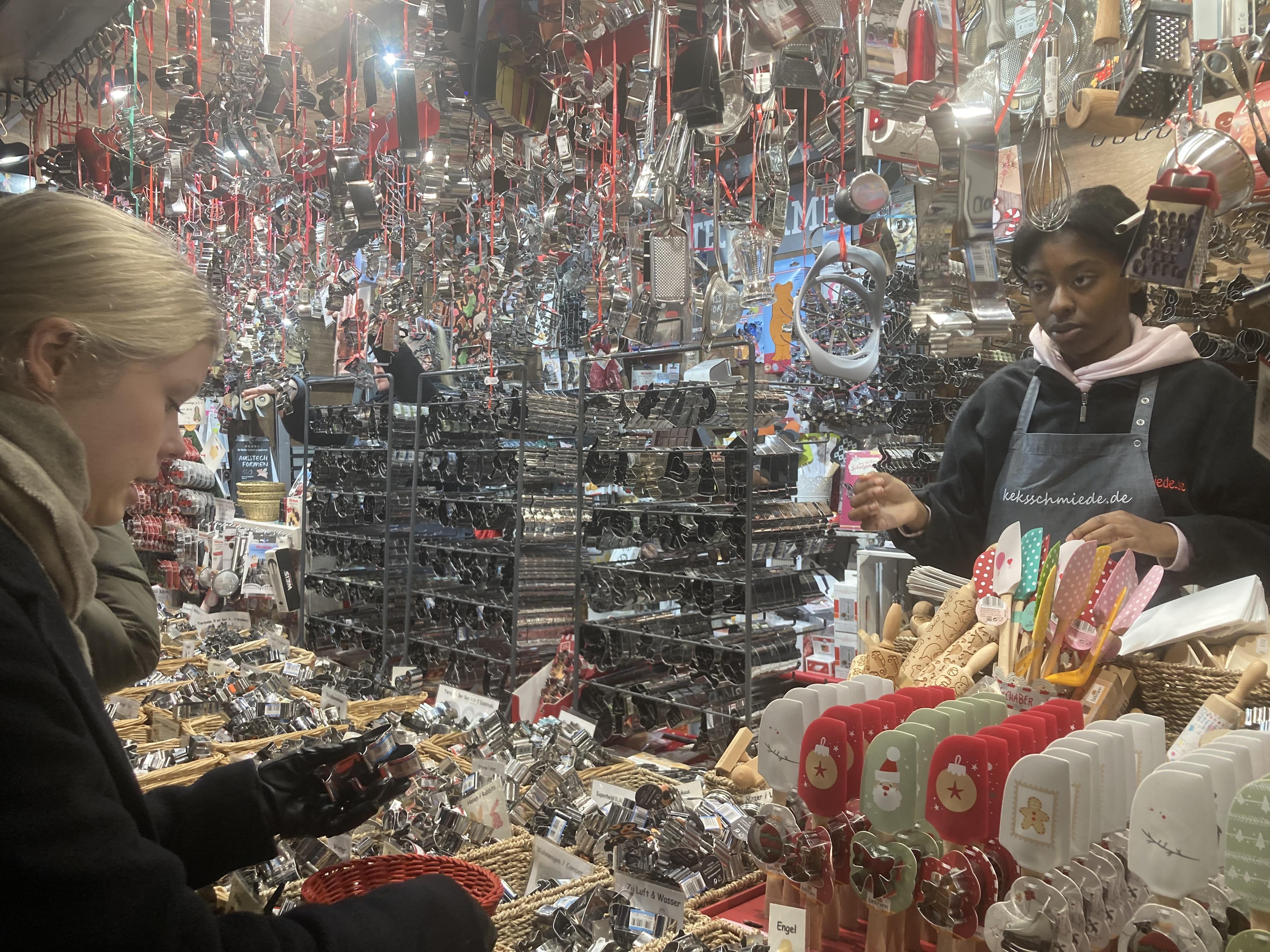
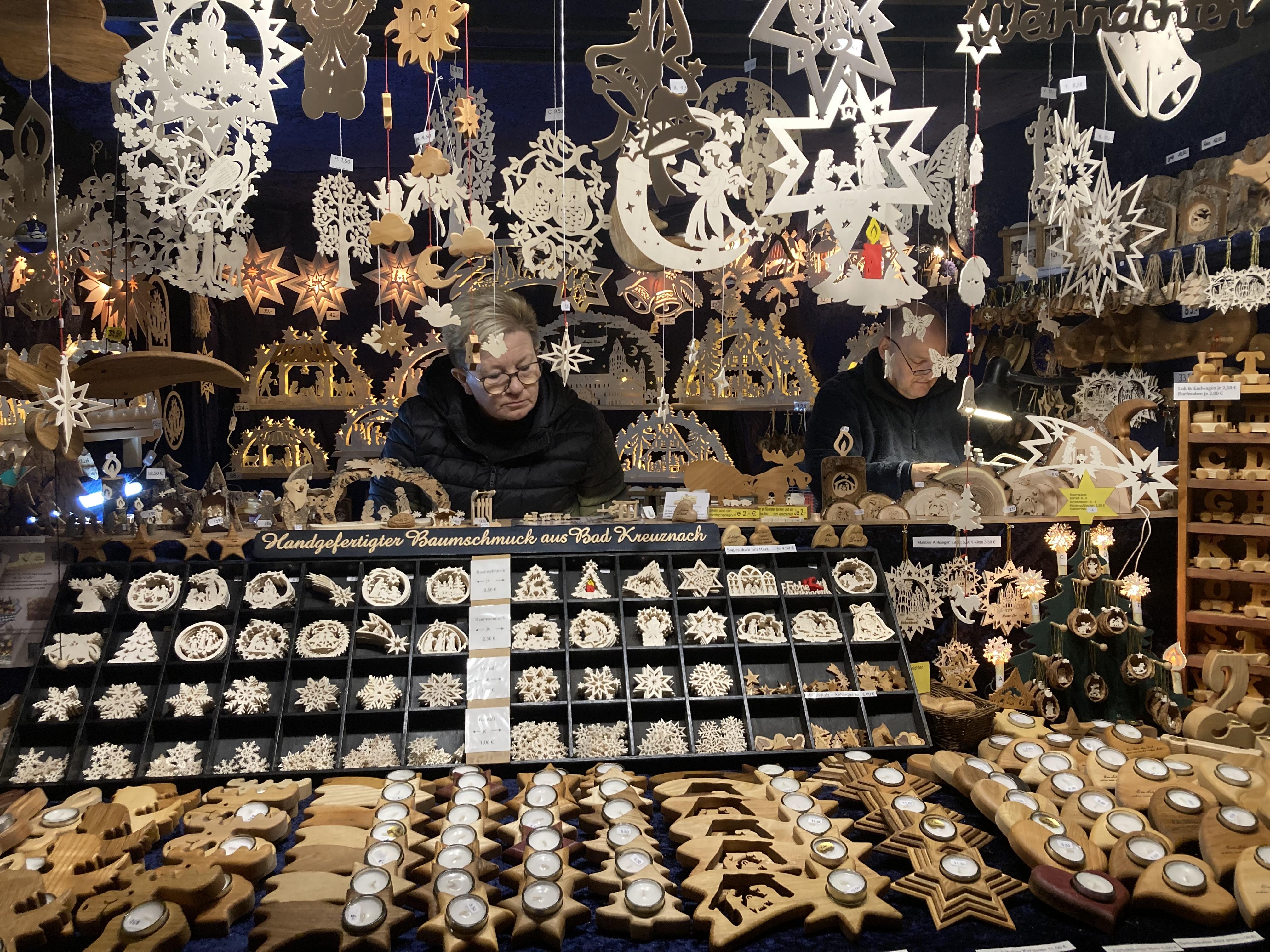
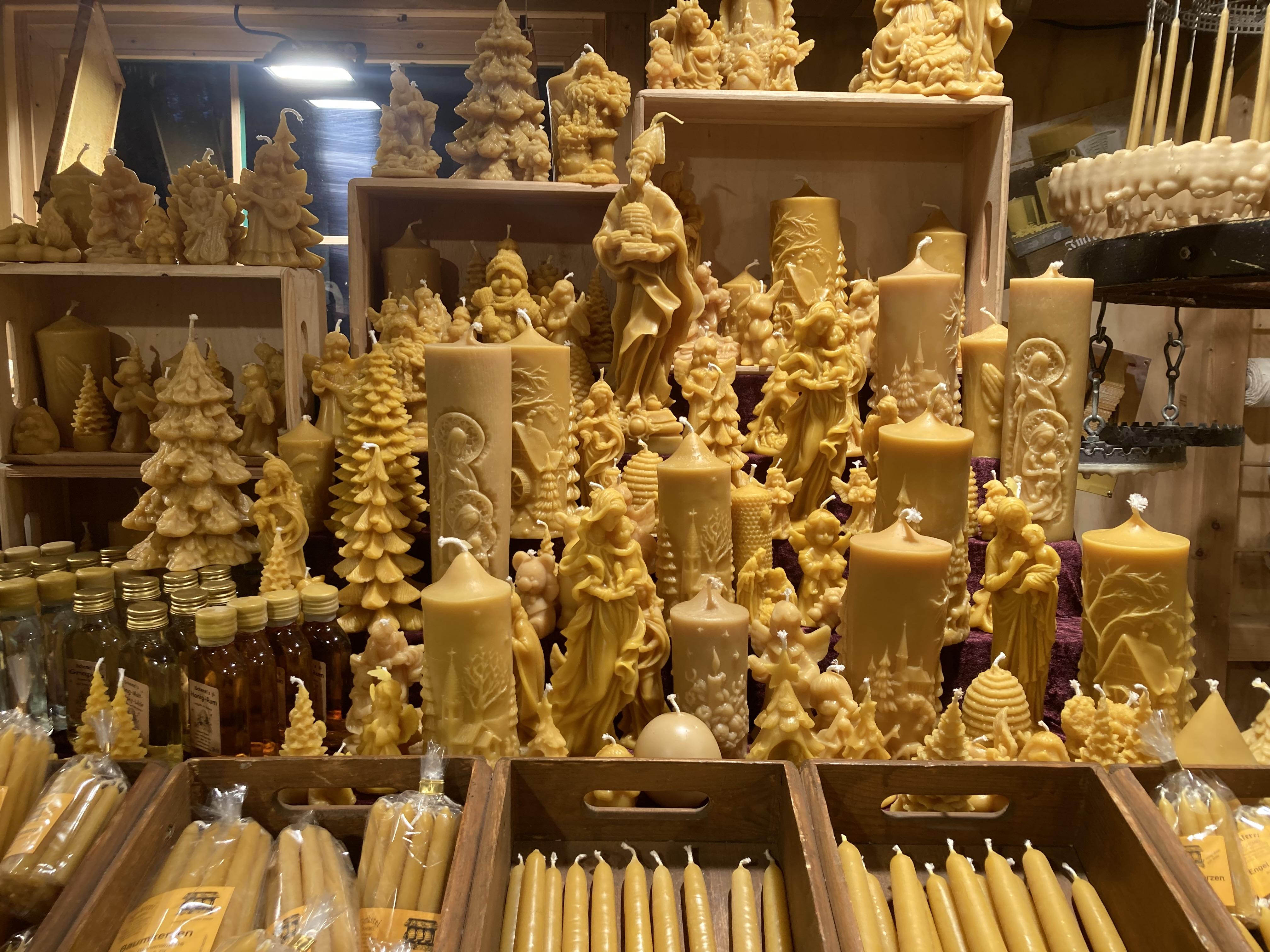
Christmas markets began in late medieval Germany as trading posts where families could buy meat, warm winter clothes, and other things they needed to survive the winter. Later on, craftspeople gathered there too, selling toys and other handmade Christmas gifts. Today, the tradition brings together all Germans: Christians, atheists, Muslims, Jews, and other religious minorities.