All of my herbs together cost only $8.00 Singapore dollars, about $6.00 US dollars. Inside, shelves stretched all the way up to the ceiling, packed with jars, boxes, and bags of dried roots, fruits and flowers, many with signs written in Chinese characters.
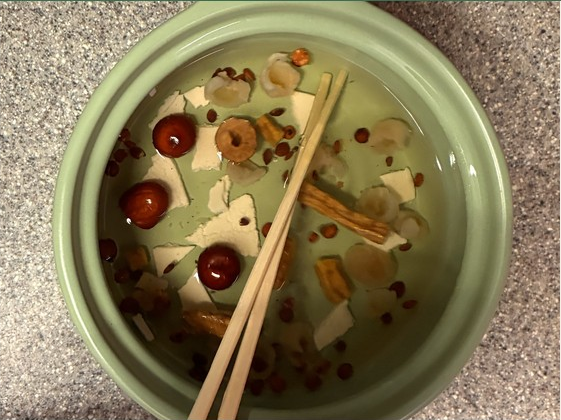
Here’s what went into my tea:
Dangshen (say: "dong-shen"): a root believed to give the body energy
Longan (say: "long-an"): a sweet dried fruit related to the lychee
Suanzaoren (say: "swan-zow-wren"): seeds from a sour jujube fruit, used in TCM to help people sleep
Fuling (say: "foo-ling"): a fungus that grows on pine tree roots. Yes, a fungus, like a mushroom!
Red dates: sweet fruits that help the flavors blend together
Rose buds: real flowers! I added these because in TCM they’re used for stress.
Chenpi (say: "chen-pee"): dried tangerine peel, which I also added to help with digestion.
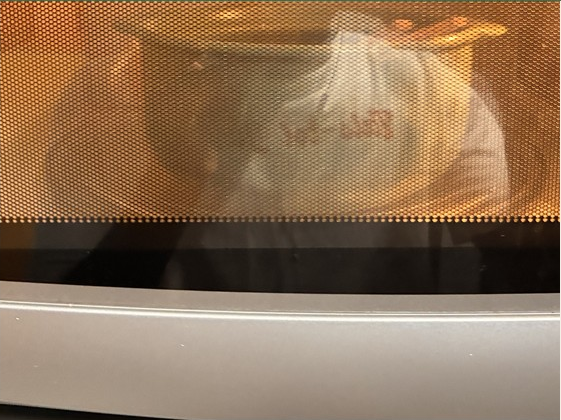
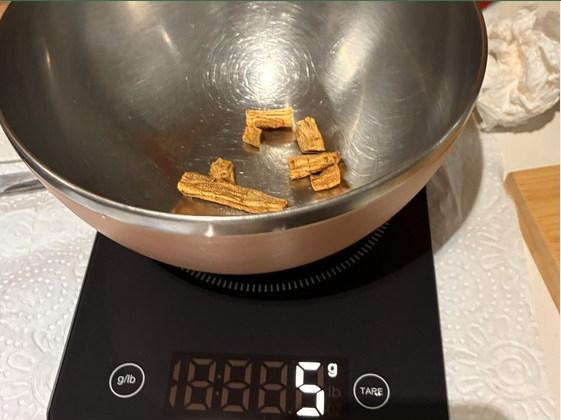
I weighed every ingredient on a scale, then brewed half a batch in the microwave in my dorm room. As it cooked, the water changed from golden to deep brown. The white fuling pieces turned yellow-orange, and the dried longan puffed up into soft, pale curls! When it was done, I poured it through a strainer into a mug.
So… did I drink it? Nope! In TCM, a remedy is matched to a person’s problem. I sleep just fine, so this tea wasn’t meant for me. Western medicine works the same way: you don’t take medicine for a sickness you don’t have.
My class also visited a Chinese medicine hall.