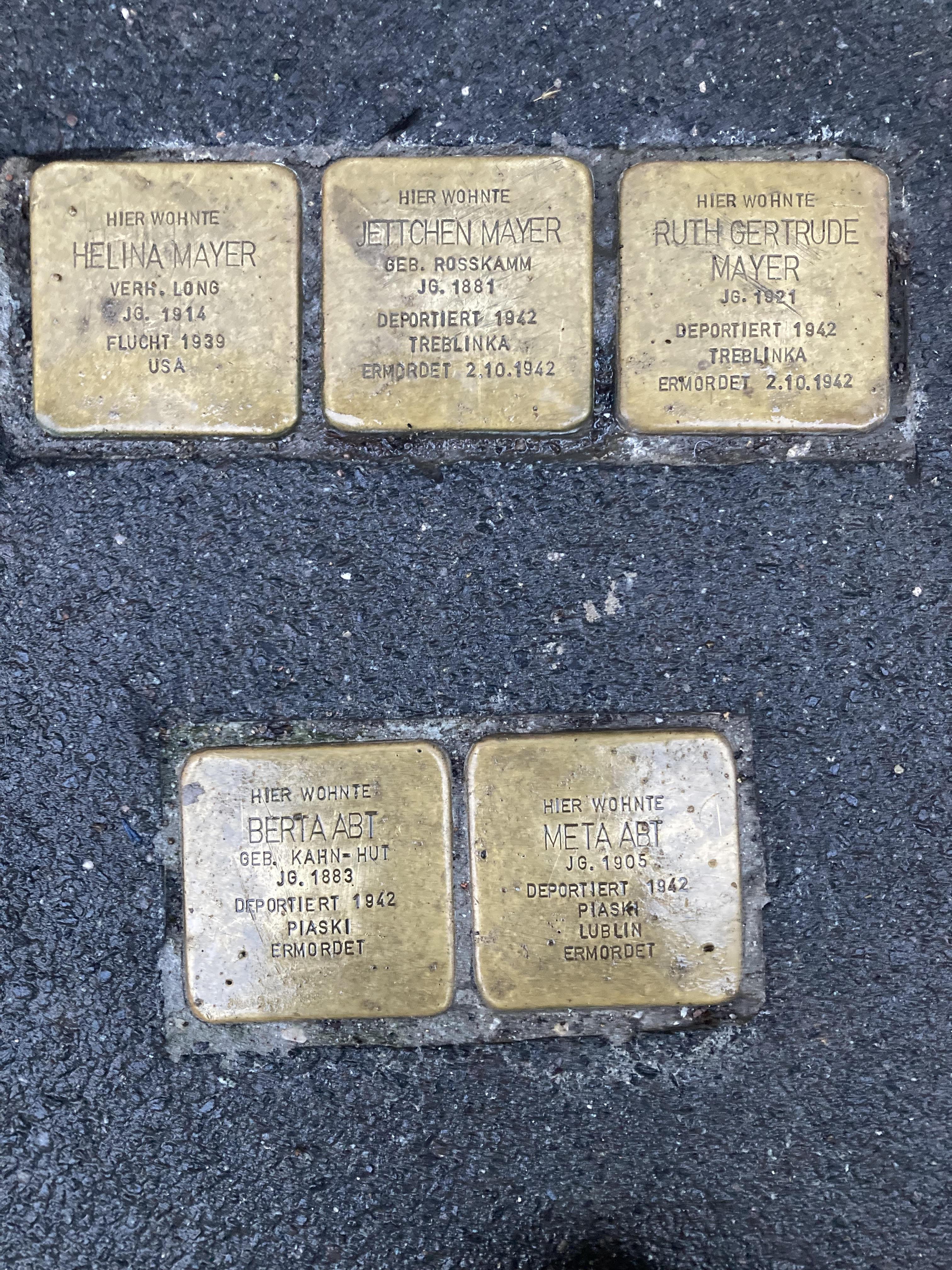
Public memorials to the Shoah are also everywhere, from the central memorial in Berlin to the smaller memorials in other cities. There are also more than 100,000 Stolpersteine, or “stumbling stones.” These small stones list the names, birth dates, and death dates of Shoah victims, both Jewish and non-Jewish, at their last residence. At first, you may walk past them without noticing, but once you start looking, you see them everywhere. I found them very touching because they honor people where they once lived.
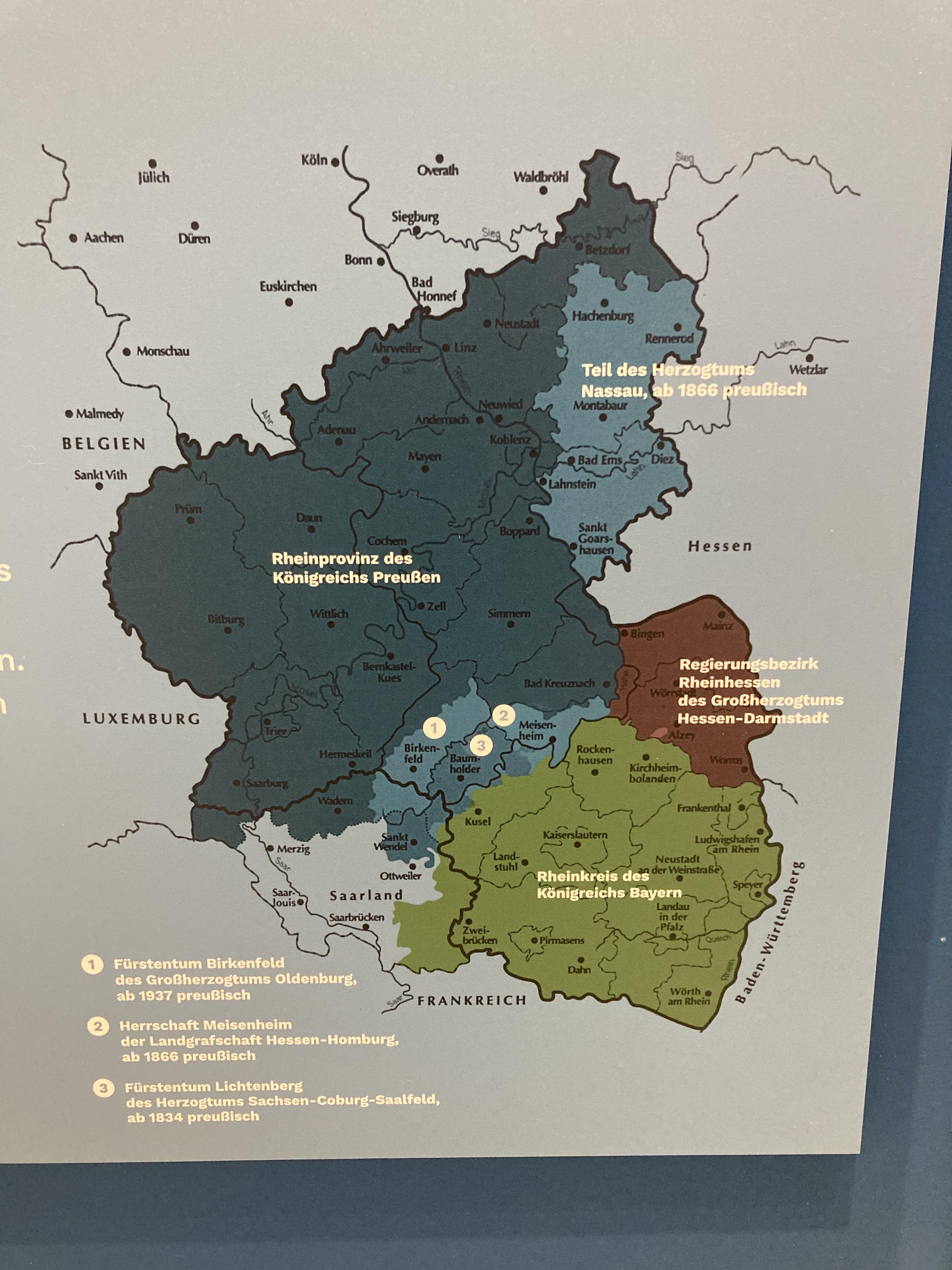
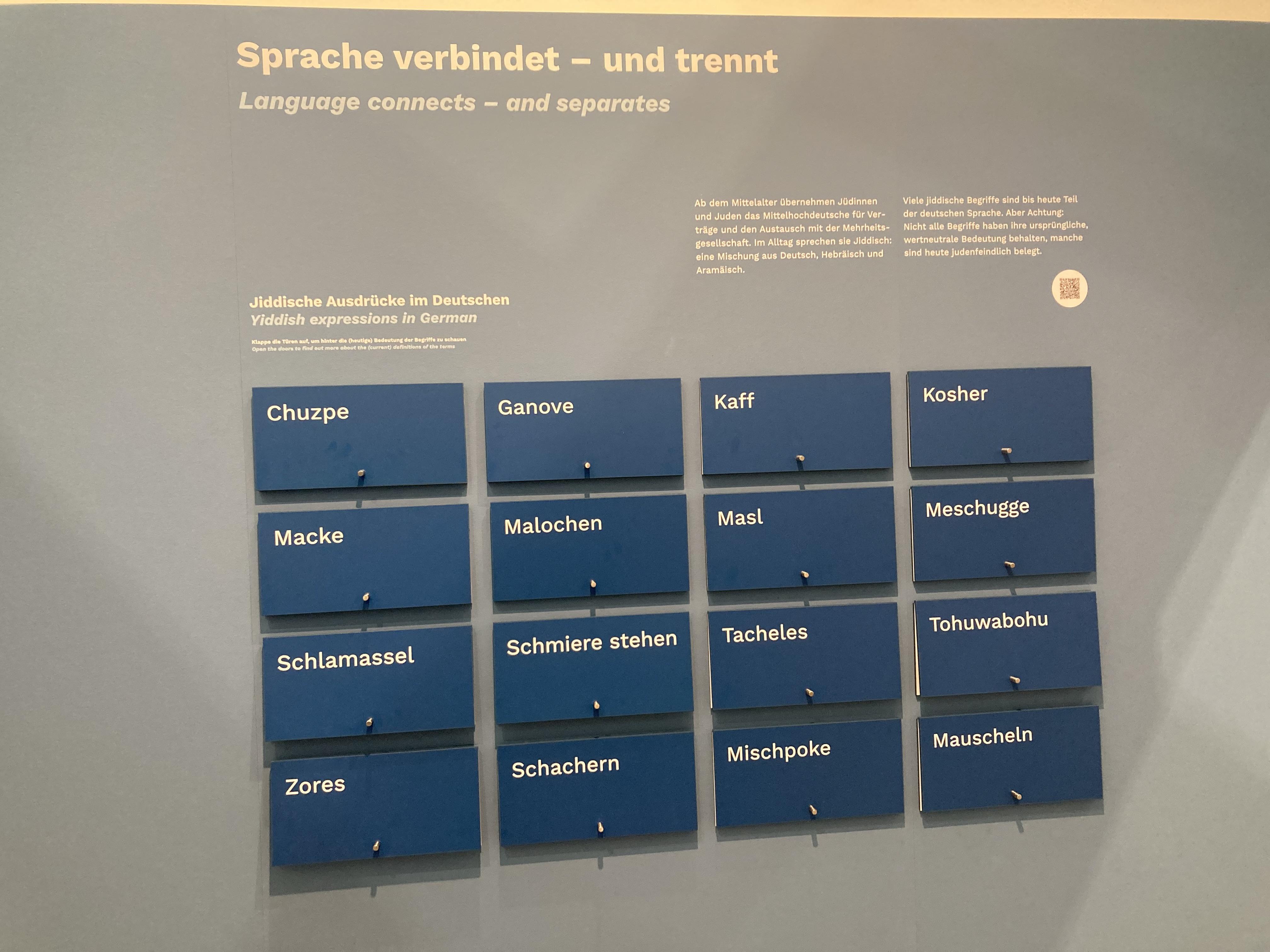
While living in Mainz, I also learned about the city’s Jewish history. I visited an exhibit at the Landesmuseum (state museum) about Jewish history in Mainz. It explained how Mainz helped shape the Yiddish language and had a large Jewish community in the Middle Ages. Mainz and other cities along the Rhine River are considered the birthplace of Yiddish. Between the 10th and 12th centuries, Mainz was called “The Light of the Diaspora” because it was an important center of Jewish learning.
Although Jewish people in Mainz often faced unfair laws and violence, many became successful traders and professionals, including doctors. The exhibit also talked about later Jewish history in the city, including Jewish political activists like Anna Seghers, who the school where I teach is named after.
I also visited two Jewish cemeteries in Mainz: the Alter Jüdischer Friedhof (Old Jewish Cemetery) and the Neuer Jüdischer Friedhof (New Jewish Cemetery). The old cemetery is one of the oldest Jewish cemeteries in Europe, with graves going back to as early as 1049 (almost 1000 years ago!). The new cemetery, established in 1881, is still being used today.