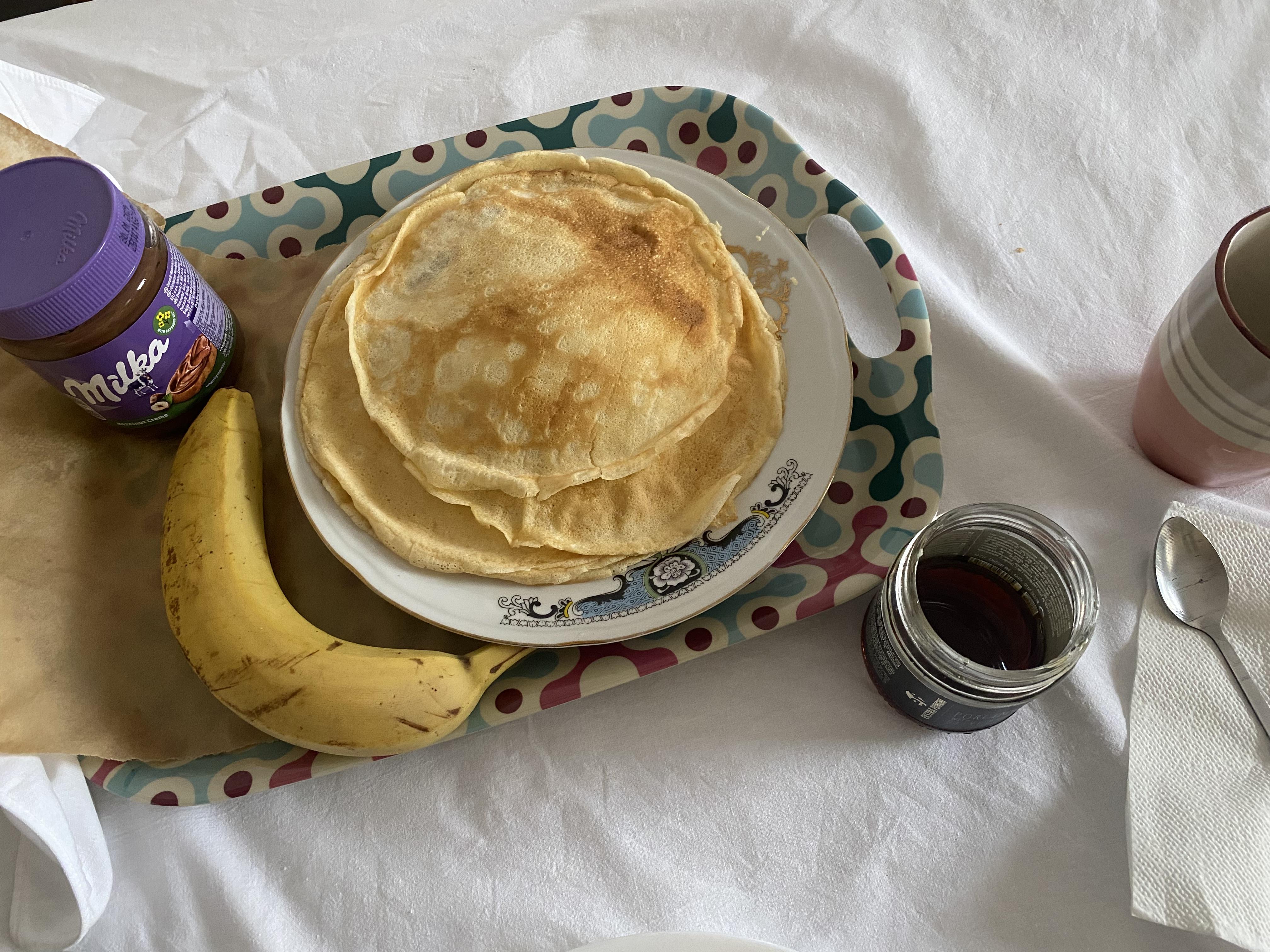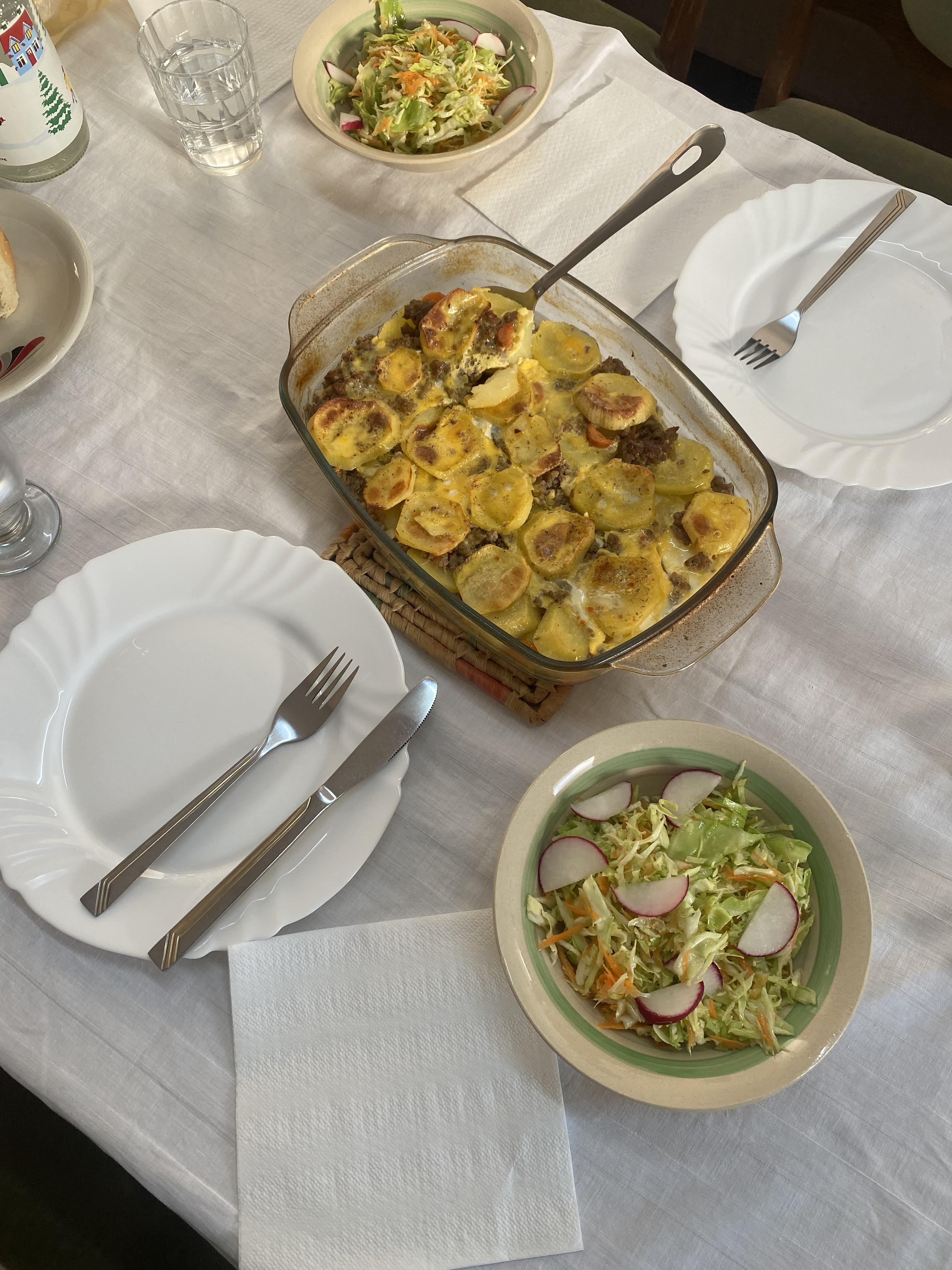
I have also eaten simple dessert puddings that are modest and homemade rather than decorative.
In addition to food, I experienced rakija. While not a dish, it is a traditional homemade fruit brandy that is central to social life. It is commonly made from grapes, plums or apricots, but it can even be distilled from kiwis.
Tavche Gravche felt warm and comforting, especially after long hikes in the mountains. What looked simple at first became something I associated with rest and relief at the end of physical effort. Over time, it became familiar and even nostalgic.
Rakija felt very strong at first. At 40–80% alcohol by volume — compared to beer at about 5% — it was surprising. My first reaction was mostly about its intensity. Over time, I began to understand that it represents hospitality and tradition more than flavor.
Palachinki felt immediately familiar because I have had many crepes. Eating them here felt like a small connection to home. Fresh salads felt refreshing and balanced, especially alongside heavier dishes. Dessert puddings felt straightforward and modest — part of everyday life rather than a special occasion.
Tavche Gravche is prepared slowly. The beans are soaked, then baked and simmered for several hours in a clay tava with onions, oil and paprika. The clay holds heat evenly and allows the flavors to develop gradually. It is not a rushed meal.
Palachinki are made from a thin batter poured onto a flat pan and cooked quickly on both sides, similar to crepes. Salads are made fresh from raw seasonal vegetables.