Chinese immigrants and entrepreneurs established businesses in the area, which gradually developed into the Chinatown we see today, with its colorful gates, lanterns, restaurants, and shops.
I found this connection fascinating, though also quite unsettling. I'd walked through Chinatowns in other cities without thinking much about how those neighborhoods came to exist; here, the history of one community's destruction was tied to the later development of an entirely different community, whose residents and businesses gave the neighborhood a new identity. I probably never would have known about this history if our guide hadn't mentioned it.
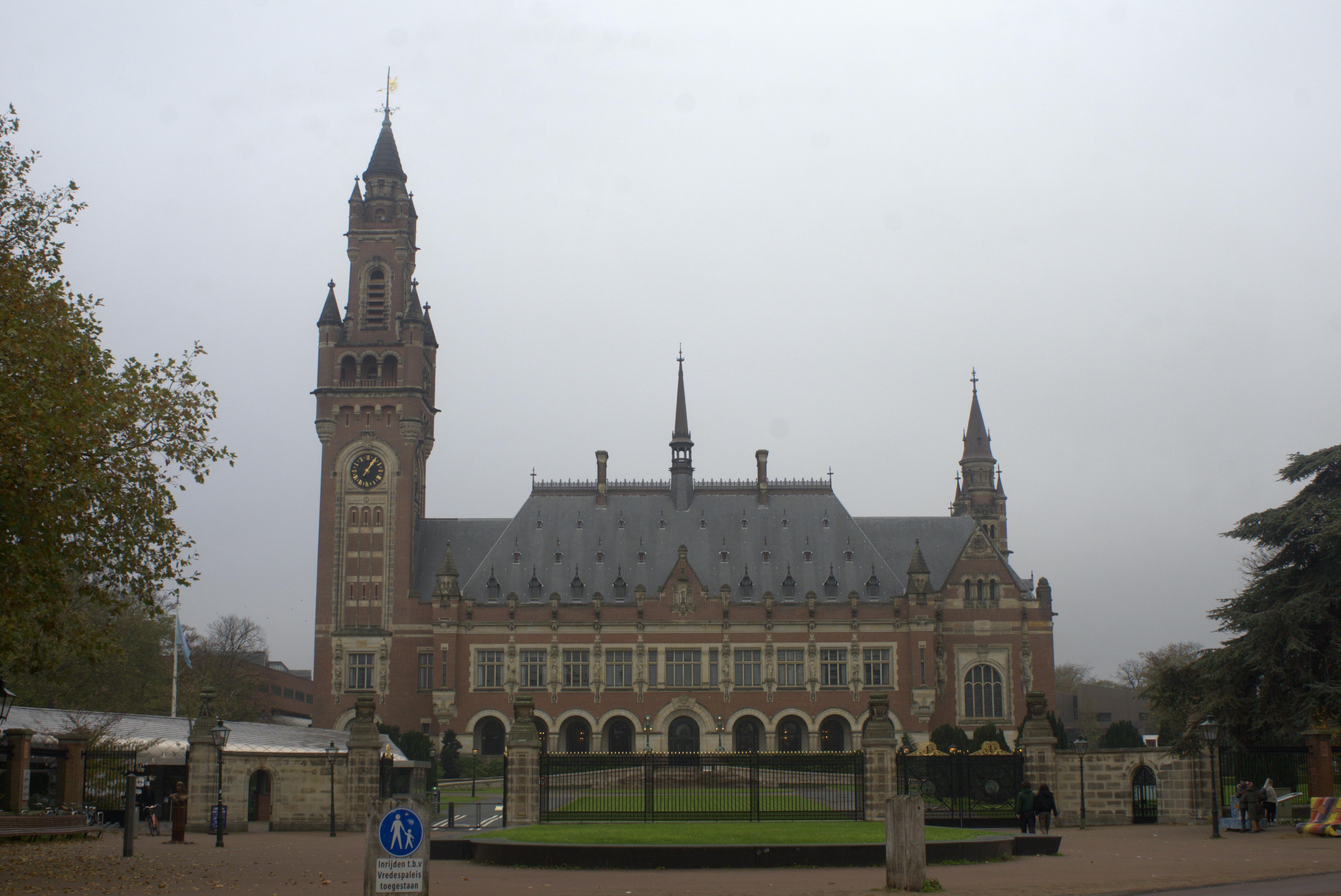
After the walking tour, I headed to the Peace Palace, one of Den Haag's best-known landmarks. The building opened in 1913 with financial support from Andrew Carnegie (of Carnegie Steel fame), a Scottish-American industrialist and philanthropist. Carnegie believed that international disagreements should be resolved through law and arbitration rather than warfare. Interestingly, the Peace Palace opened just one year before World War I began, making the timing of its construction particularly poignant. Today, it houses the International Court of Justice (ICJ), the principal judicial organ of the United Nations. The ICJ resolves legal disputes between countries and provides advisory opinions on international legal questions.
Den Haag is also home to the International Criminal Court (ICC), established in 2002, although it's located in a separate building.