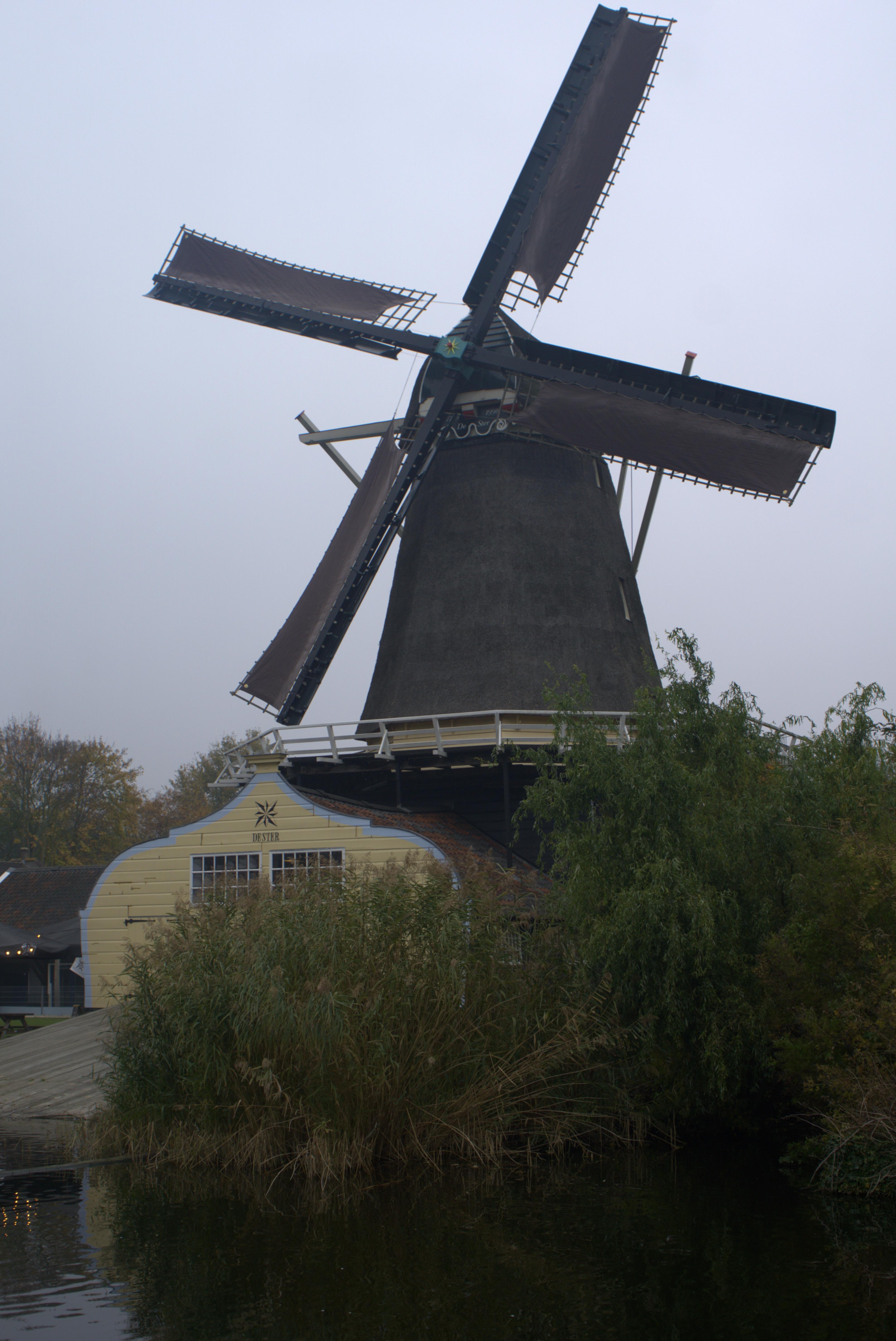
After three days in Amsterdam, I headed south to Utrecht, a university city that felt noticeably quieter and more relaxed. I spent the morning wandering around its canals and streets before stumbling upon something I hadn't expected to visit: a working Dutch windmill!
We tend to associate Dutch windmills with picturesque countryside and tulip fields, but they were once essential to the country's industry. Depending on their design, they could pump water, grind grain, or saw logs into planks. The windmill I visited, Molen de Ster ("The Star"), was built in 1739 as a sawmill. Its location beside a canal was no coincidence; logs were transported by water and stored submerged in a timber basin beside the mill, helping preserve the wood before it was cut.
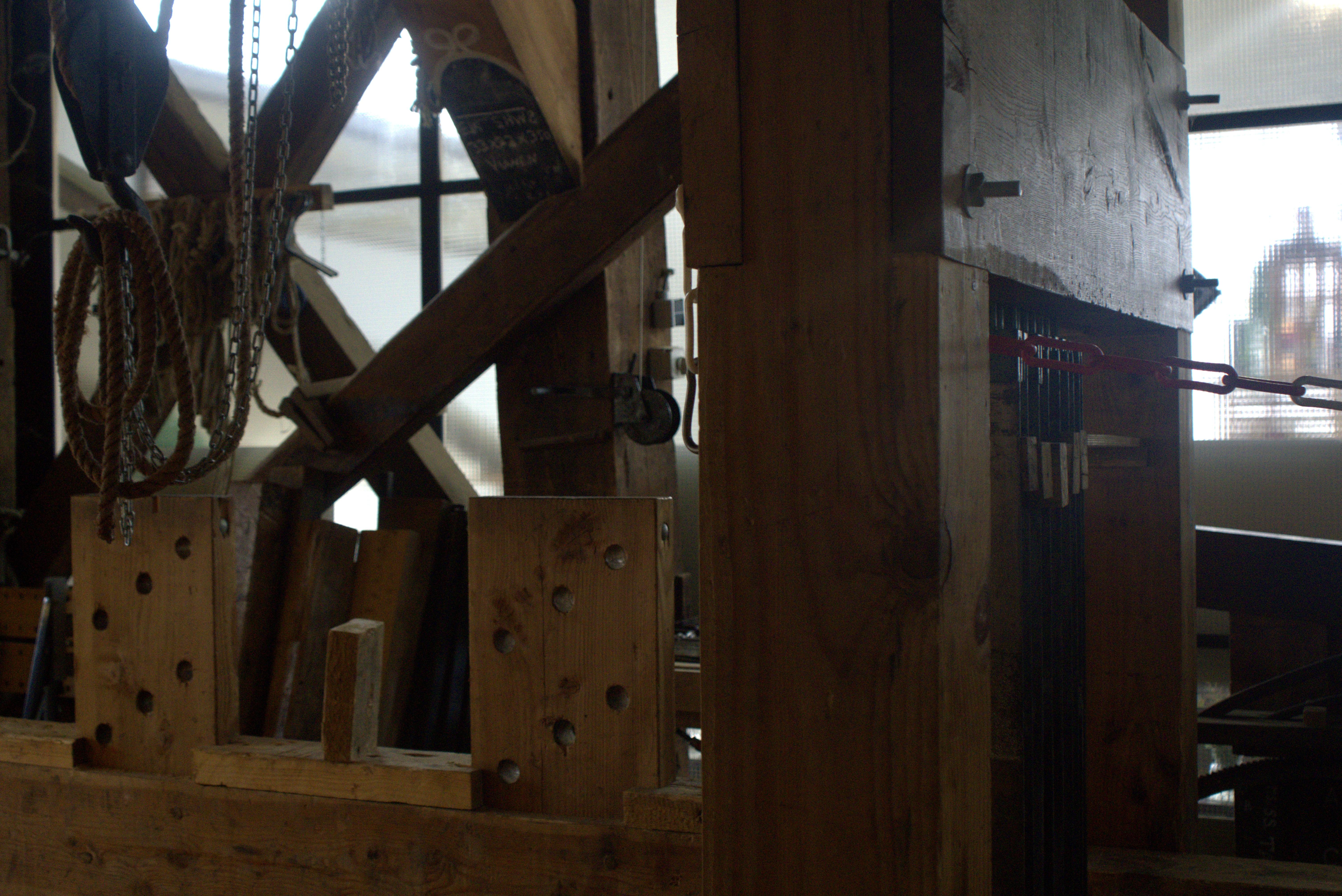
I was most excited about getting to see the machinery inside. The windmill contains an enormous system of wooden gears, shafts, and beams that convert the rotation of its sails into the (approximately) up-and-down movement of saw blades. For those of you interested in science, this is a great example of energy conversion!
Here's a brief overview of how a windmill works: when wind flows past the sails, aerodynamic forces generate a torque that rotates the main shaft. Interlocking gears transmit this rotation through the windmill, and a crank mechanism converts it into the nearly vertical, back-and-forth movement of the saw blades. The logs themselves are slowly advanced through the saws by another wind-powered mechanism. Even the width of the finished planks can be adjusted by changing the spacing between the blades!
Something else that surprised me was that much of the windmill had actually been reconstructed.