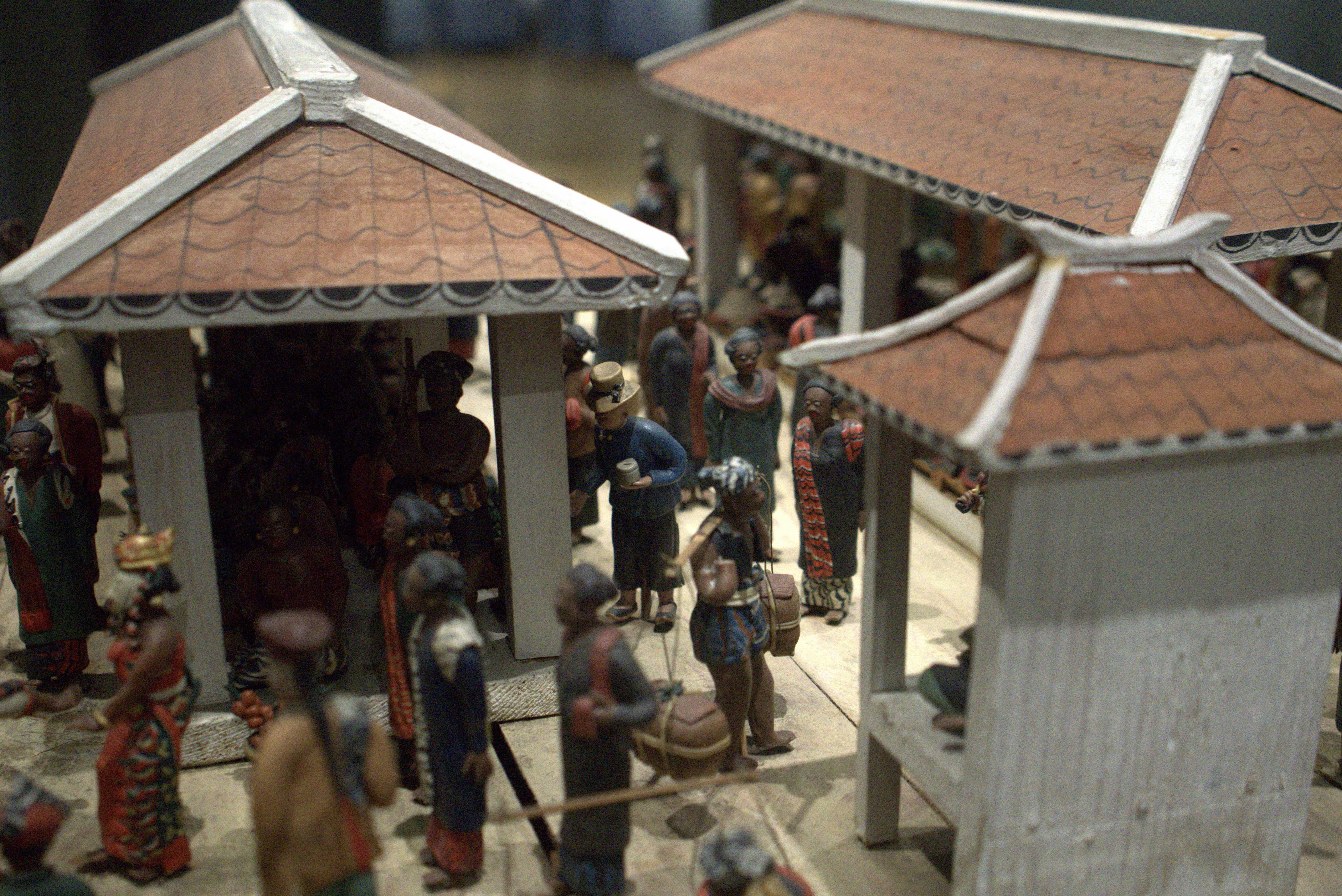
The Dutch East India Company (VOC), founded in 1602, played a significant role in expanding Dutch commercial and political influence in Asia. Over time, the Dutch established colonial control over much of present-day Indonesia, then known as the Dutch East Indies.
The museum didn't shy away from discussing the violence that accompanied this expansion. One description of Dutch colonial policies in 19th-century Indonesia mentioned "dozens of colonial wars that claimed hundreds of thousands of human lives." I remember being surprised by how directly the exhibit addressed this history, particularly in a museum otherwise filled with celebrated examples of Dutch art and craftsmanship. Much of the country's wealth during this period came from colonial trade, forced labor, and the exploitation of colonized populations.
I was similarly interested in the Netherlands' history during World War II. Nazi Germany occupied the country from 1940 to 1945, during which more than 100,000 Dutch Jews were murdered in the Holocaust. Although some Dutch citizens resisted the occupation and helped protect Jewish neighbors, others collaborated with the Nazis, including in the persecution and deportation of Jewish communities.
As I explored Amsterdam, I began wondering how Dutch students learn about these more difficult periods of their country's history. In the United States, we study subjects such as slavery, the displacement of Indigenous peoples, and the Civil Rights Movement, though debates about how these subjects should be taught remain ongoing. I was curious whether similar conversations take place in Dutch classrooms, especially when discussing colonialism and the Holocaust. Stay tuned...