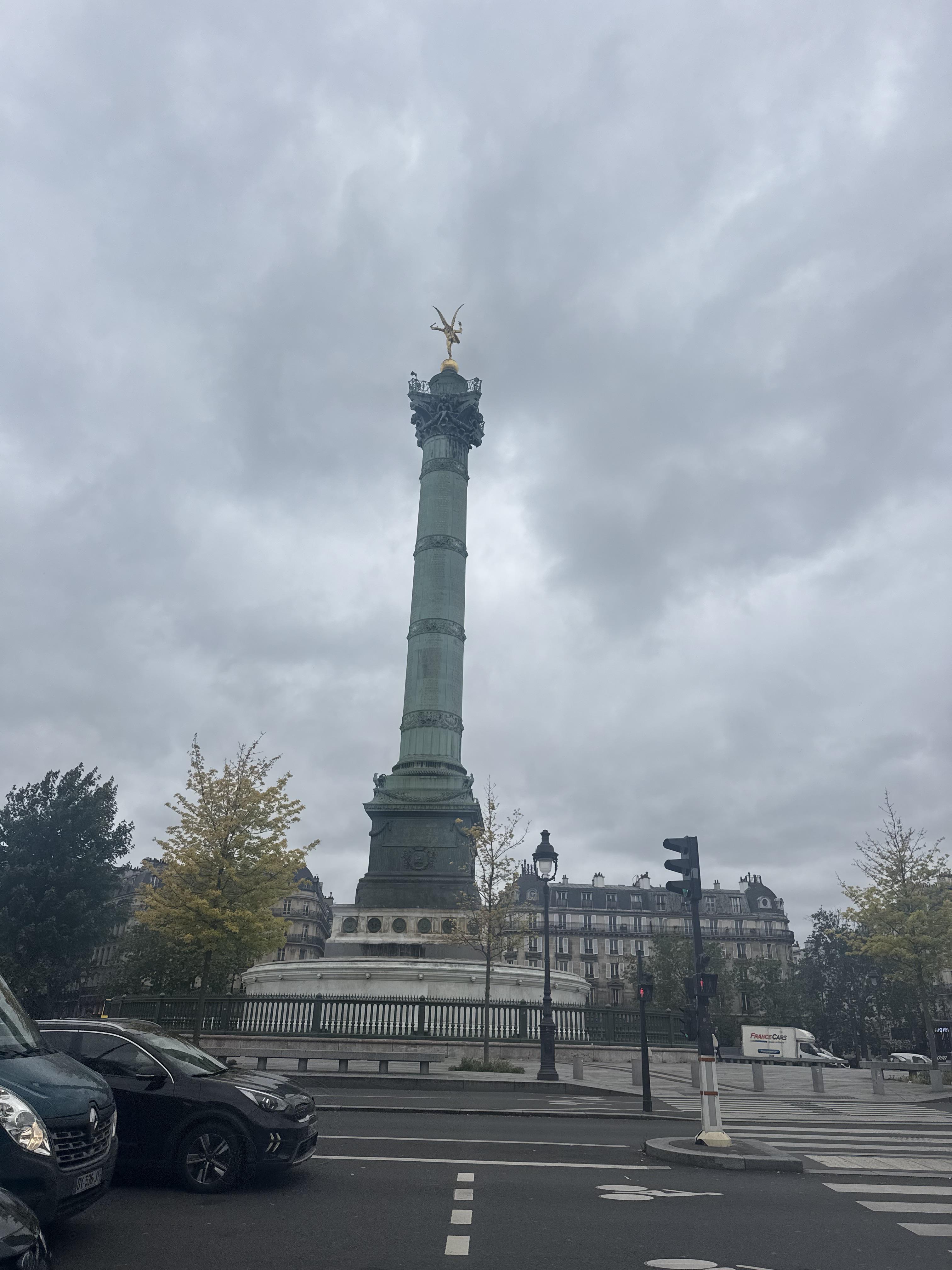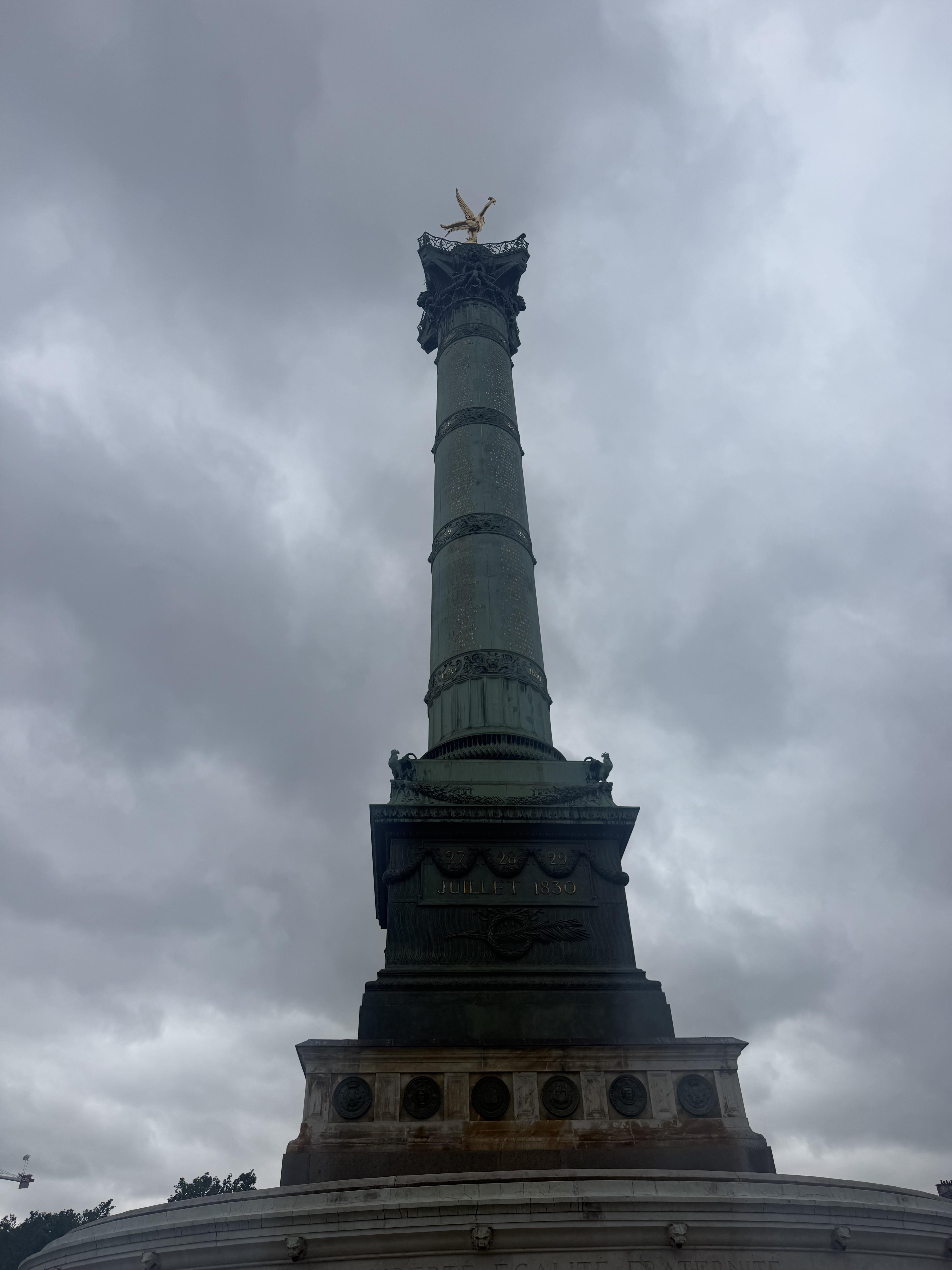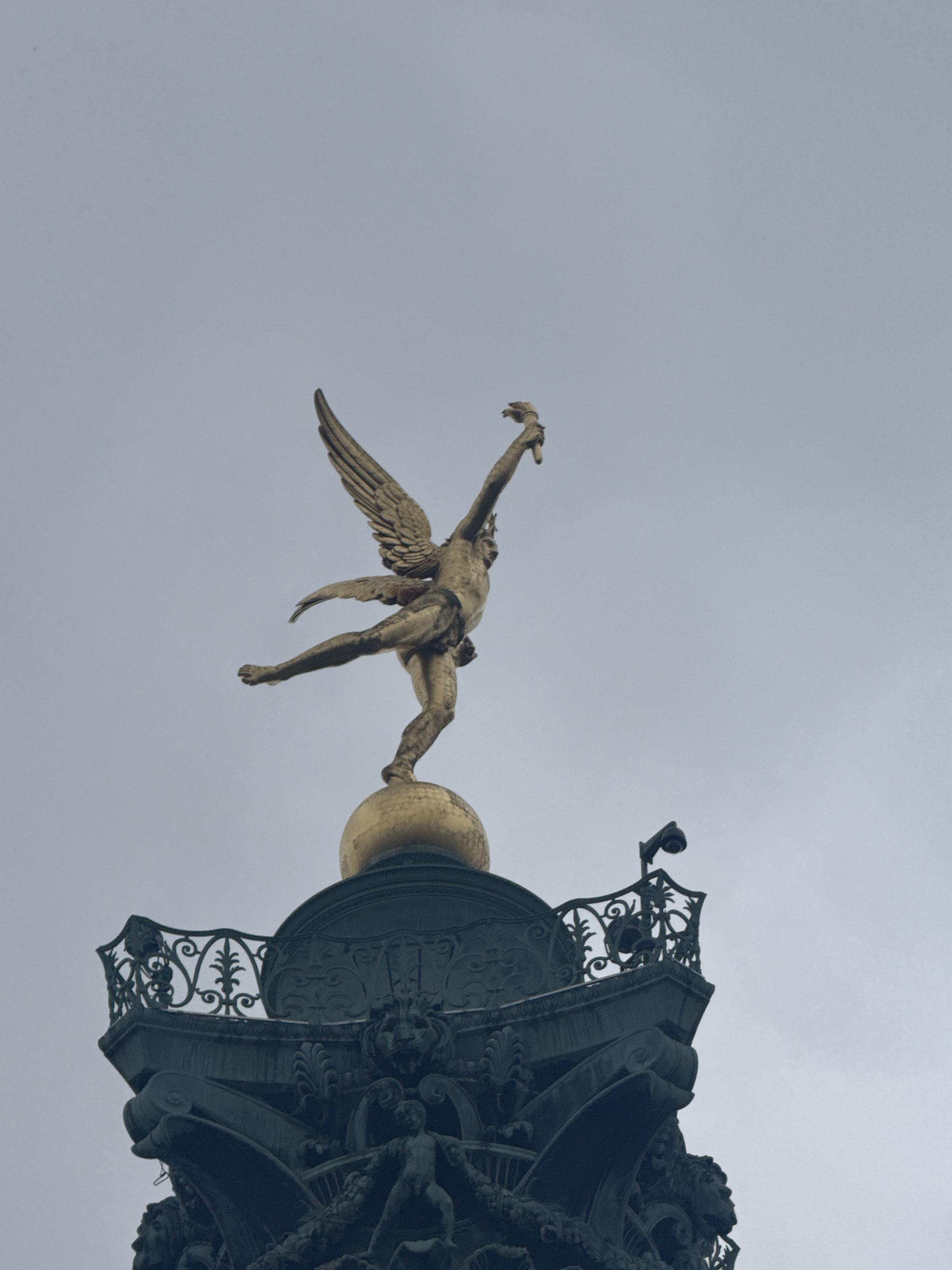
The Bastille was originally a large prison and fortress in Paris. Centuries ago, the kings of France could send people there without a fair trial, so many citizens saw it as a symbol of unfair power and fear. On July 14, 1789, during the French Revolution, a large group of everyday people stormed the Bastille. They wanted weapons and gunpowder, but they also wanted to show that the king should no longer have complete control over the people. Even though there were only a few prisoners inside at the time, the event became very important because it represented the people fighting back against injustice.
One tradition I learned about in Paris is the celebration of Bastille Day on July 14th. Since I live near the Bastille area, I have noticed that this place remains very important to people today. There are often “grèves,” which means strikes or protests, around the Bastille because it has become a symbol of people standing up for their rights and speaking out when they want change. Even now, many marches and demonstrations happen there because of its connection to freedom and revolution (especially during soccer games!). Last weekend, Paris' soccer team (called football in Europe) won the semi-finals, and there were fireworks and cars honking all night, celebrating!