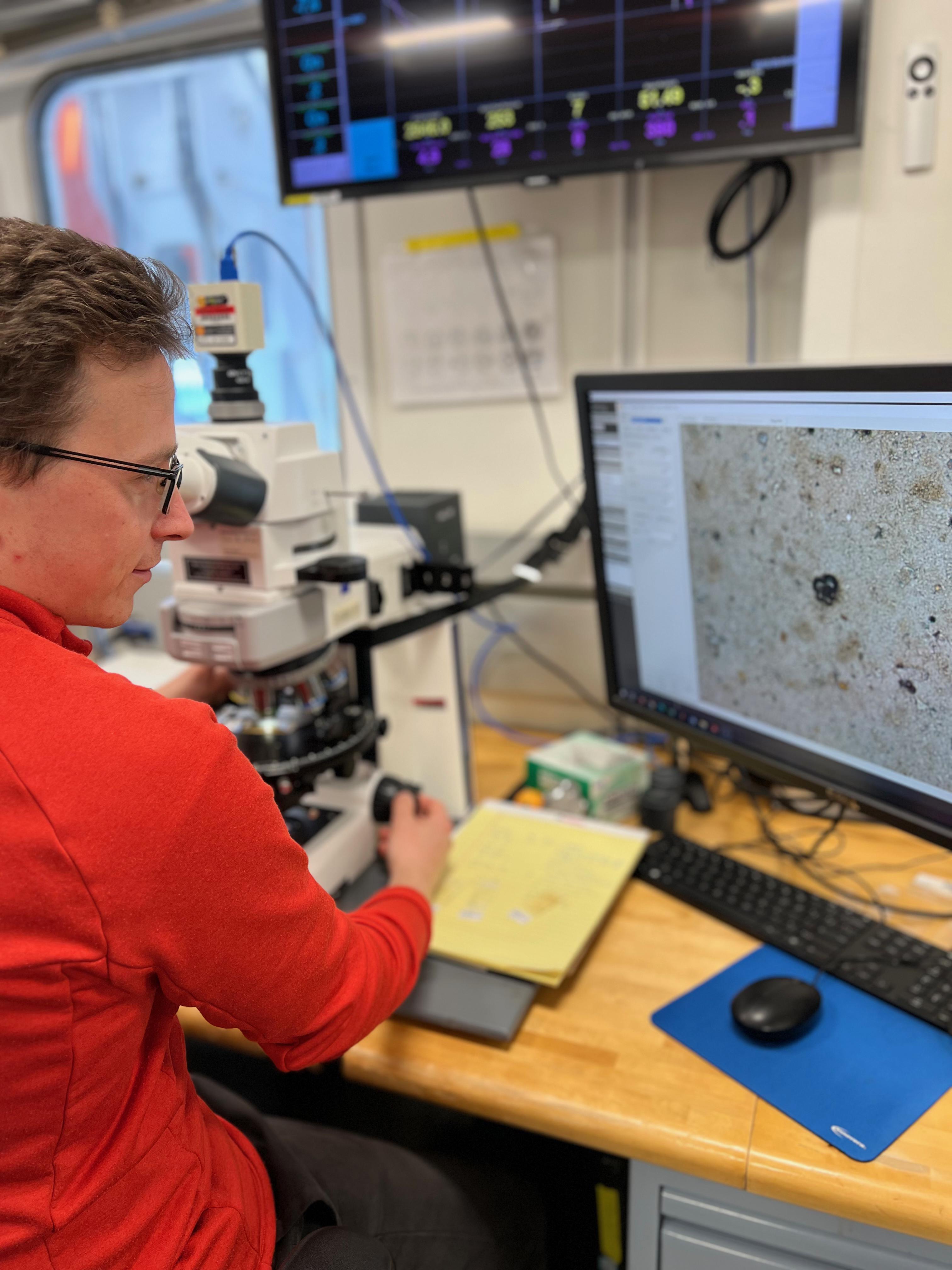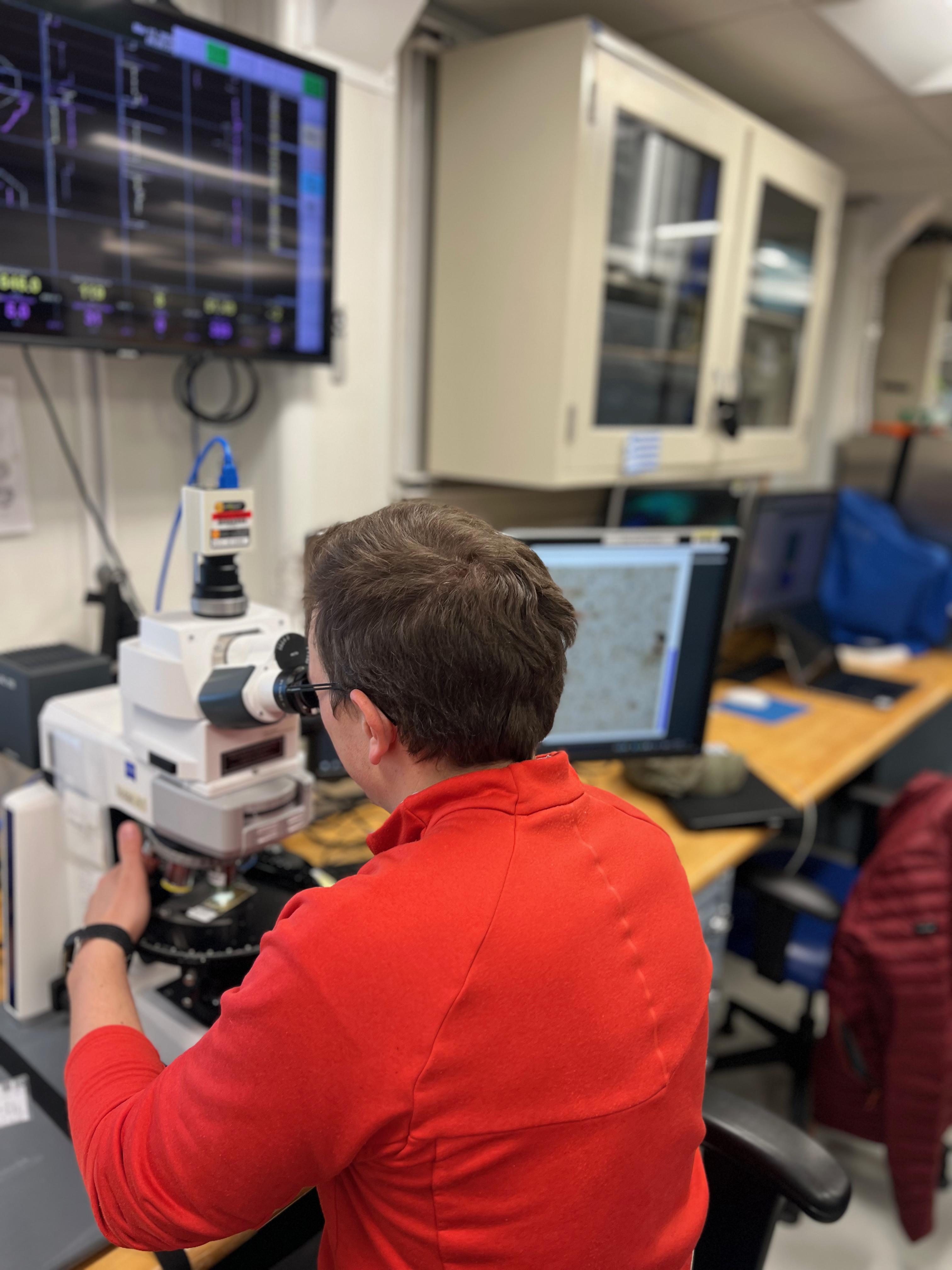
He is the only sedimentologist who works on the midnight to midday shift. He starts his day meeting with the two other sedimentologists who work the opposite shift to be updated on what they have completed or how many cores were recovered. They go over any issues as a team so the two sedimentologists can finish their shift. Once they leave, Walter is tasked with describing any of the cores that have not been examined. That means, taking notes on what colors he sees, interesting shapes or features in the sediment, what kind of disturbances the sediment has, and what kind of grains are in the sediment. For instance, we have found lots of volcanoclastic grains, aka material released from a volcano. When he's not describing cores, he makes smear slides. Smear slides are toothpick amounts of sediment (taken from a specific part of the core) that are smeared on a glass slide with deionized water, dried, and then glued down. Once ready, Walter observes the slides under a microscope to determine what kind of minerals and fossils exist in the sediment.
When his team comes back to their shifts after his day is done, he updates them on what he has completed and what they need to start with. When they all are awake, they work together on the site report and site summaries, which are documents that state what they found, conducted, and interpreted during that expedition week. It is a lot of work being a field scientist, but it is fun! You make great friends, listen to music while you work, cheer on the drilling team when they recover a great core, and handle sediment cores you otherwise would have never been able to touch!