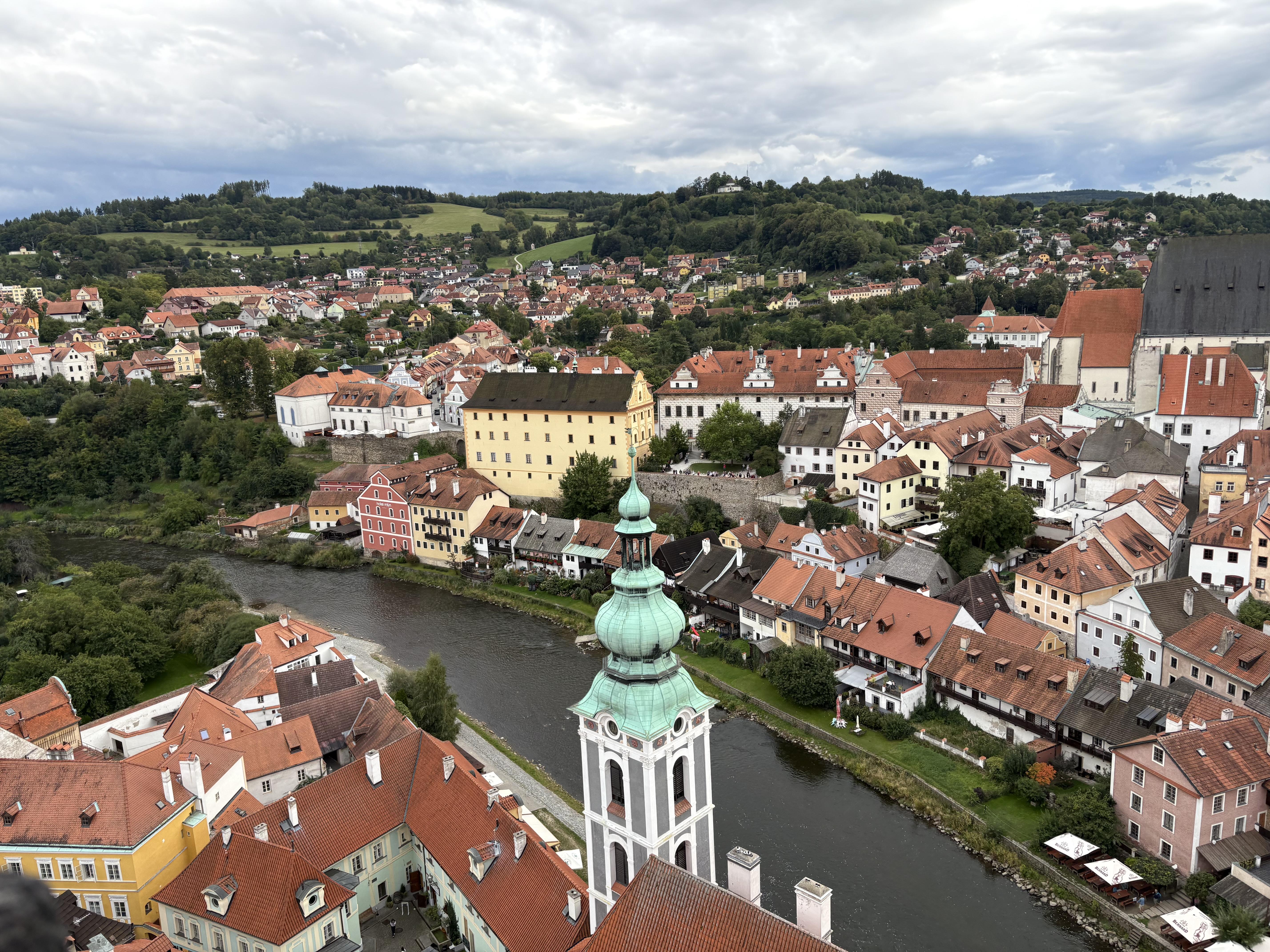
The Czech Republic is a small, landlocked country right in the center of Europe. It has rolling hills, dense forests, long rivers, and mountains at its borders. The capital city where I study, Prague, sits along the Vlatva River. These natural features shape how people build their homes, travel, and use the land.
Czechia's environment is unique because it is completely landlocked, meaning it has no ocean coast. Instead, it is surrounded by mountain ranges, like the Sudetes and the Bohemias Forest, which historically protected the land and today offer a scenic landscape. The dense forests of Prague are protected by the government, providing resources and habitats for wildlife. Prague is built upon nice hills split by the Vlatva River, which gives the city many famous bridges and viewpoints such as the historic Charles Bridge, Petrin Hill, and Vysehrad Park.
There are many parts of the environment that help people live in the Czech Republic and Prague. For example, the Vlatva River provides water and transport (in history, the river also helped early trade, allowing people to build water-powered mills).