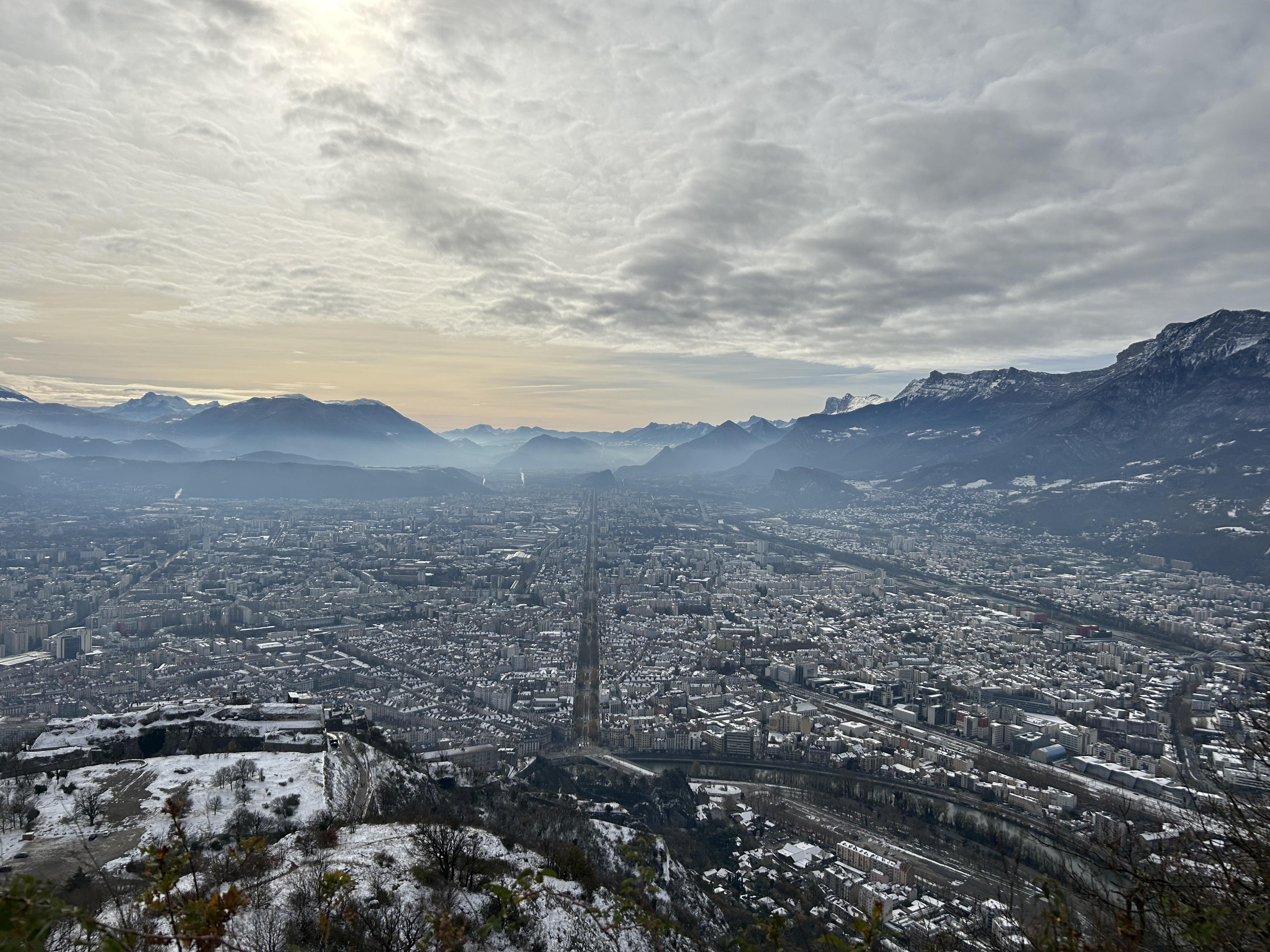
The warmer air up high acts as a barrier and traps in the cool air below. This means that all the pollution from cars and industry gets stuck in the atmosphere close to the city. This gets especially bad in the winter, but it is something that the city monitors to let people know when the conditions are dangerous for people who are at risk.
An additional challenge comes from the fact that there is a major river that flows through the heart of the region. With high rains, flooding can be a major risk, along with the risk of mudslides or debris flows. Flooding events are the most common environmental risk experienced in Grenoble.
Since Grenoble’s geography in a valley makes it more susceptible to air pollution, the city has a focus on increasing public transportation and making the city accessible by bike and walking as a way to reduce cars, especially during the winter. Being in a valley really forces the city to think about compact and sustainable urban design. Grenoble was even named the European Green Capital in 2022.
In terms of minimizing flood risks, there are a series of major engineering projects to widen the river and increase the capacity to store water, along with the construction of pump stations, levees, and other barriers.
Grenoble continues to work to improve the sustainability of the city, and many of the solutions are focused on nature-based adaptations that work with the existing environment.