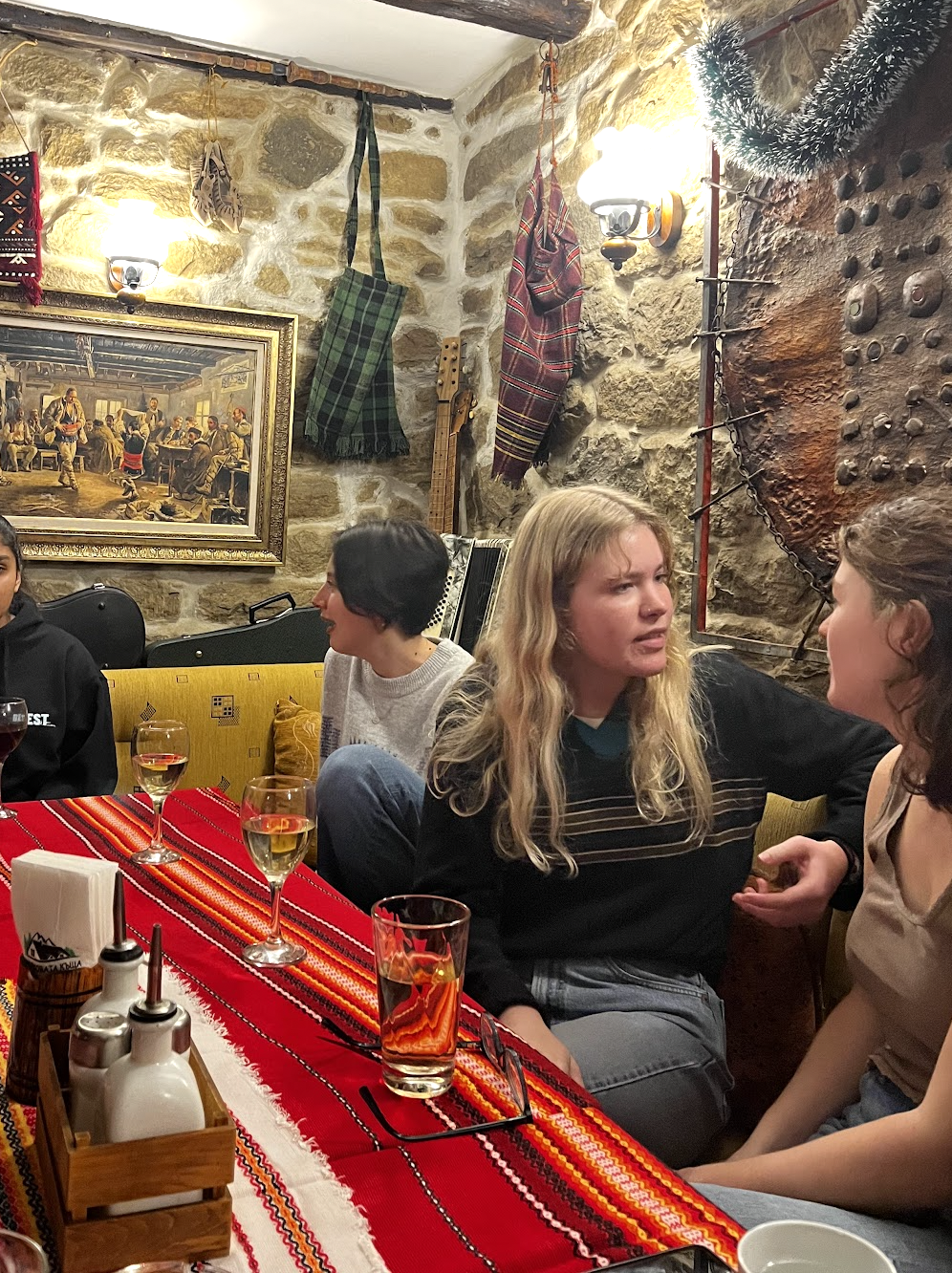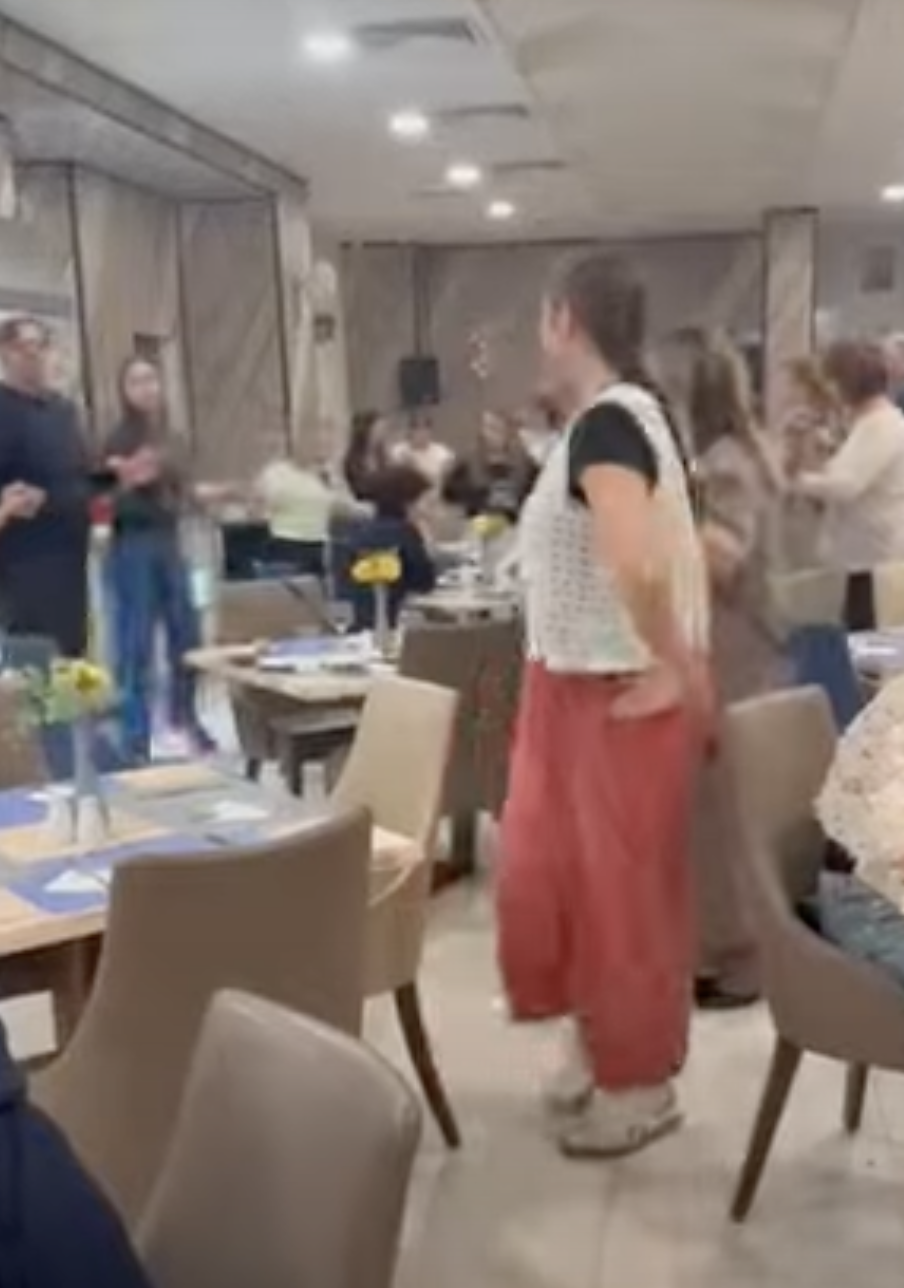
We were sitting around a large wooden table, the iconic red embroided tablecloth topped with plate after plate of shopska salata, grilled meats and roasted vegetables. The restaurant was filled with the excited chatter of Fulbright English teachers and the lively sound of Bulgarian folk music. All of a sudden, a new song starts playing and people start standing up from their seats across the whole restaurant. They join hands in one long chain and start dancing in a line. Those around me encourage me to join in, so I grab the hand at the end of the line and am whisked into a tradition that has been central to Bulgarian folklore for hundreds of years.
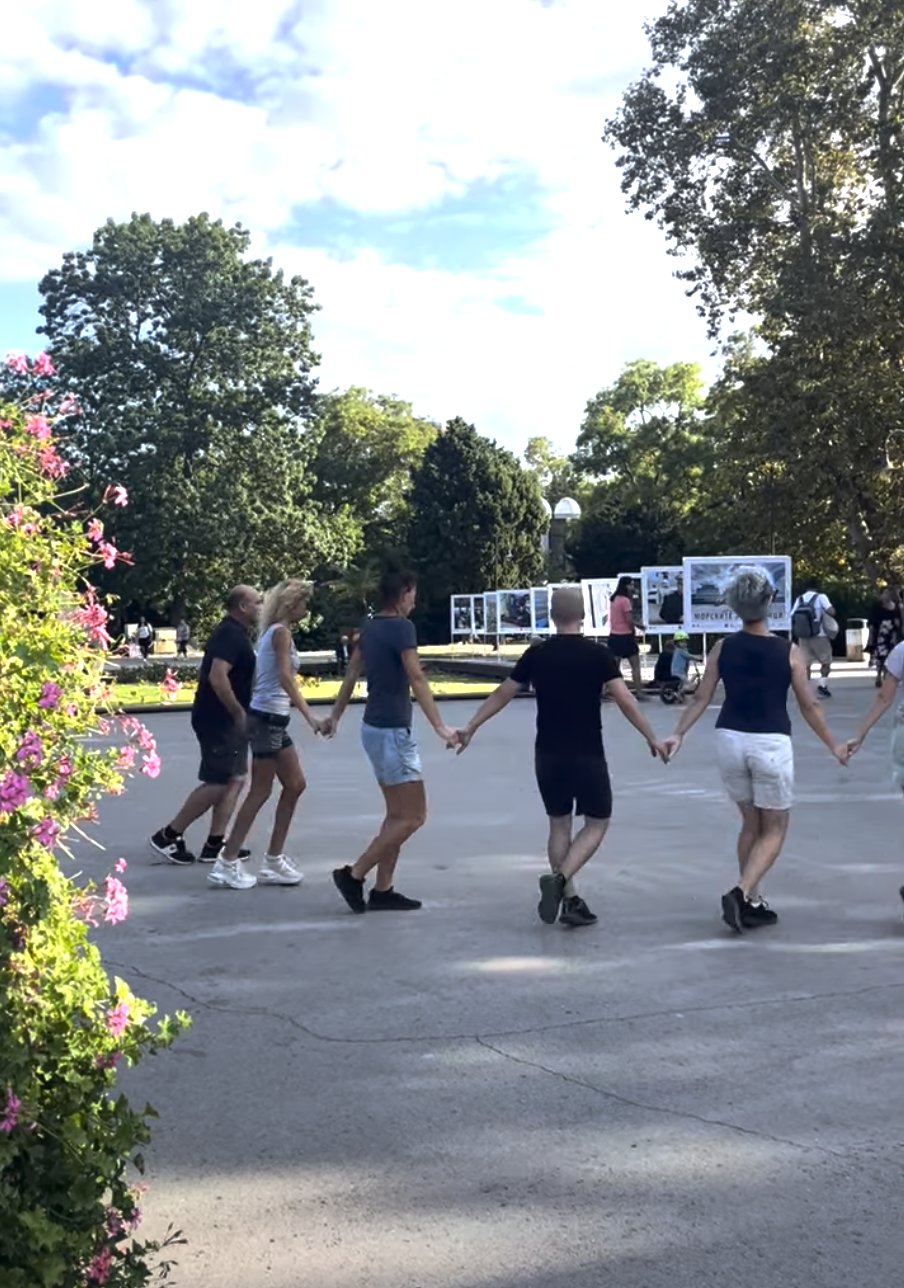
The Bulgarian horo is a type of folk dancing that everyone in the community knows how to do. It is often done at restaurants with live music, in town squares, on holidays, at weddings and at any big celebration. There are different variations of the dance depending on the region of the country, but the most basic patterns are easy to pick up and everyone can take part, from little children to elderly grandparents. The most common version today consists of three steps forward, kick left, kick right and repeat.