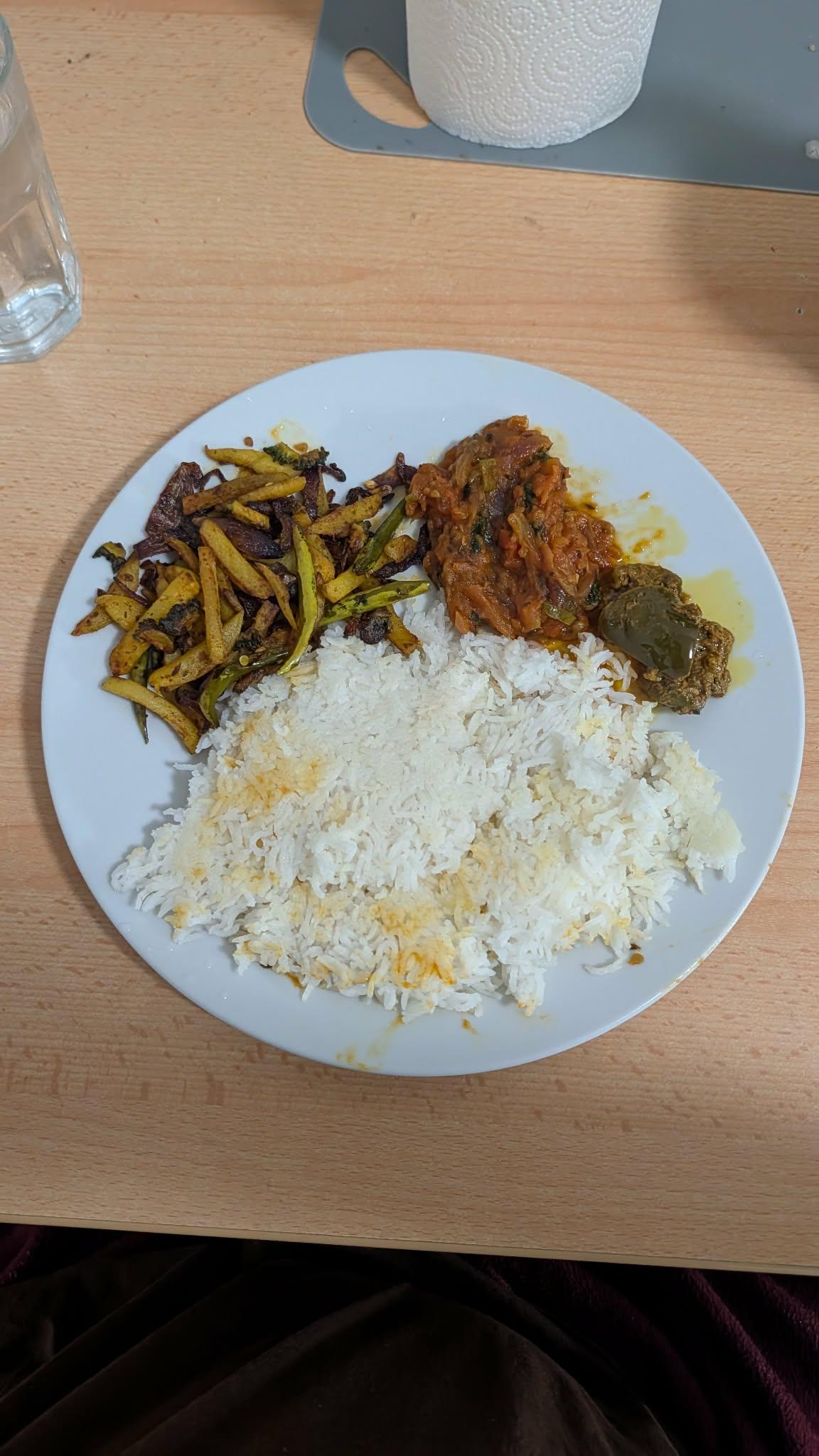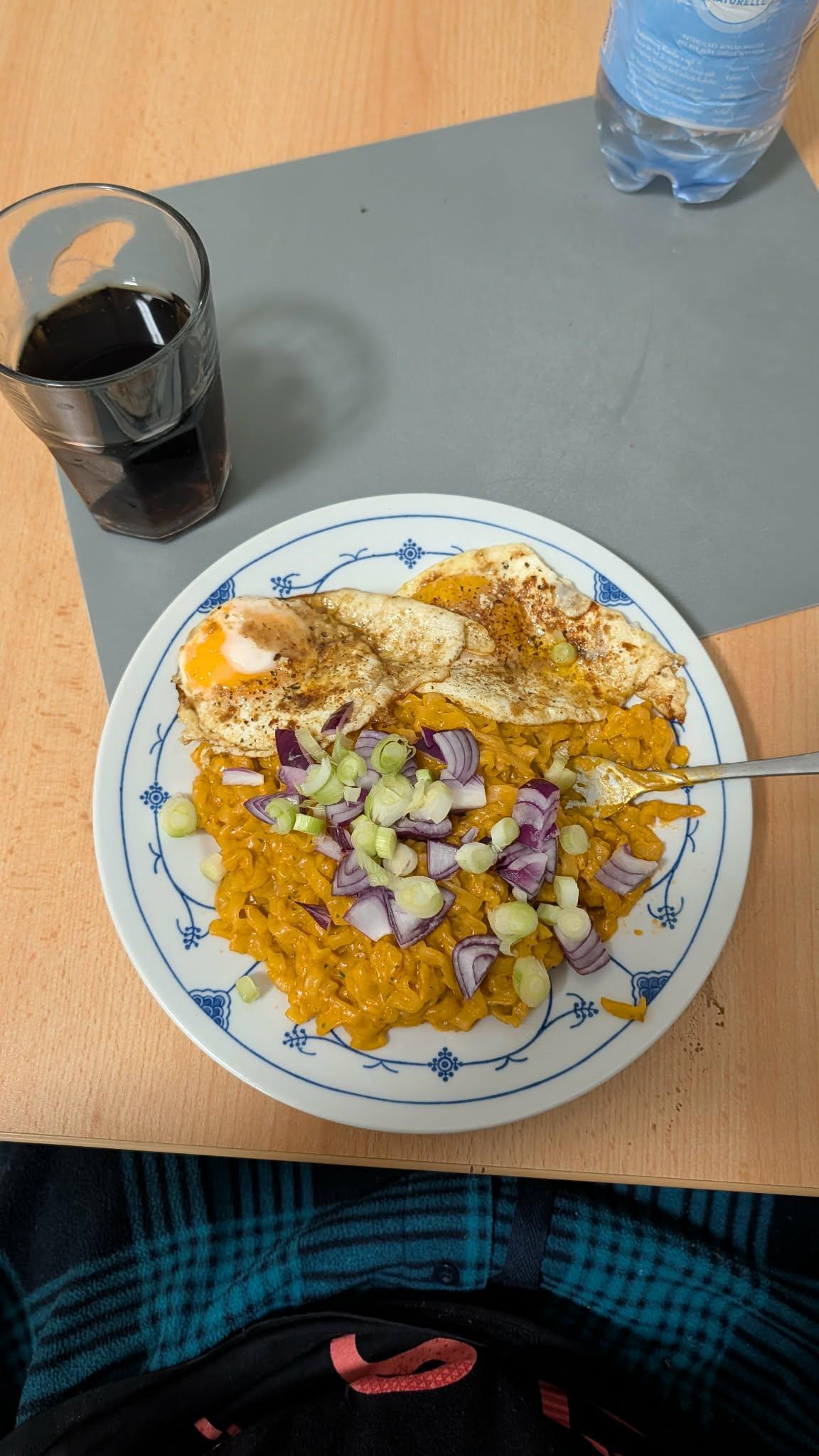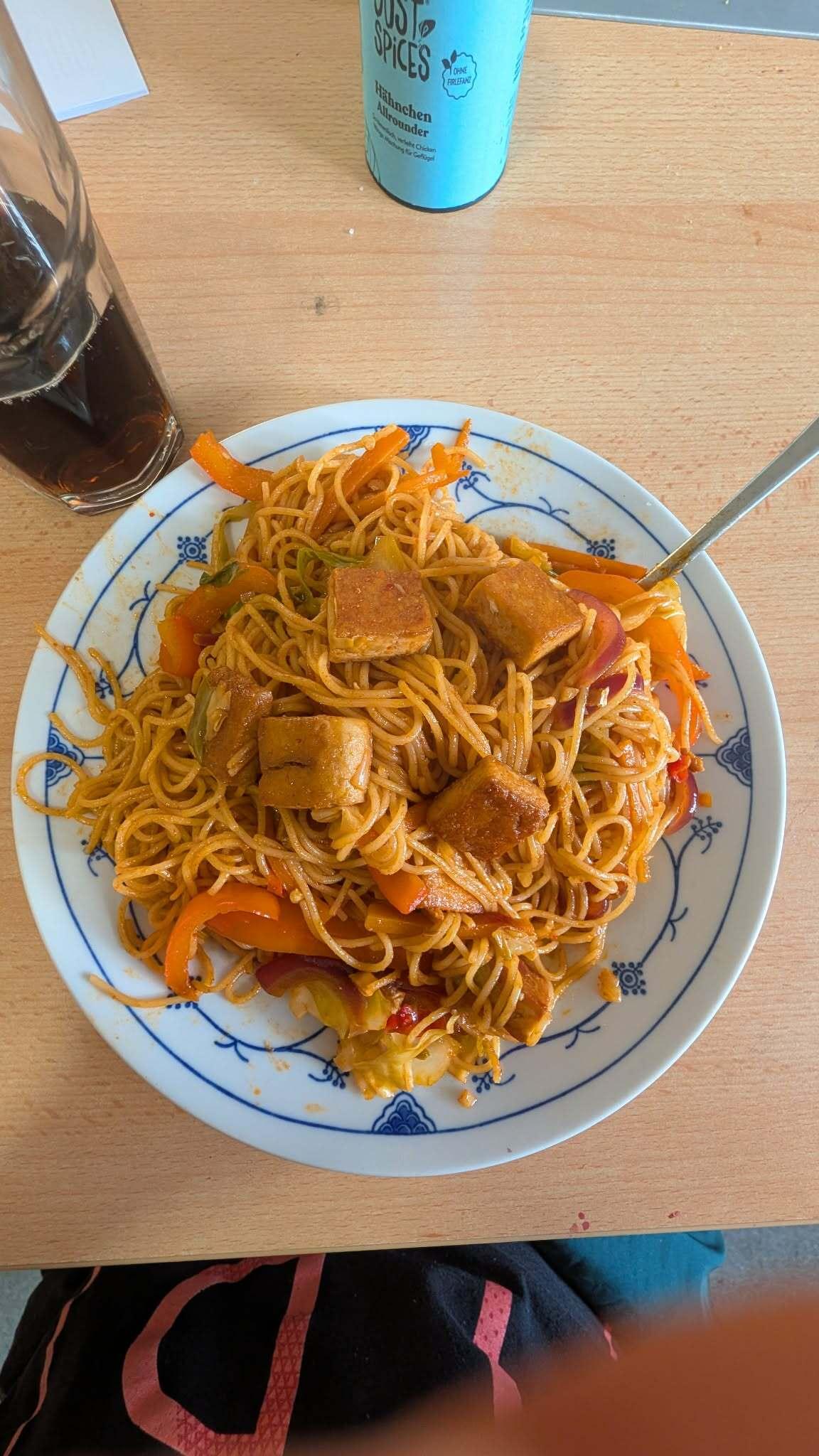
Eventually, my experiences with food in Germany led me to start cooking for myself. I wanted to have a taste of home, so I began learning how to cook Nepali food. I have made rice with fried potatoes, soya chunks, egg fried rice, chowmein, Maggi, Buldak ramen, lentils, tomato achar and many other dishes. Now, I spend most of my time cooking at home and occasionally eat out, and I have been much happier with my meals. At the same time, I am learning a skill that I can use for the rest of my life. I am sure my family and friends back home will be pleasantly surprised when they see how much I have learned to cook.
Bratwurst is often grilled ahead of time and then placed on a piece of bread when someone orders it. Because the sausage is already cooked, the entire process can take less than a minute. Doner Kebab is prepared in a similar way. The meat, vegetables, sauces and bread are already prepared, so the worker mainly has to assemble everything together when you order. Restaurants will take the standard 10 to 15 minutes wait since they prepare meals from scratch, but many common German foods are designed to be served quickly and conveniently.
I wouldn’t say that the food here is directly connected to the local environment. Since I live in a city, most of the food I eat comes from supermarkets, restaurants, cafeterias and local food shops. I am not growing my own food or raising animals, so I don’t really get to see where most of the ingredients I eat come from. I imagine it would be very different in a rural area, where people might live closer to farms, grow their own food or raise their own animals.