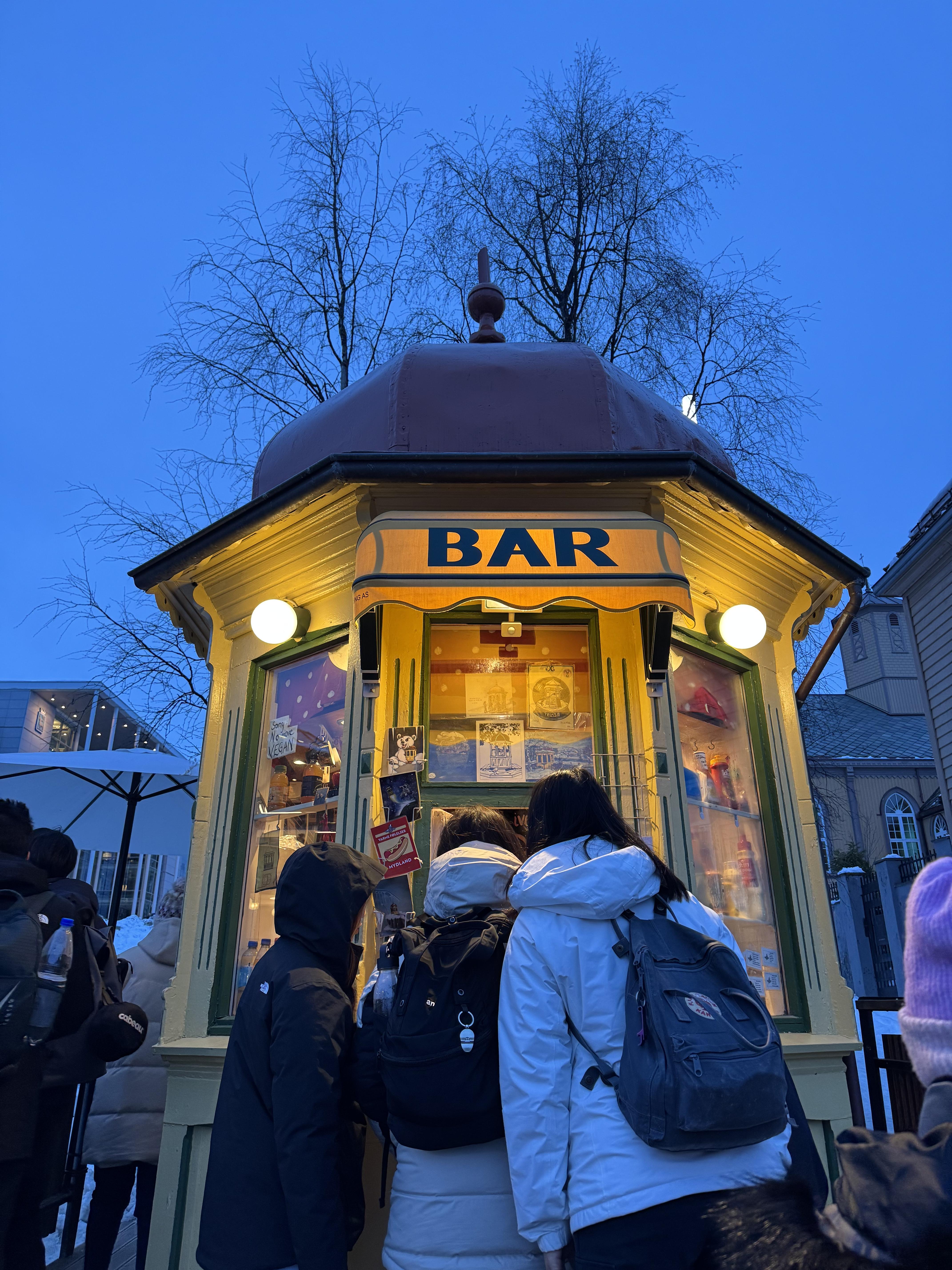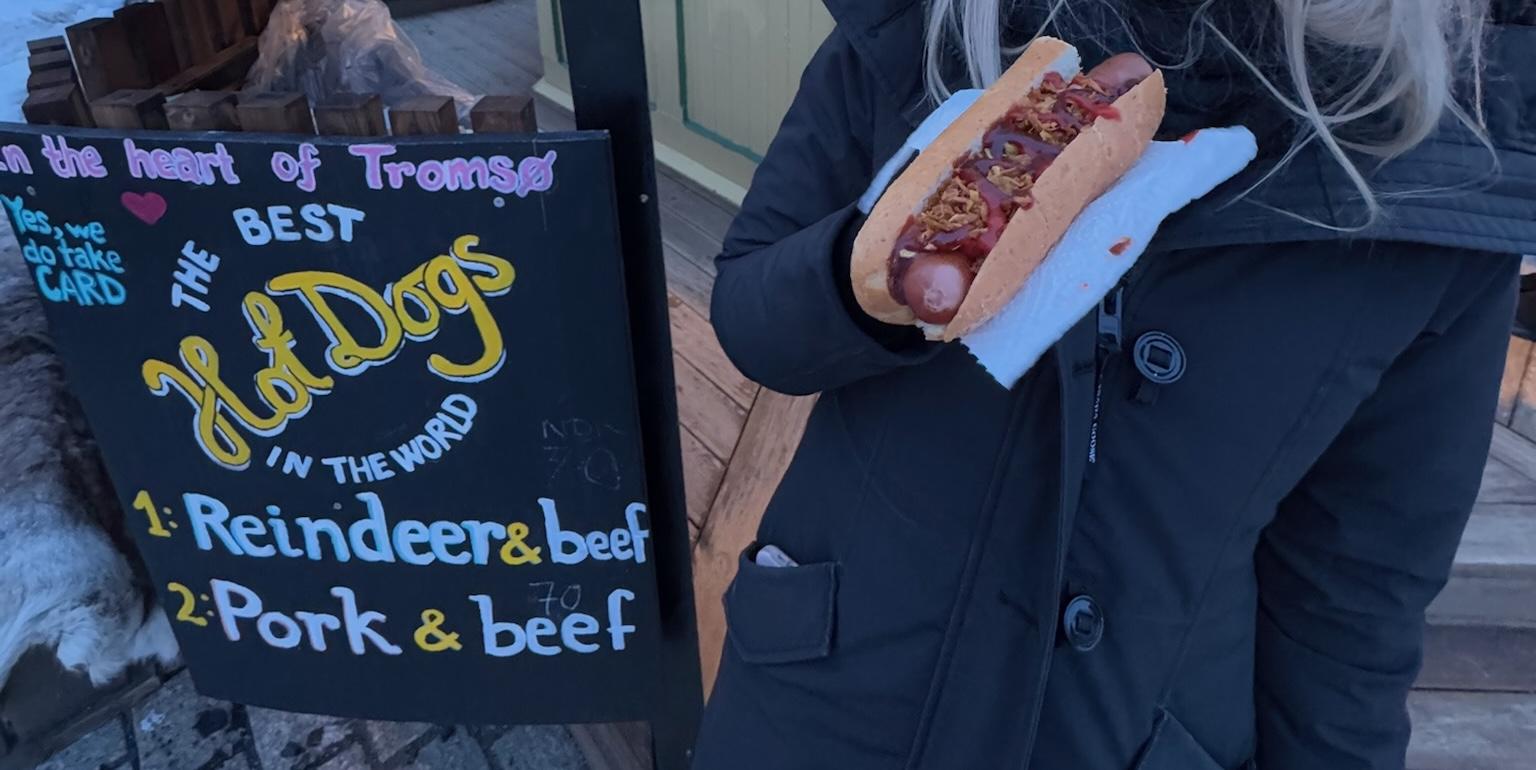
I was nervous to try the reindeer hot dog in Tromsø because I had never eaten deer or reindeer before. The reindeer sausage tasted surprisingly similar to a traditional hot dog, although the meat had a much stronger smell. I'm glad I tried it, but I think I'll stick with pork or beef hot dogs in the future!
Danish hot dogs are usually made with pork or a mixture of pork and beef. The sausages are grilled, then served in a bun with toppings. At a traditional hot dog stand, you can choose your own sauces and toppings. Reindeer hot dogs are prepared similarly, but the sausage contains reindeer meat, sometimes mixed with other meats. In my case, the reindeer meat was mixed with beef.
One unique type of Danish sausage is the rød pølse, which translates to "red sausage." Its bright red color comes from food coloring added to the sausage casing.
Denmark has a long history of pig farming and is one of the world's major pork exporters. Pork is used in many traditional Danish dishes, including sausages. The first officially licensed Danish hot dog stands opened in Copenhagen in 1921, and they've remained a popular place to grab a quick meal ever since.
In northern Norway, reindeer are well adapted to the cold Arctic environment. Reindeer herding is also an important tradition for some Sámi communities. The Sámi are indigenous people who have lived in Northern Scandinavia for thousands of years, and have historically relied on reindeer for food, clothing materials, and other resources.