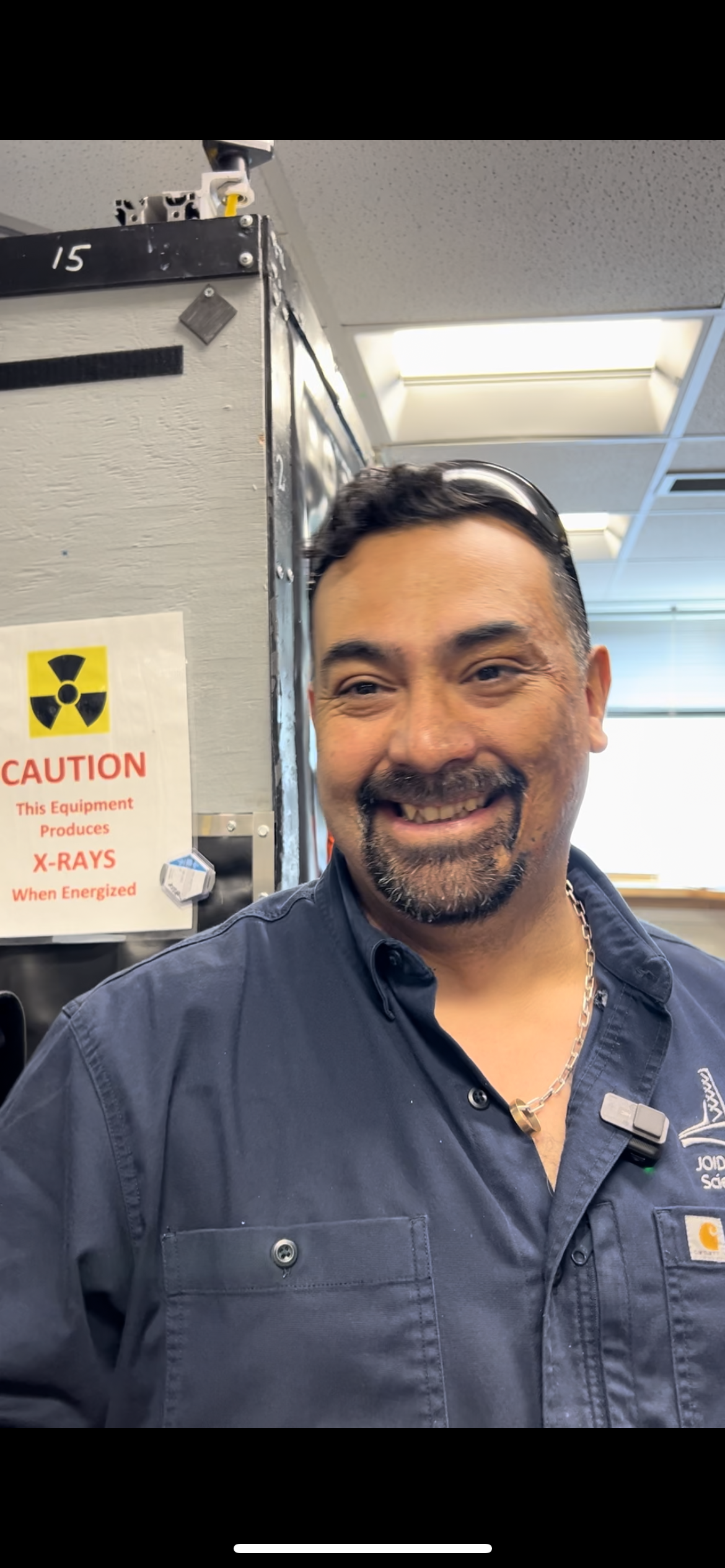
Alejandro Avila Santis started on the JOIDES Resolution with the JR Expedition 100 as a scientist. The JR 100 expedition is a shorter-term expedition, around one month from start to finish. The JR 100 expedition has notably "provided the US paleoceanographic community a new way for recovering long sediment records (up to 100 meters below seafloor)" (https://marine.rutgers.edu/rosenthal-lab/jr100/).
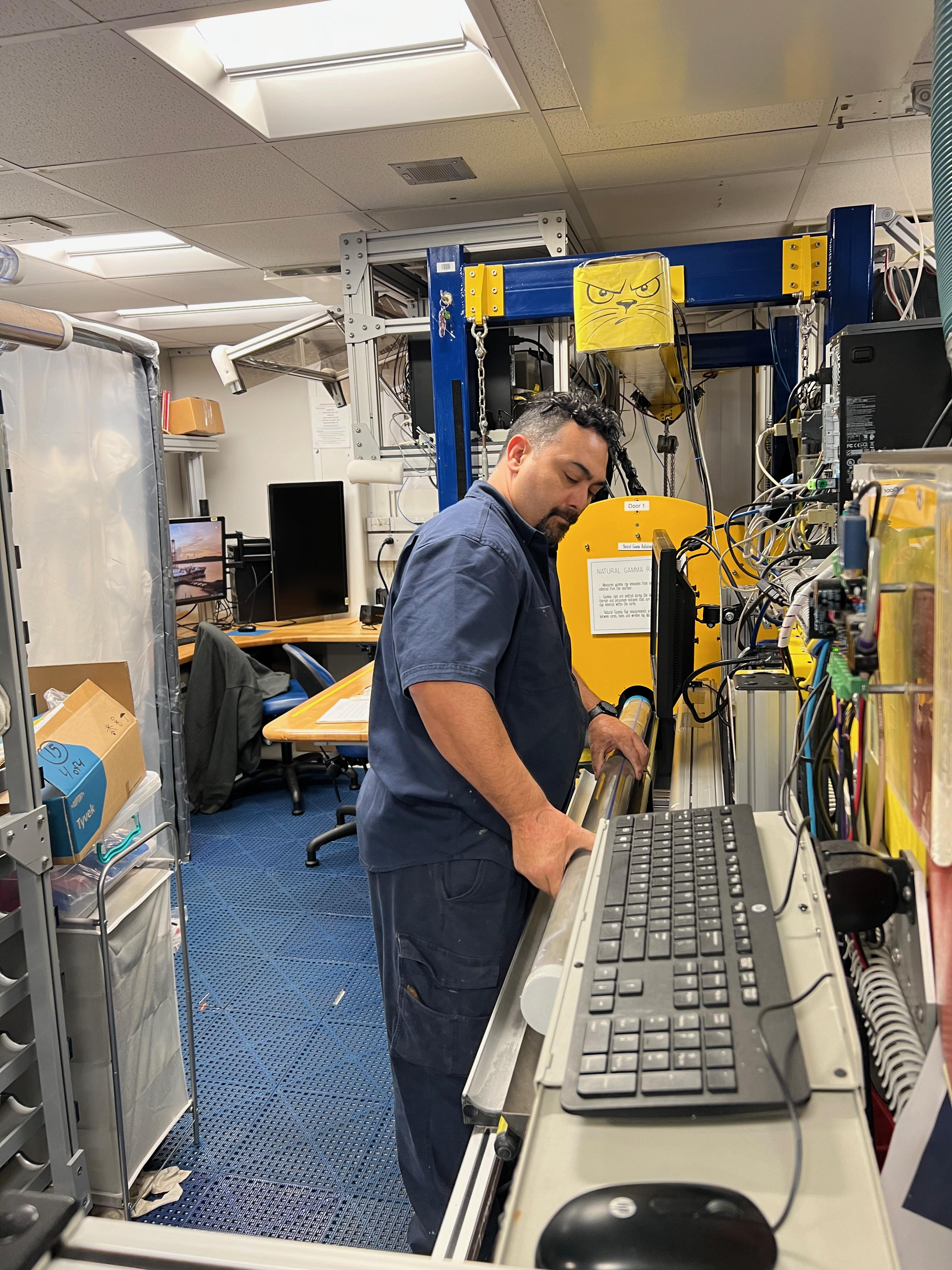
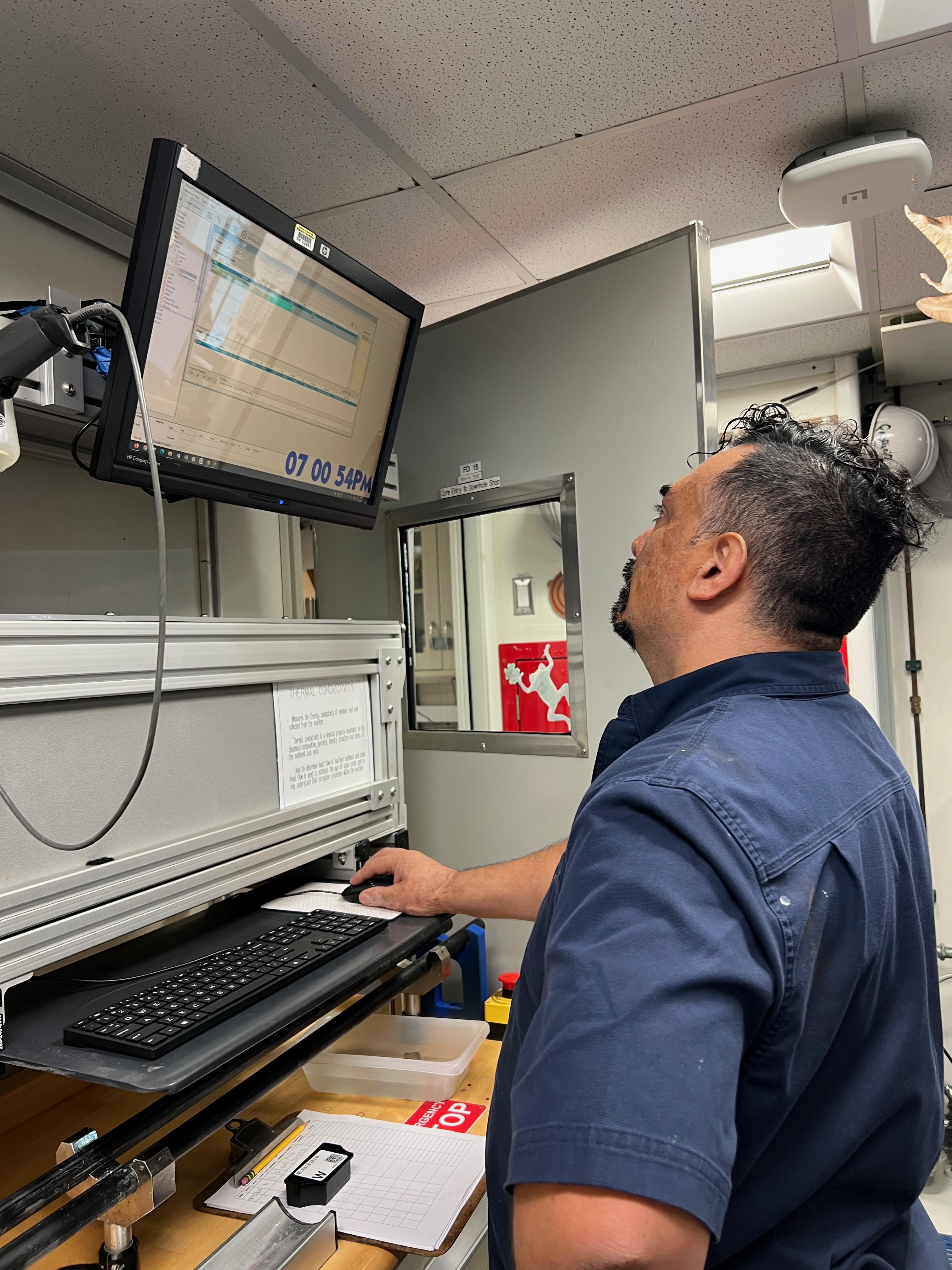
Alejandro's background is in marine science, and he moved into sedimentology and paleoceanography after working on the JR. After sailing as a scientist, he was also curious about being a marine technician. This role seemed really interesting to him because it fed his passion for working with machinery. Since then, he has been hired as a marine technician and enjoyed the learning curve that took him out of his comfort zone of sedimentology science. He operates within the physical properties of laboratory equipment that can analyze both hard rock and sediment. He has to ensure that all the software on the machines is working accurately and well enough for the upcoming expedition, which means a lot of calibration tests and troubleshooting.