Inequity: Around the communal bowl, children usually get only rice unless an adult offers them a piece of meat or a vegetable. They’re used to this and often prefer the greasy rice anyway. School food programs are sometimes their only source of non-rice nutrition, like peas or fortified millet. In this patriarchal society, women also receive less food than men, while guests of honor and male family members eat first and best.
With the women being the ones to prepare all of the food, I've had my fair share of days spent in the kitchen, chopping, peeling and mashing vegetables, and skinning fish. All in all, it feels a bit more dangerous than cooking in my American kitchen back home. Chopping boards are not a thing here, so all foods are cut directly into one's own hand. Knives are not sharpened often or meticulously. Even the most skilled women cut their hands often and badly. The fires over which the pots are placed are created by abutting three logs and creating a smoky, low fire. These are often done inside the kitchen instead of outdoors, which aggravates asthma and breathing problems in the female population.
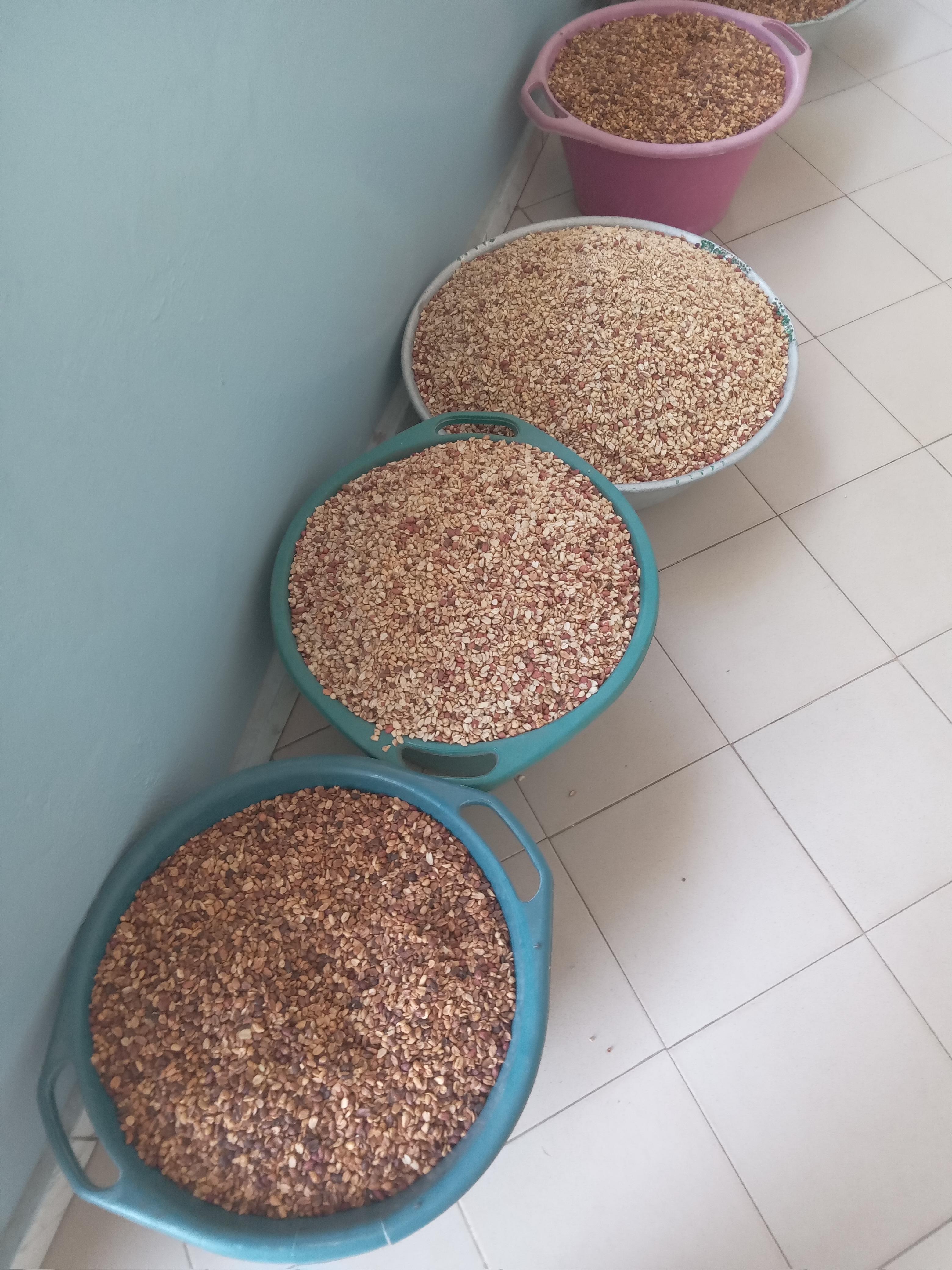
For millet-based dishes, the women will spend an entire day or two each month toasting and sifting the ground flour, storing it in large buckets to take out and use for dinners for the next month. In our house, we eat a millet-based dish every other day. Large pots are used to steam the rice over the fire. Pots are also used to fry the fish and vegetables in massive amounts of oil. With the large number of people in my home, dishes are a constant chore, though less so than if we used plates and bowls as we do in America.