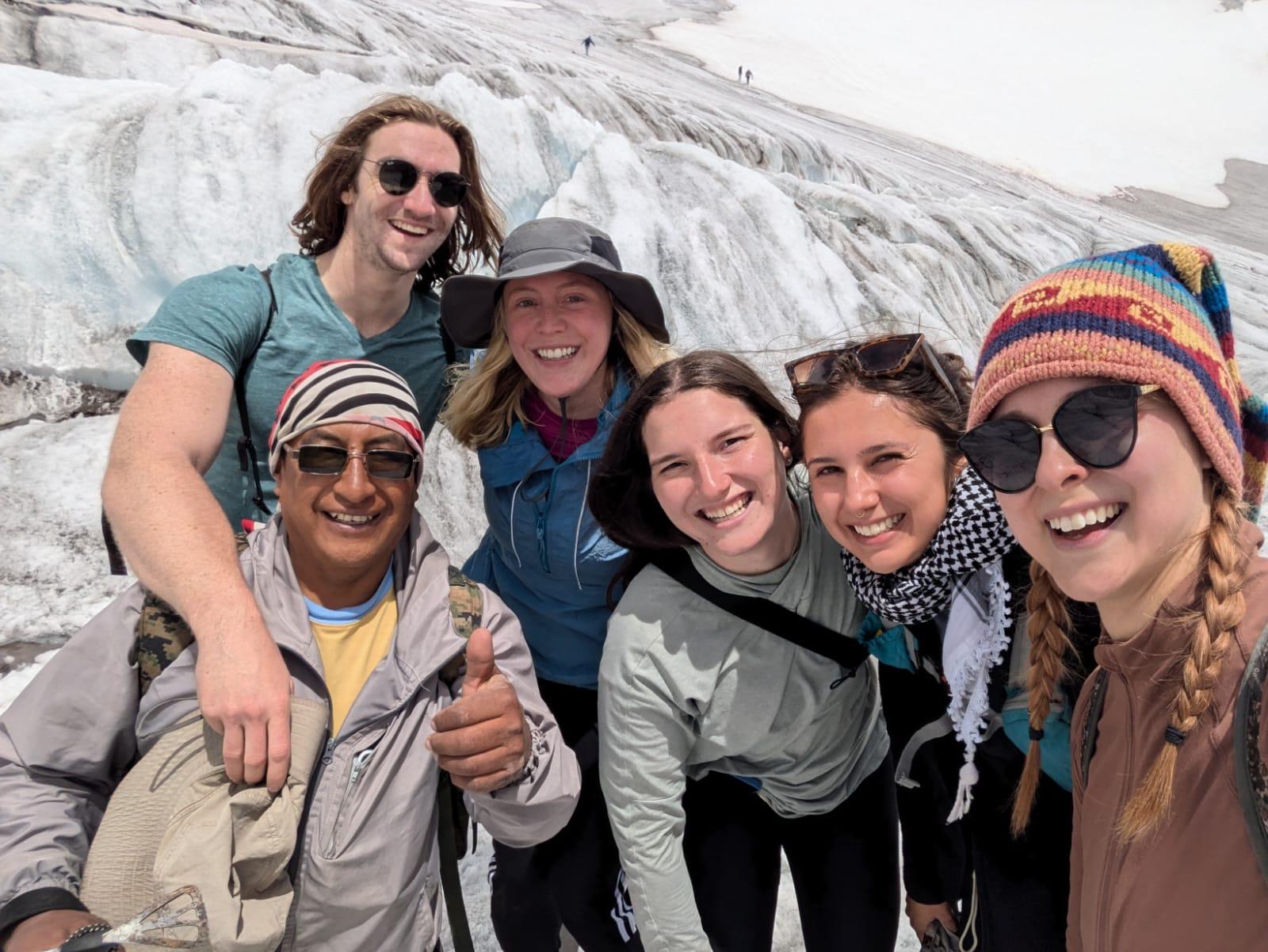
I have also hiked Cayambe, Pichincha, and Ilalo, all of which rank among my favorite memories in Ecuador.
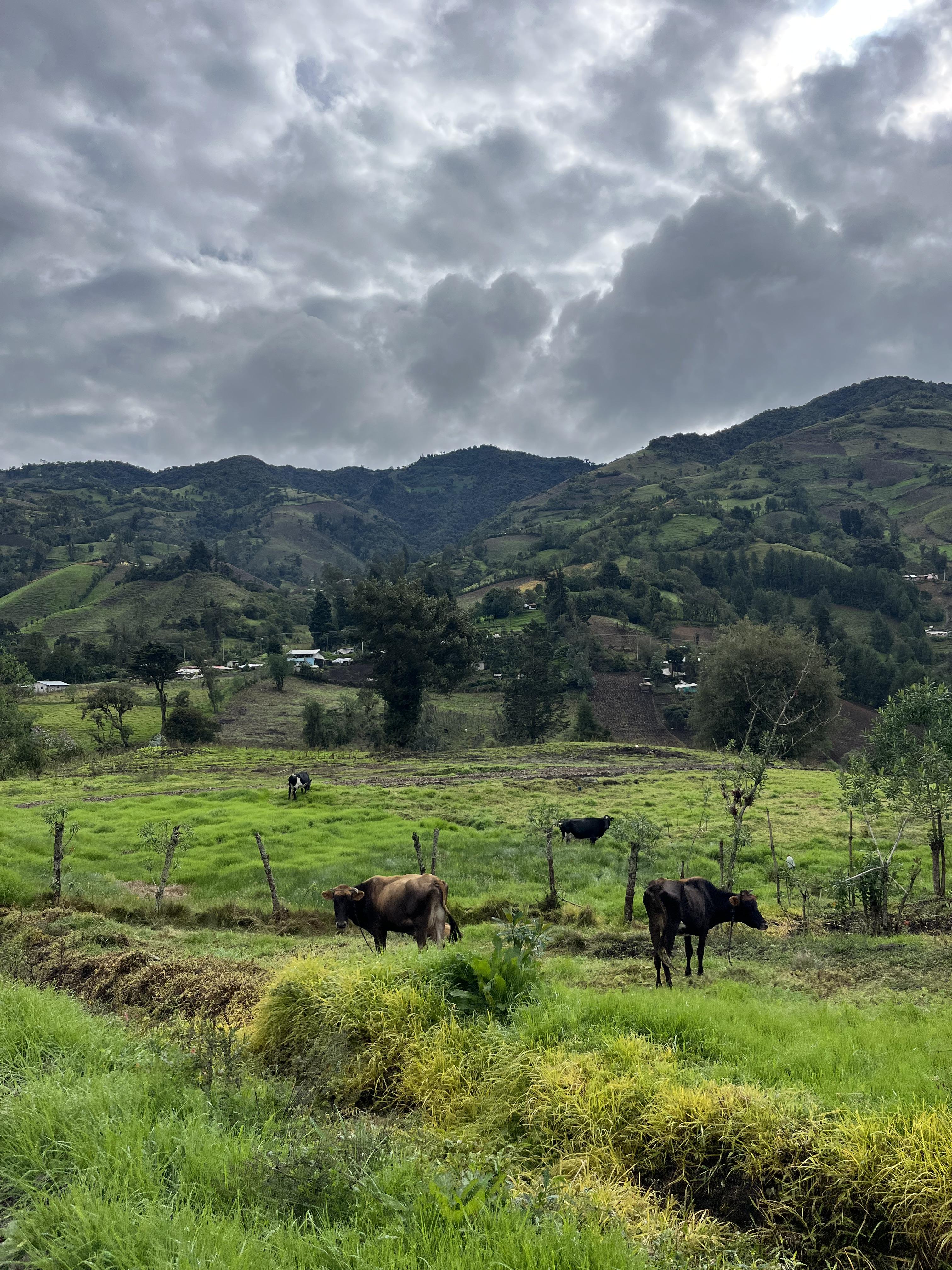
A lot of people who live in the Andes of Ecuador work in agriculture. In the Sierra region of Ecuador, people mainly grow crops like corn, potatoes, beans, wheat, barley, and other crops, as well as quinoa. We also have a lot of vegetables that grow in the valleys between the Andes Mountains. Choclo (a type of corn) is the most important crop in my area; it's so important that there's a statue of an ear of corn in one of the park's fountains.
One thing all the volunteers have to adjust to is the elevation. Quito is at an elevation of 2,850 m (9,350 ft), making it the first or second highest capital city in the world. My town of San Miguel is at 2,444 meters (8,018 ft), but after living at sea level in Cleveland, the air can feel quite thin sometimes.
Climate change has hit Ecuador particularly hard. Last year, the country experienced its worst drought in nearly 60 years. This is especially problematic because 80% of the country's electricity grid uses hydroelectric power. Due to this imbalance, there wasn't enough energy to power the country, and strategic cuts were implemented. The blackouts lasted up to 16 hours a day in some areas, and I was personally without electricity for up to 14 hours a day. Specific schedules were sent out for most of the time, so we knew when to expect them, but it was still difficult to adjust to them initially.