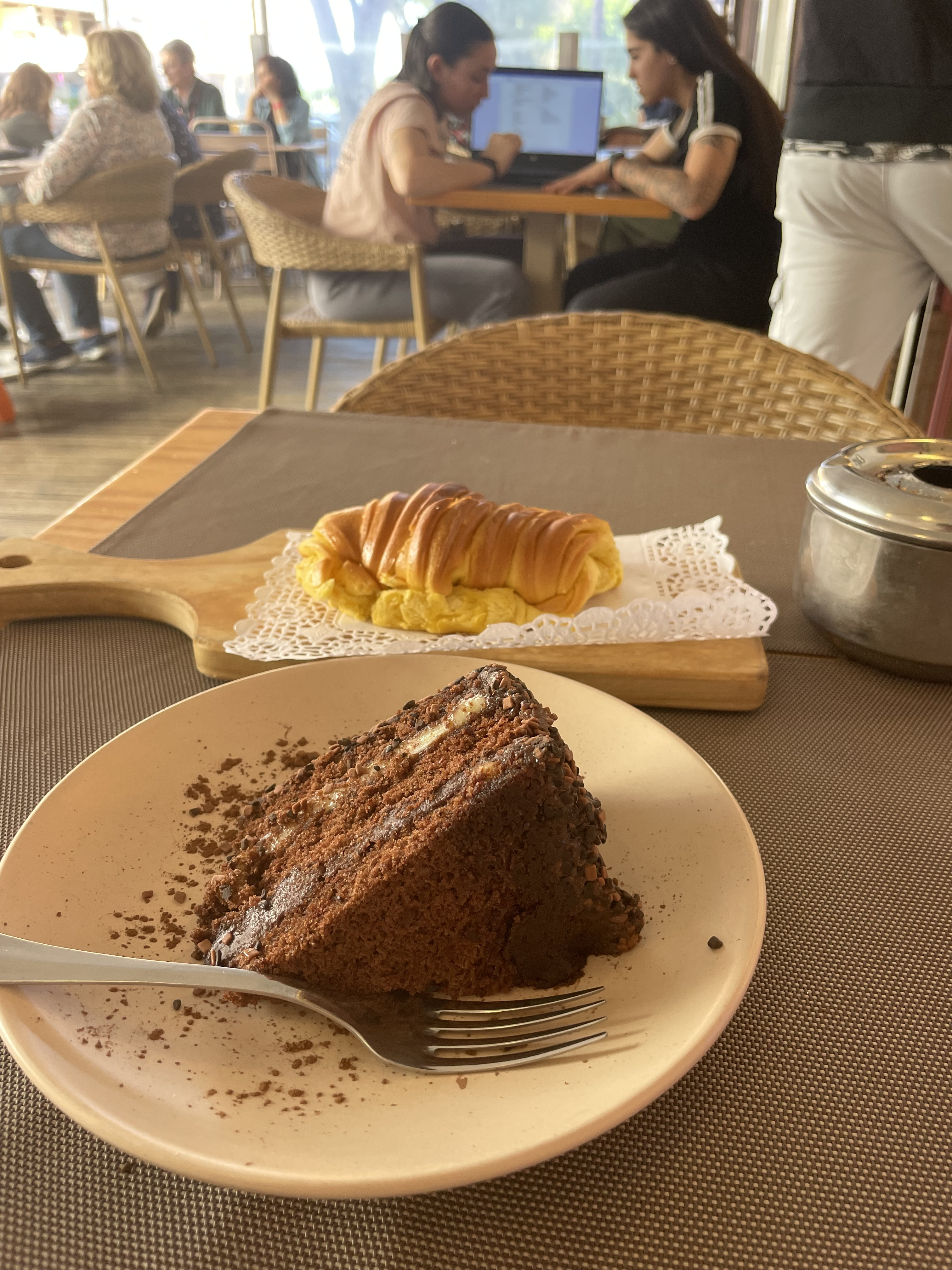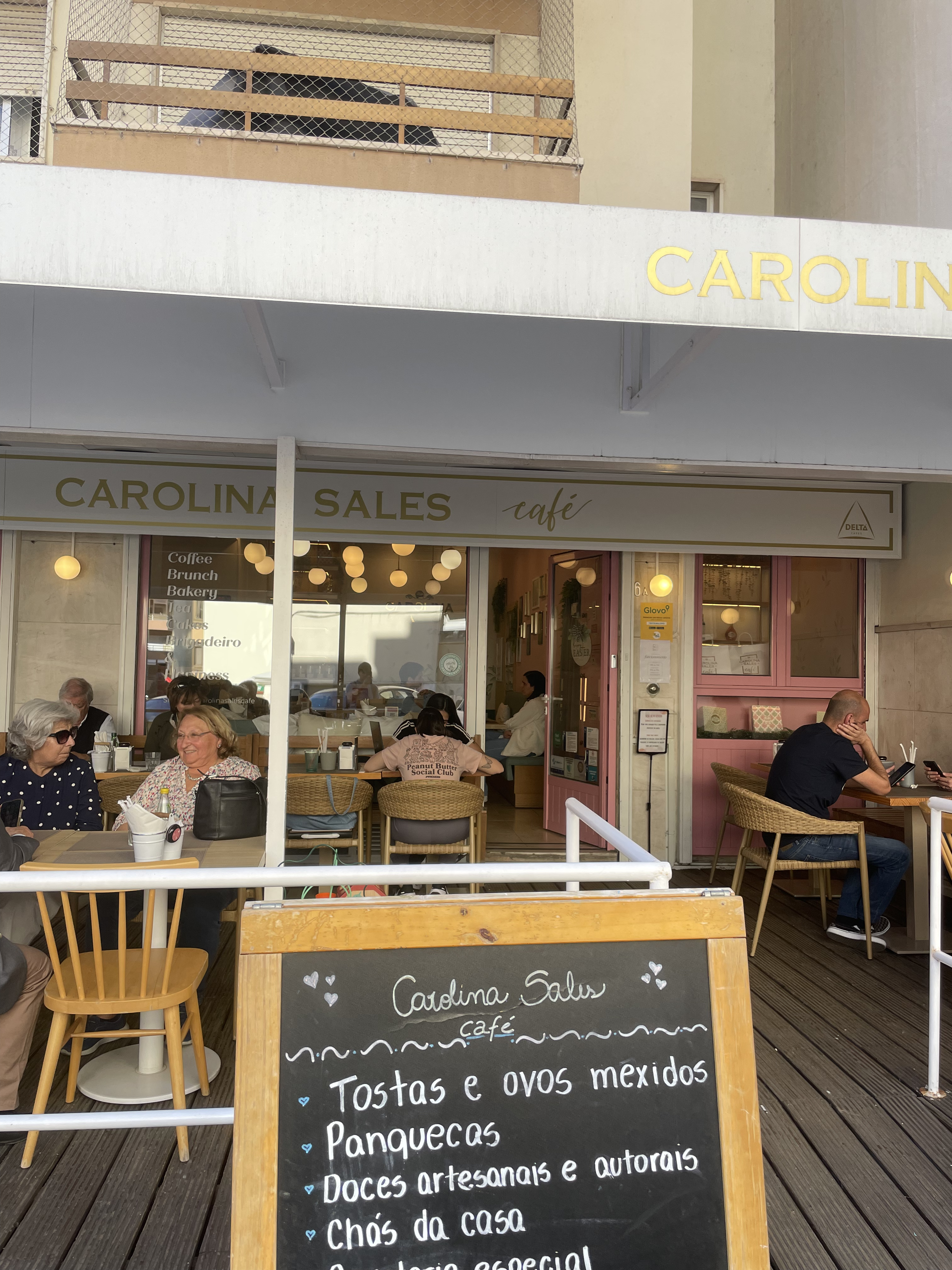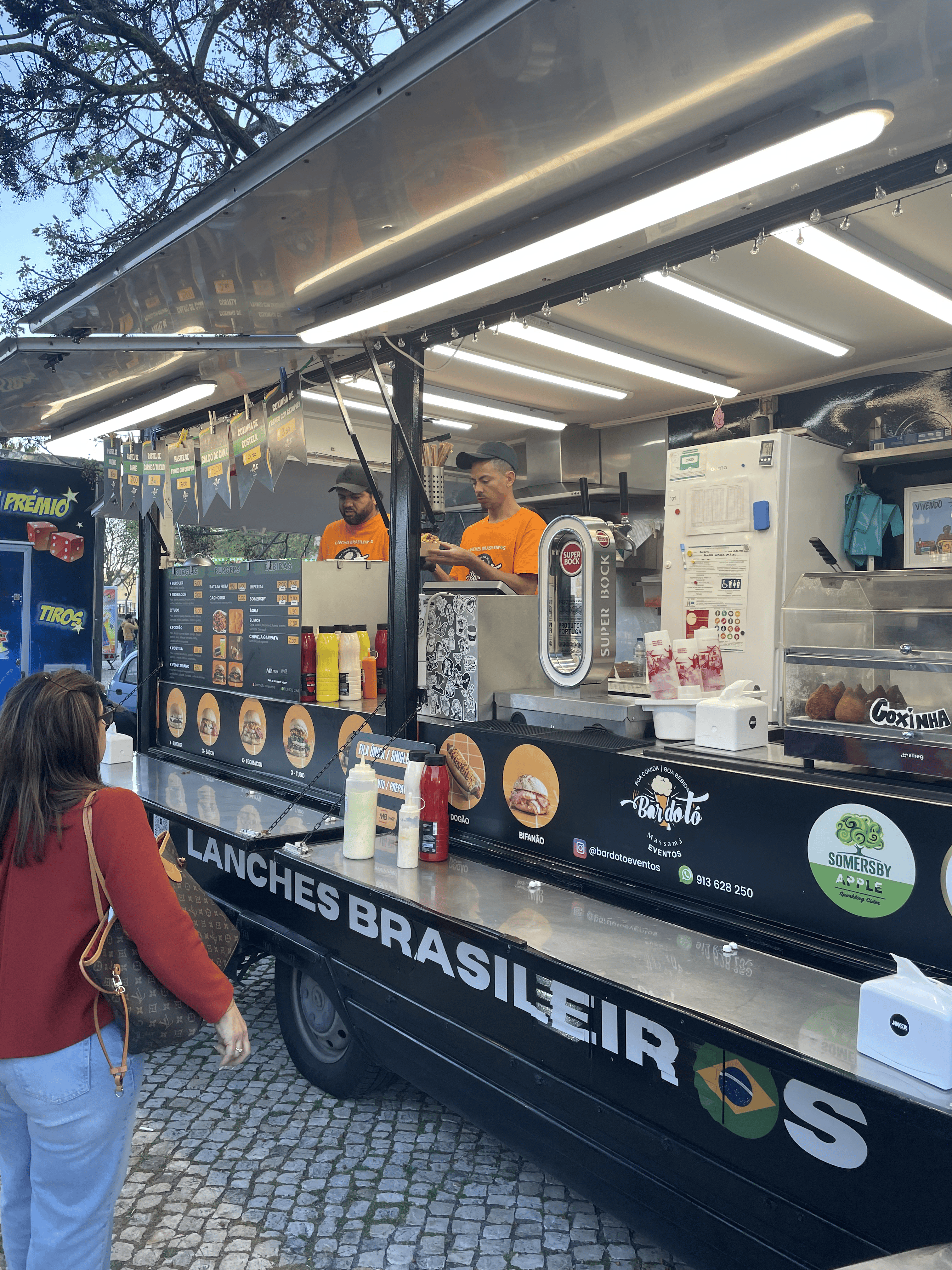
Despite these differences, all of them serve a similar social function. People often stop briefly for an espresso or sit and talk with others, making cafés a regular part of daily routines rather than an occasional activity.
This tradition exists because cafés provide an accessible and comfortable space for social interaction. During my time here, I experienced this firsthand when I entered a café and began speaking with an older woman. At first, I felt nervous initiating the conversation, especially since I was still developing my Portuguese skills. However, as the conversation continued, I became more comfortable, and the interaction turned into a meaningful exchange. What started as a simple interaction turned into a longer conversation, where I was able to practice Portuguese and learn more about the area from her and her son. This showed me that cafés are not only places for food and drink, but also spaces where relationships and conversations naturally develop, even between strangers.
This tradition is also connected to the environment in subtle ways. Because cafés are embedded within walkable neighborhoods, people often reach them on foot rather than by car. Additionally, the smaller scale of these establishments and their quick, simple offerings can result in less waste compared to larger, more commercial dining spaces. In this way, café culture supports a more localized and potentially sustainable lifestyle. This experience showed me that engaging with local traditions, even in simple ways, can lead to meaningful cultural and personal growth.