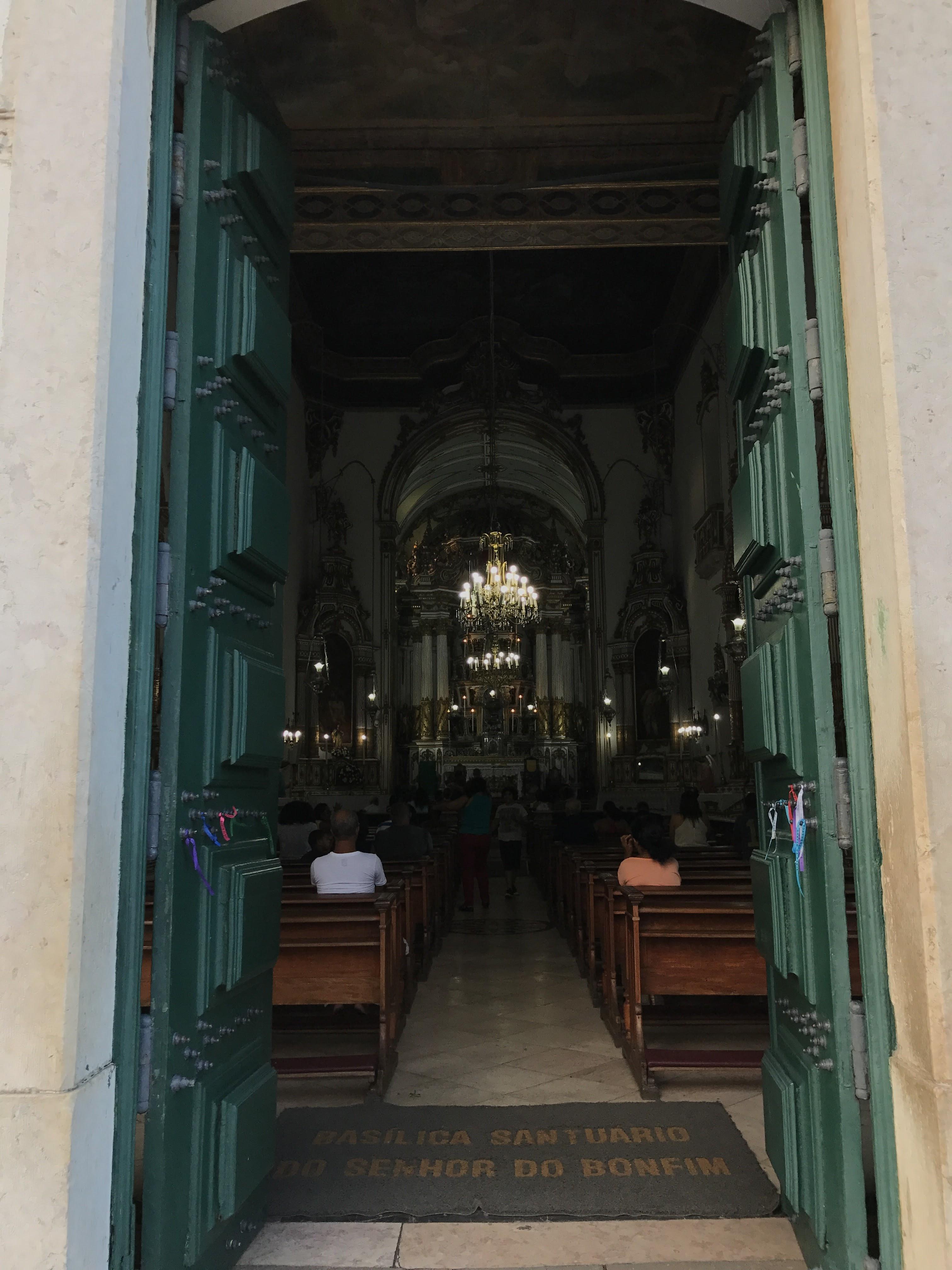
The fita do Senhor do Bonfim is a small colored ribbon with the phrase "Lembrança do Senhor do Bonfim da Bahia" (Remembrance of the Lord of Bonfim of Bahia). The tradition is to tie the ribbon around the wrist, making three knots and with each knot making a wish. The wishes are said to come true when the ribbon falls off on its own. A long time ago, it was common to wear them around the neck with charms.
I was introduced to this tradition on my very first day in Bahia. The man who brought my bags to my hotel room tied one on my hand. I had no idea why he was doing it or the meaning of the little ribbons I saw all over Salvador, so I missed the opportunity to make my wishes. It was not until weeks later that I learned about the tradition.
The ribbon is meant to bring good luck and faith. The gates of the church are almost invisible because they are covered in ribbon. Visitors to the church tie them to the gates for the same reasons they tie it to their hands. My host mom has them tied on the doorknob of the front door as well as around the house. This shows how important religion is to the people of Salvador. The fitas are sold throughout the city, especially in Pelourinho.
The religious importance of the bands is connected to Brazil as a Catholic country. Brazil was originally supposed to be called Santa Cruz, which translates to Holy Cross. The Europeans who came here many centuries ago brought Catholicism to the region.