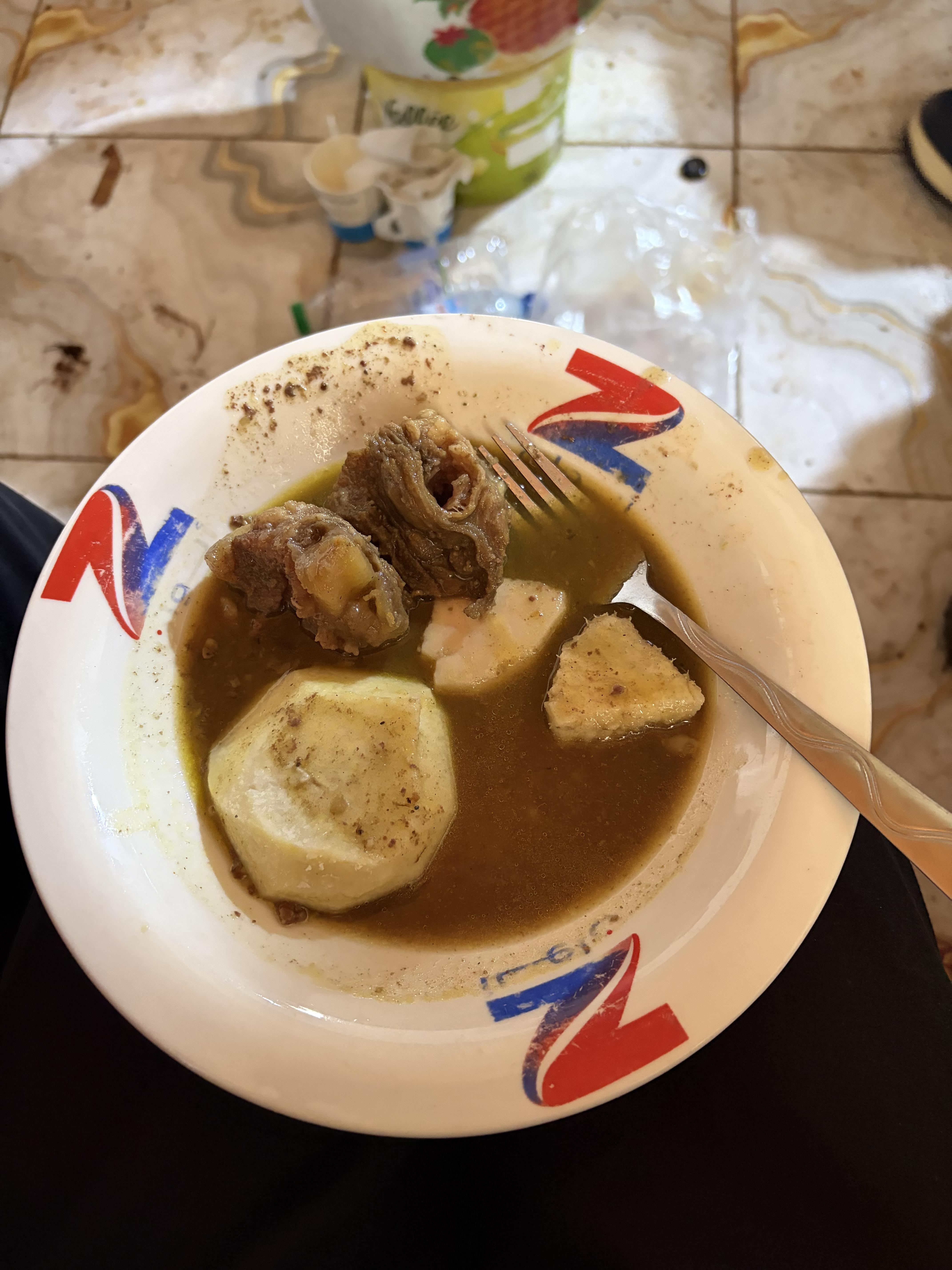
Because it is a soup and the taro is very soft, it is easy to consume the soup and the taro fufu using simply your right index finger. This was a slight challenge for me, as I did not grow up eating food with my hands, but my colleague was very supportive of me trying my best to eat it the traditional way. I really enjoyed the taste of achu, and though I had some difficulty chewing the kanda (cow skin), I appreciated its flavor.
Achu soup is also known as yellow soup due to its striking yellow color, created by red palm oil mixed with the broth of the meat and/or fish in the soup. It is served with pounded cocoyam turned into “taro” which is a specific type of fufu. People typically pair it with a side of huckleberry leaves, known as ndjama-ndjama (pronounced like “jama jama”). Before I came to Cameroon, I thought that there was only one type of fufu, but I’ve already been lucky enough to taste four different types, all made from different ingredients. When eating local food in Cameroon, you are bound to try different types of fufu depending on the dish. The texture of taro is very soft and velvety. Personally, it has been my favorite type of fufu so far in terms of its texture.
Something that I have seen in two Cameroonian dishes, both from the anglophone regions, is kanda, or cow skin. I am sure that kanda is consumed in other cultures as well, but presently I have only eaten it in two traditionally anglophone dishes, Achu and Eru. I first noticed kanda while observing different street vendors at the market, and I had always been very curious what it was.