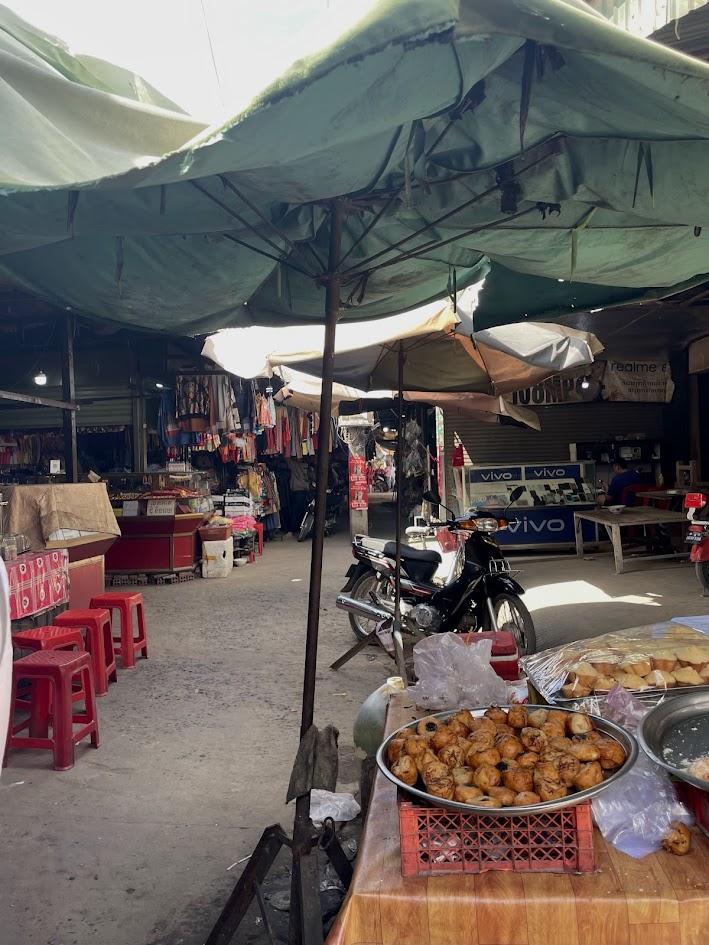
At this point, the rice has become a dough that can be cooked into noodles. To form the noodles traditionally, the dough is placed in a large press above a large pot of boiling water. The noodle maker then sits on the end of a long lever, and the force pushes the dough through many tiny holes and into the hot water. The noodles only need to cook for a couple minutes until they are done. Khmer noodles are always made and sold fresh each day, and noodle sellers are very popular at markets.
The next step is making the broth. Usually Khmer noodles are eaten with a thick, bright yellow broth that is made from boiled fish, lemongrass, turmeric root, lime leaves, galangal root, garlic, peanuts and coconut milk. The fish and herbs are pounded into a paste and then cooked with coconut milk. This broth is called Samlor Khmer, or Cambodian soup, but Khmer noodles can be eaten with other types of broth as well.
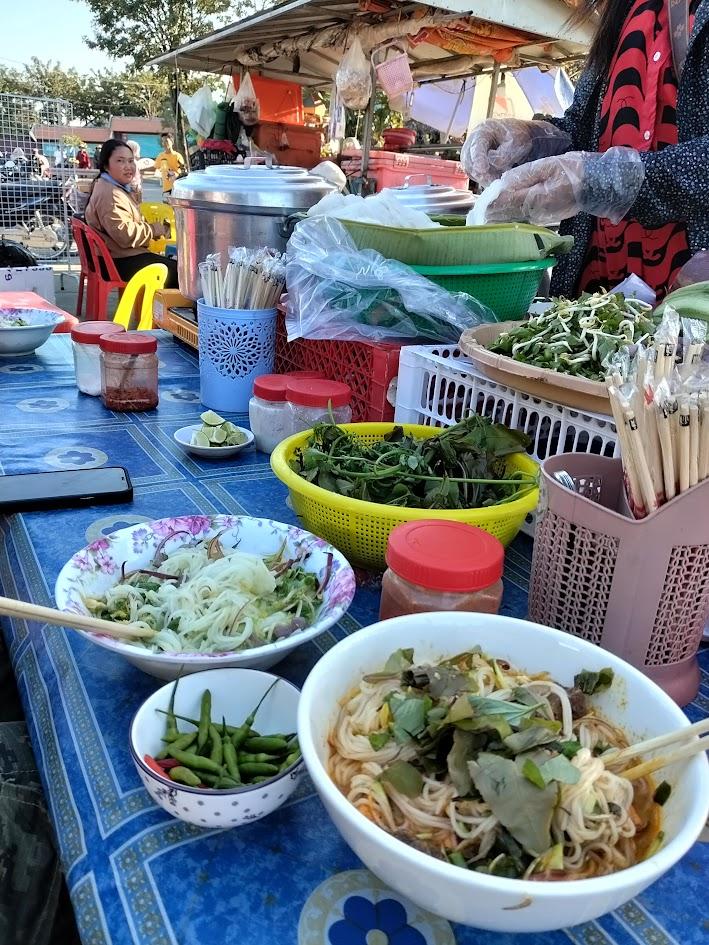
And last, don’t forget to add lots of fresh vegetables for color and flavor! Some of my favorites are tiny slices of cucumber, short pieces of long beans, bean sprouts, sliced banana blossom, sliced water lily and wild bean flowers. Many people also eat nom banh chok with chili peppers and lots of fresh herbs.
Yes, nom banh chok is very connected to the local environment! Nom banh chok is a common breakfast in Cambodia. Many sellers sell the noodles on the side of the road, and people buy a bowl on their way to work or school. The food is cheap, convenient and tasty. For many years, the process of making, selling and eating Khmer noodles has been an important part of many Cambodians' lives.