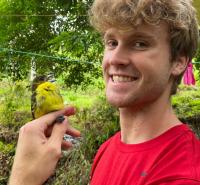
Upon their approach, we note the species, sex, and identify (all three from the color-band), and we observe the following with a recorder: the type of vocalizations they give (alarm, mobbing, etc.), how often the call is made (two alarm calls, three mobbing, etc.), and where they are calling from (perched, approaching the feeder, at the feeder, etc.). We also note the total diversity of the flock, or in other words, which species are there and how many of each. All of this data is then entered into a spreadsheet based on whether the feeder site was open or obscured.
Expected Results: Birds will elicit more mobbing calls, both in terms of dominant call type and repetition, when approaching feeders that are in obscure, dense locations. Because potential predators would be more difficult to spot in greater vegetation, the mob calls serve as a preemptive warning signal as birds approach to forage. Perceived risk is lower where feeders are more open because a potential predator would be exposed, so mobbing call utilization will decrease.
Project 2: Flock connectivity dynamics as a function of time of day
Background: As the winter season sets in and resources like food become more scarce, the different species of tits will begin to flock and live together. This means that it is typical for individuals within flocks to forage together at a food source once it is found. However, if there are multiple food sources available, members may forage separately at different feeders rather than at the same one.