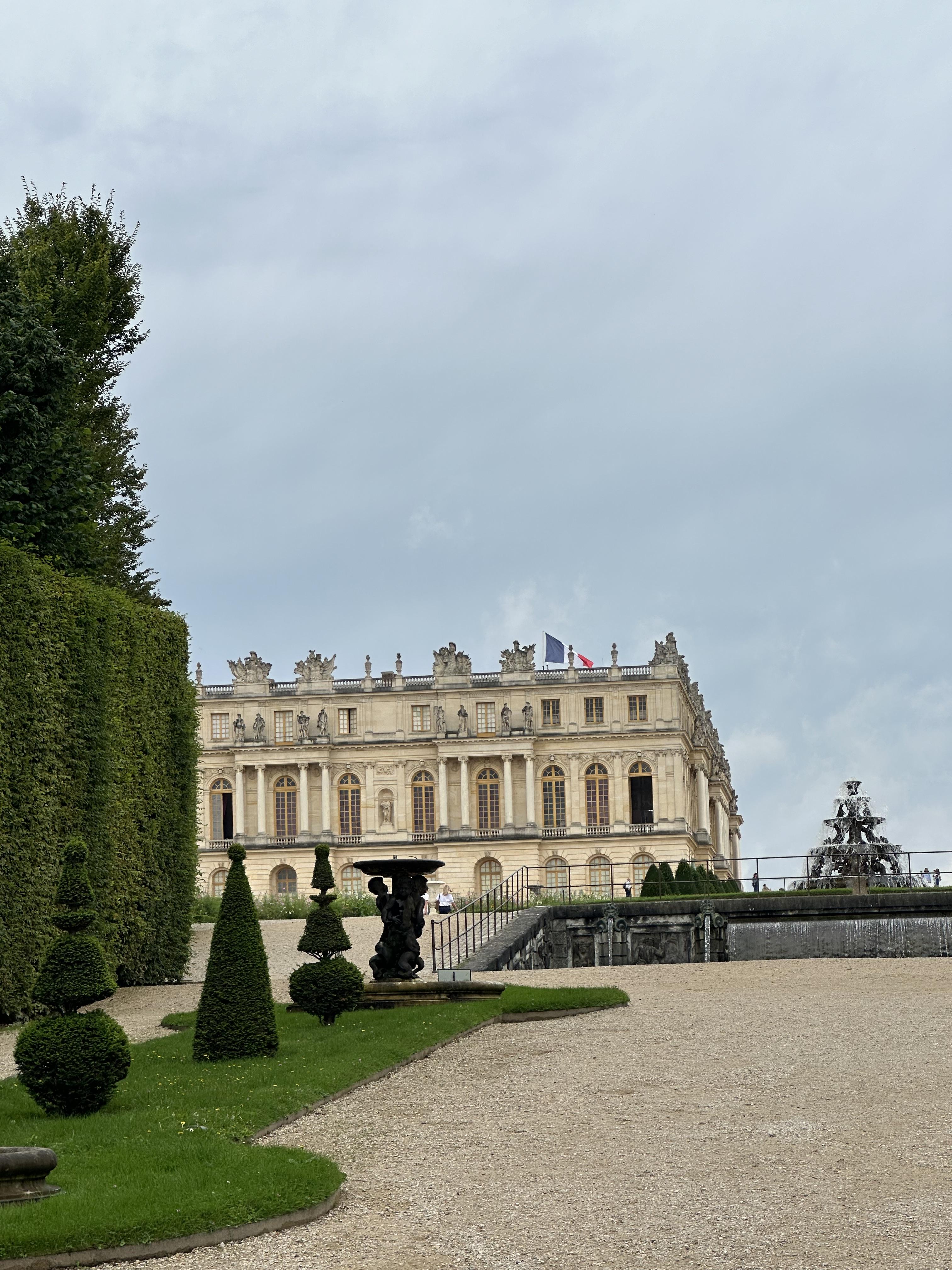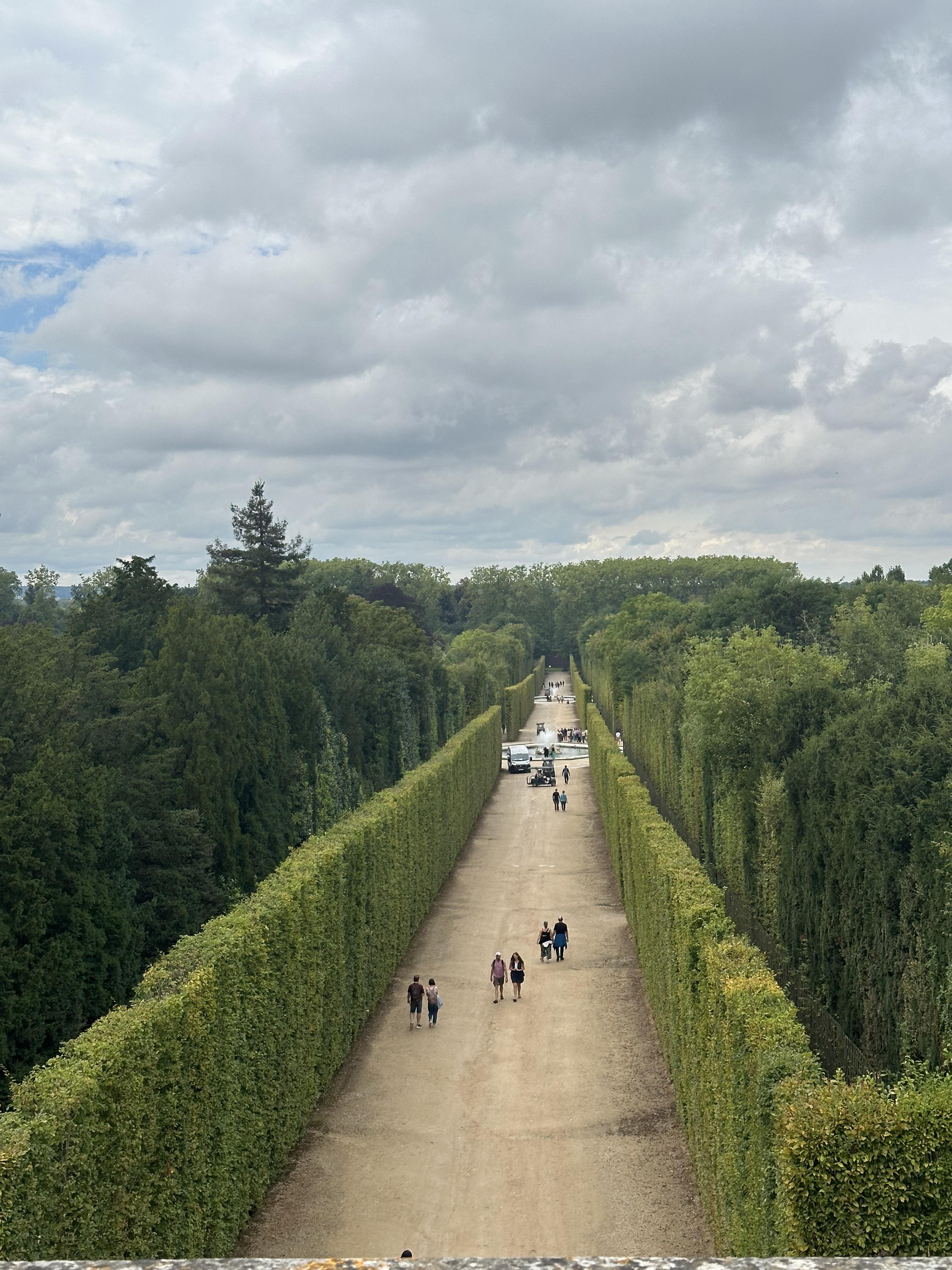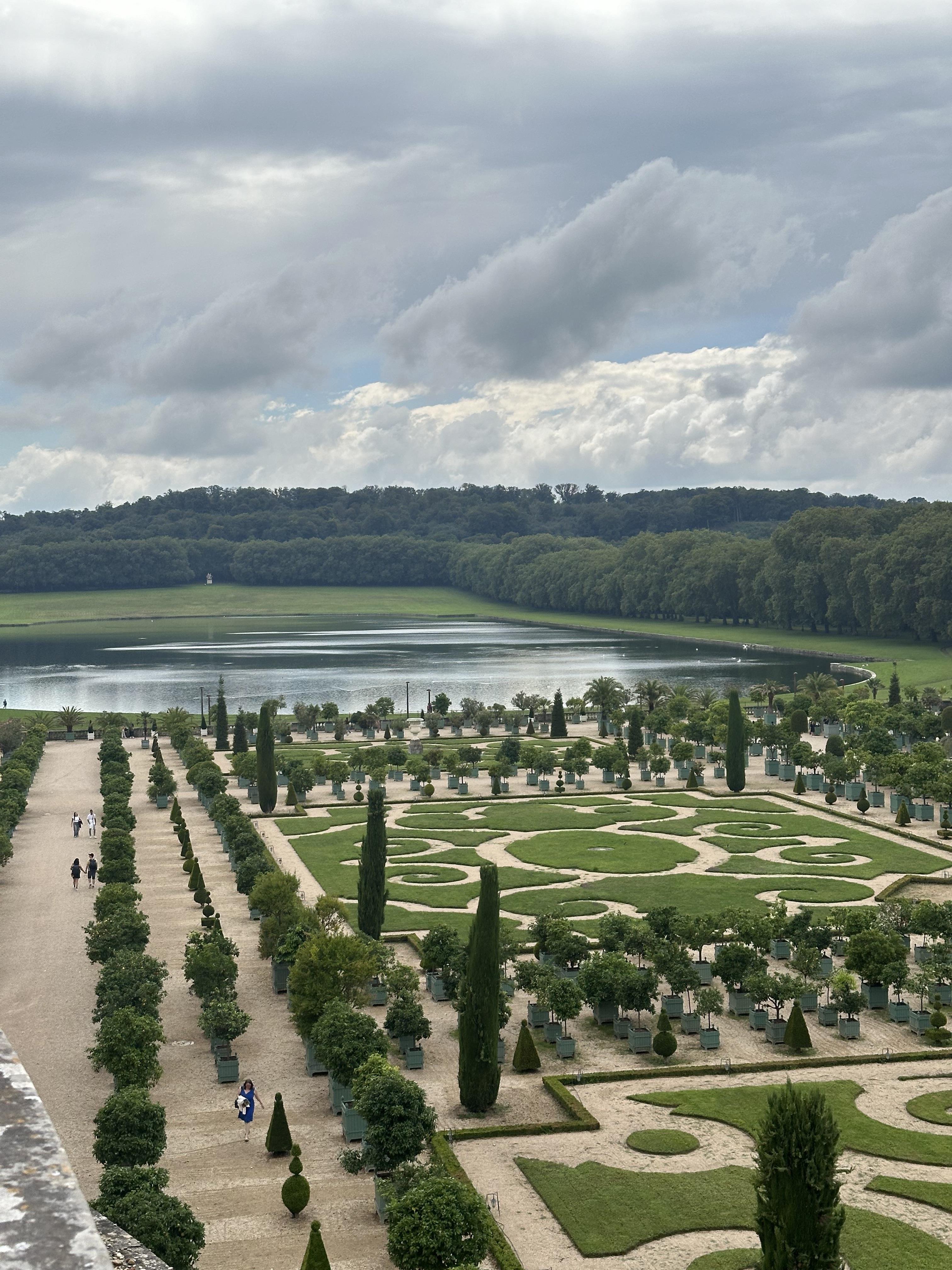
The Palace of Versailles is by far the most extravagant display of wealth I have ever seen. The interior of the palace is a recreation of what it once was, as many of the pieces on display had to be repurchased by museum curators as a result of looting during the French Revolution. While revolutionaries took furniture, melting down much of the gold and silver to sell, they left the palace mostly intact. The expansive palace gardens, of course, updated for modern visitors, are also a reflection of the past realities at Versailles. While in the 1780s Versailles was a symbol of vast inequality in France, today it represents the opulence of royalty. The palace at Versailles is another example of revisionist French history: it is celebrated today and not condemned.
Every day crowds of tourists, some French and some foreigners, line up outside patiently awaiting the slow shuffling required to get through the crowded halls. Each room represents a different era of Versailles, explaining the construction of the palace and who lived there, and finally, there are rooms dedicated to recreating the bedrooms of French kings and queens (with Marie Antoinette’s bedroom being arguably the most anticipated).