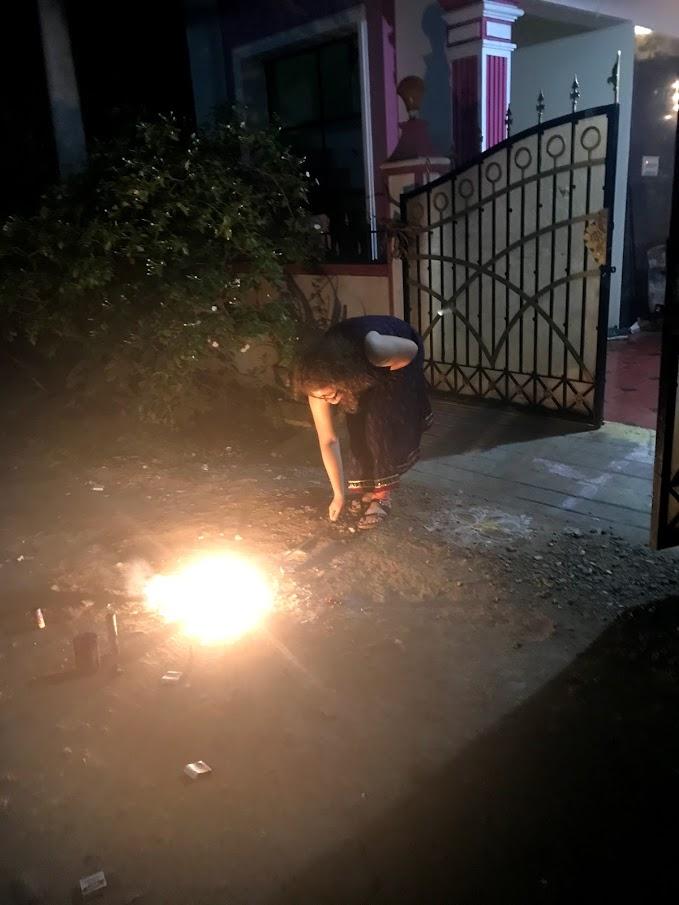
In Salem, Tamil Nadu where I was staying with Hema’s family, we saw large fireworks lighting up the sky in every direction we looked. There were more fireworks on Diwali night than on the Fourth of July in the U.S.!
Diwali is celebrated as an important religious holiday for Hindus in India. In Hindu mythology, Diwali celebrates the return of the Hindu god Rama and his wife Sita to their home after they defeated the demon king Ravana. Maybe that’s one reason so many people go home for Diwali?
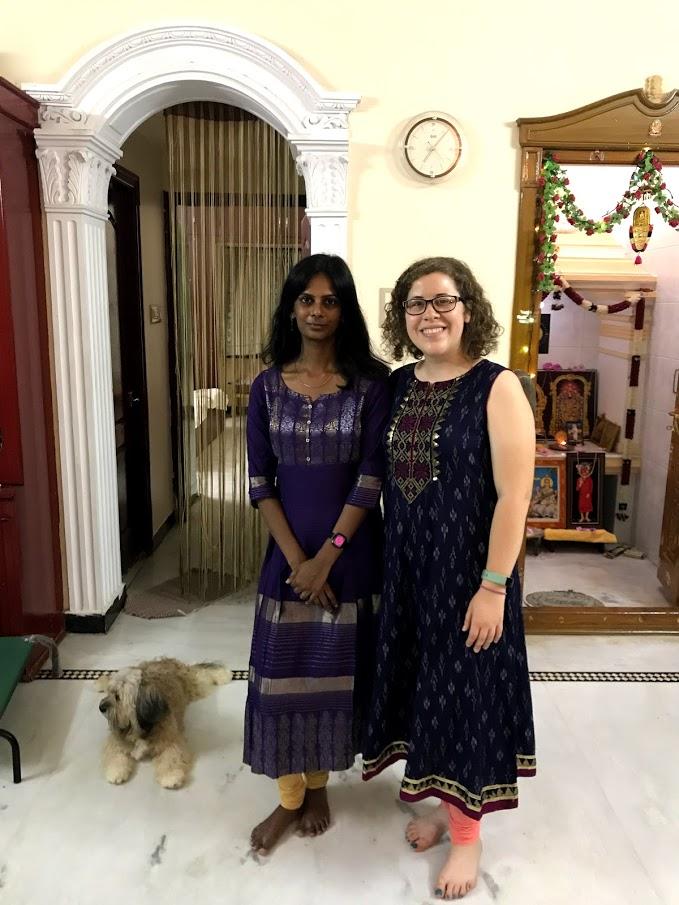
Regardless of their religious beliefs, Diwali is a time for creating closer bonds with family, friends and neighbors. Communities will gather together to set off fireworks and families come together to spend time with each other. Exchanging sweets is one part of Diwali that helps create bonds between neighbors. Hema’s mother made sweets for their neighbors that Hema and I delivered.
Yes, many people travel to the homes of family members to celebrate Diwali. It is a period of homecoming and bonding for many families. Since it is one of the most important holidays, many shops and schools are closed for at least part of Diwali.
Lately Diwali has been the subject of some disagreements. The fireworks that people light to celebrate the festival create a lot of noise and air pollution. People don’t clean up the fireworks, either, so the trash pollutes the streets and can even get into nearby bodies of water. Because of these pollution issues, many places are now limiting the use of fireworks during Diwali. Where Hema’s family lives, for example, the city said we could only light fireworks for two hours every night.